Jun 24, 2021 | Customer Service
Summer is moving season in Pennsylvania. Whether you’re helping your child move into a new college house, trading your home for an apartment downtown, or building a house for your growing family, we have tips to make transferring your electric service simple.
1. Ask your realtor or landlord for the meter number at your new residence so there’s no confusion about the address.
2. Confirm with prior tenants or homeowners when they are planning to request to stop service in their names. Then you can request the same date to prevent a gap in service.
3. Decide which of the following requests works best for your family:
- Start service: You can start service at any address within our territory without stopping service at another property.
- Stop service: Moving out of the area? You can simply stop your existing service and we’ll send you a final bill.
- Transfer service: Stop service at your existing property and start service at a new home with just a few clicks.
4. Visit pplelectric.com/moving up to 40 days before you move to process a request to start, stop or transfer your electric service.
New! If someone requests to start service at your existing address, you may receive a text or email from us to confirm. If you’re moving, there’s no need to take action. If the change was requested in error, let us know so we can prevent a new customer from starting service at the wrong address.
Moving requests only take a few minutes on our website, so there’s no need to wait. Cross this off your moving to-do list and get back to packing!

May 6, 2021 | Energy Efficiency
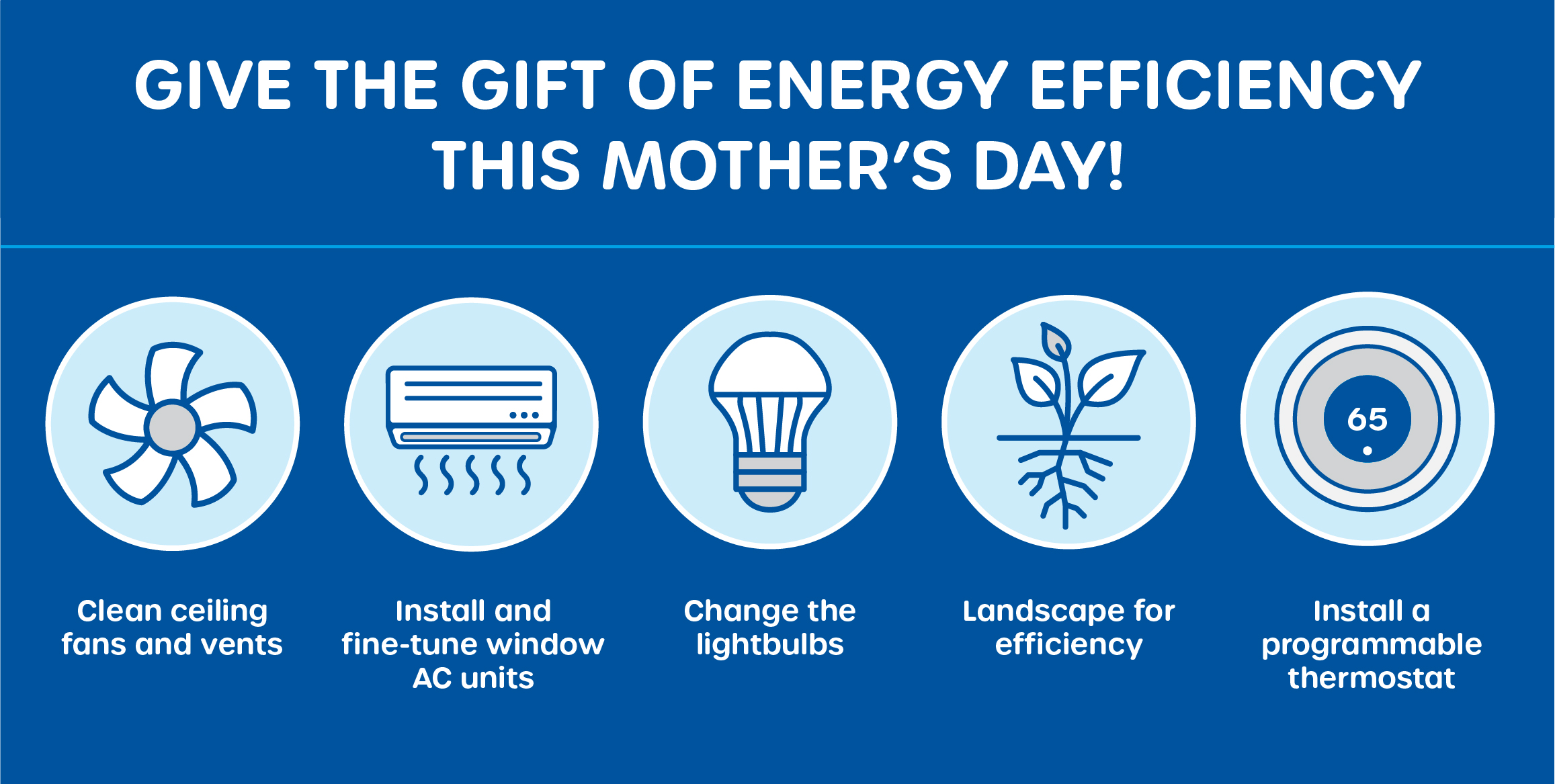
Flowers and candy are Mother’s Day mainstays, but this year try something new— make energy-efficient changes around your mom’s house for a gift that keeps on giving all year long. But, don’t forget the flowers. She’s your mom, after all.
Here are a few tips:
Clean the ceiling fans and vents.
- Not only can they be hard to reach, but they’re prone to dust buildup. Clogged vents could make Mom’s heating and cooling systems work harder to move air through the house. By using the ceiling fan and turning up the thermostat by only two degrees, your mom can lower air conditioning costs by up to 14%.
Install and fine-tune her window AC unit.
- If your mom lives in a home without central air, save her the hard work of installing window units. Be sure she knows how to use the timer settings to keep the unit running efficiently. Setting the timer to turn on the unit when she arrives home instead of running when the house is empty, for instance, will save money.
Change the lightbulbs.
- Swapping out costly and inefficient incandescent lightbulbs in Mom’s home with LED bulbs can save up to $75 each year, and they can last 3 to 25 times longer.
Landscape for efficiency.
- Planting trees, shrubs and other landscaping features in appropriate places brings a bounty of energy savings, from cutting heating and cooling costs to reducing noise and air pollution. On average, a well-designed landscape saves enough energy to pay for itself in eight years.
Install a programmable thermostat.
- Help Mom set it and forget it. Programmable thermostats adjust when the heat or air conditioning turns on according to a preset schedule. Keeping the house warmer than normal when she is away and at 78°F when she’s home can save Mom up to 10% on her energy bill every year.
May 5, 2021 | Community Involvement, Environment
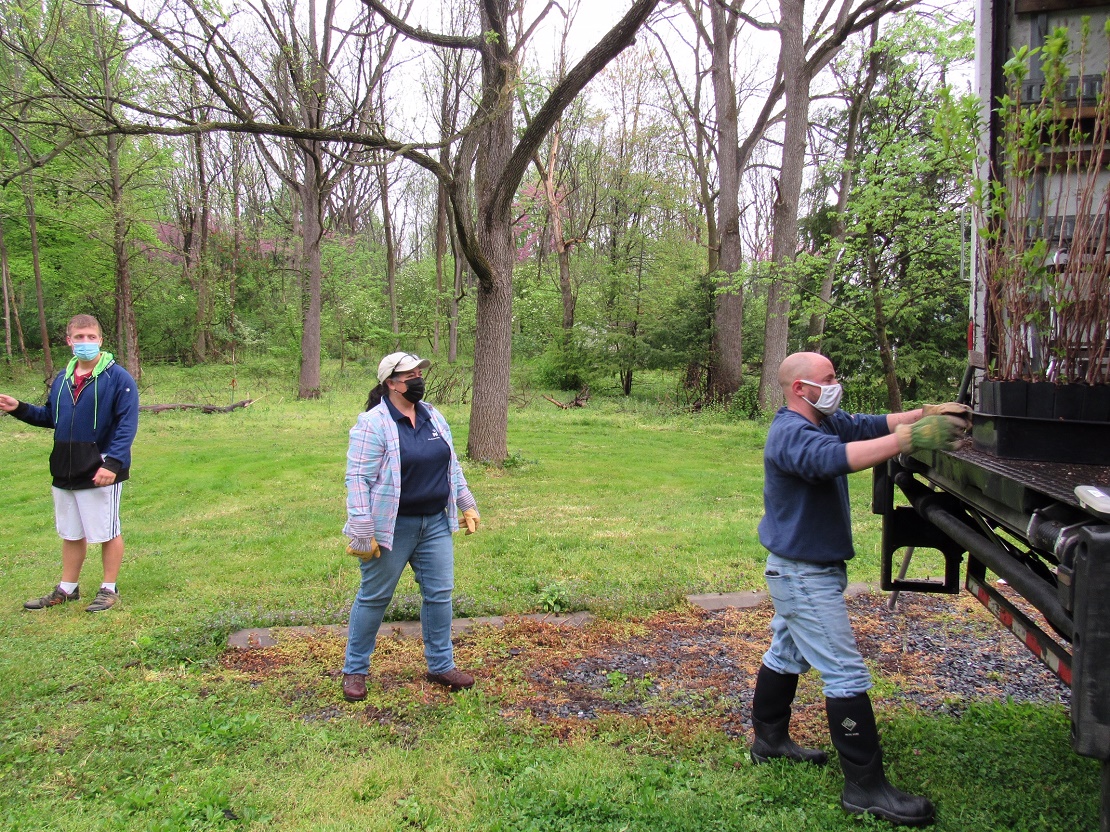
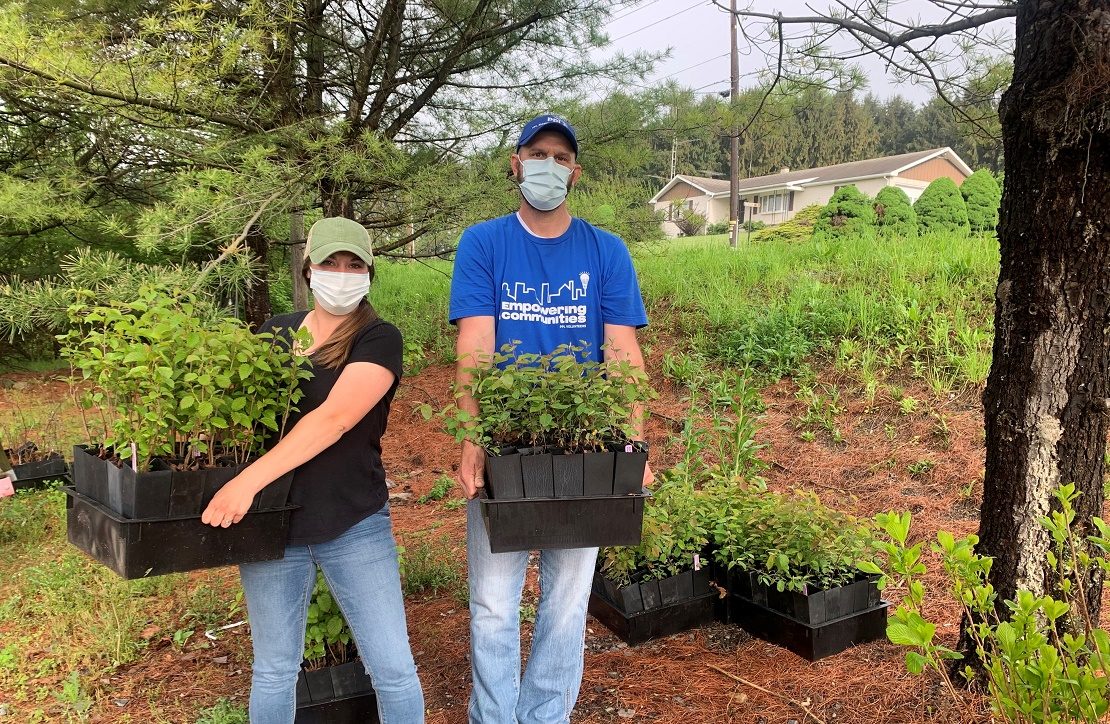
Thousands of blueberry, serviceberry, eastern redbud, river oak and sycamore trees are getting planted across our territory, thanks to our Community Roots program.
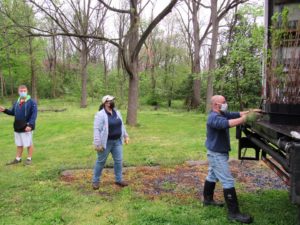
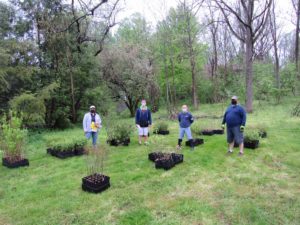
Just this week, our employees distributed nearly 12,000 tree seedlings to conservation organizations, such as Wildlands Conservancy in Lehigh County, where they’re being prepared for spring planting.
Since 2017, we have distributed more than 105,000 free trees to help preserve the environment by reducing greenhouse gases, promoting healthy waterways, and giving birds, bees, and butterflies a natural food source.
The trees, which also help to beautify parks and other public spaces, are given to environmentally focused groups, municipal and county governments and fourth grade students at schools in our service territory.
“Community Roots is a great way for us to promote trees and their benefits and reinforce to the public our commitment to the environment,” said Lori Burkert, manager of Environmental Compliance.

Apr 27, 2021 | Customer Service
We’re committed to delivering an effortless customer experience, whether we chat on social media, speak over the phone, or interact with you on our website. We’re also committed to continuous learning and improvement. So, when we received customer feedback regarding accessibility issues with our website, we took action.
Here’s what we learned:
- A legally blind customer made us aware that she was having difficulty using her screen reader to pay her bill online.
- Another customer with red and green colorblindness was having difficulty interpreting certain message banners on our website.
Here’s what we’re doing about it:
- Updating our online bill pay section to better support those who are visually impaired.
- To help overcome the color hurdle, we’re testing and implementing designs that use larger icons, which are more noticeable and legible for users with colorblindness.
Taking it a step further:
- We’ll continue checking-in with customers who have disabilities and design our website with accessibility in mind.
- We’re establishing panels of customers who can provide us guidance and insight on accessibility issues as we’re making routine improvements to the website.
We’re continuously learning from customers who access our website differently, so we can make the web experience inclusive for all.

Apr 20, 2021 | Reliability
We’re using technological innovation and data to reduce costs, improve safety, and keep the lights on for our customers.
This past winter we piloted dynamic line rating (DLR) technology on two of our transmission lines. When integrated successfully into operations, this technology has the potential to delay costly investments.
We’re excited to report that our pilot was successful. Thanks to the accuracy reported by our DLR sensors, we didn’t need to build new lines or upgrade the transmission line to avoid congestion.
The use of DLR sensors on our transmission lines saved millions of dollars that can be invested into preparing for the grid of the future. It also prevents us from having to do construction work.
Our company is one of the first to successfully integrate this technology into operations.
Let’s take a closer look at how it works.
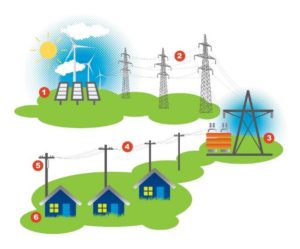
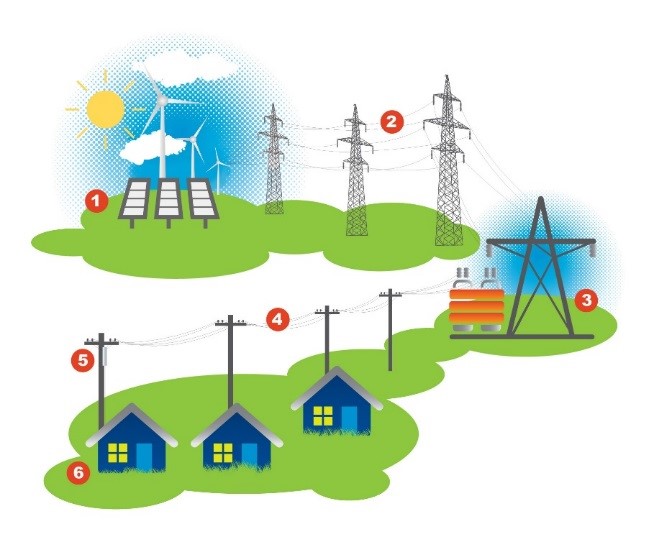
The energy grid moves electricity like the roadway system moves vehicles. The grid has two main components. The transmission system (#2) acts like the highway, moving energy over long distances and across state lines. The distribution system (#4) acts like local roadways, delivering energy directly to homes and businesses.
Like traffic on the highway, the grid becomes congested when the transmission system can no longer deliver the electricity without exceeding certain limits. When this happens, just like roads need to be expanded or added, transmission owners, like us, must upgrade or build new electrical lines.
DLR sensors give real-time information on conditions that affect transmission line performance – like wind speed and line temperature. This information is used to increase the amount of electricity delivered over existing lines and decrease congestion.
Traditionally, static line ratings are taken when the lines are initially built, and the ratings are used indefinitely to make investment decisions. So, even though the environmental factors are continually changing, the rating assumes the most conservative factors are at play. When the grid becomes congested, we may be unable to increase the amount of electricity because the initial static line rating assumes we cannot. This means we must invest in upgrading or adding transmission lines.
“The information we are collecting is helping us better balance strong resiliency while holding down costs,” said Dave Quier, vice president of Transmission and Substation. “Not having to make upgrades to Harwood-Susquehanna saves money, avoids construction work and gives our team more flexibility to invest money where customers will see bigger reliability results.”
This is just another example of how we’re using technology, innovation and data to improve safety, reduce cost, and keep the lights on for you.