Feb 25, 2026 | Safety and Security
PPL Electric Utilities is joining this effort by sharing simple ways customers can avoid scams, report suspicious activity and protect their information.
A few basic steps can make a big difference.
What PPL Electric will never do
Scammers often rely on urgency and confusion. They may claim your power will be shut off within minutes unless you pay right away.
Remember:
- We will never demand immediate payment over the phone.
- We will never ask for payment using gift cards, prepaid cards or cryptocurrency.
- We will never show up at your door to demand cash.
- We will never ask for personal financial information through an unexpected call, text or email.
If something doesn’t feel right, slow down and verify.
Common utility scam tactics
Phone scams
Scammers may call and pretend to be from PPL Electric. They often:
- Claim your account is past due
- Threaten immediate shutoff
- Demand payment through apps or gift cards
Fake websites
Some scammers create lookalike websites that appear in search results. These sites are designed to collect your personal or payment information.
Text and email scams
You may receive a message saying your bill is overdue, with a link to a fake payment page.
Avoid, report and recover from scams
During National Consumer Protection Week, the Federal Trade Commission encourages consumers to focus on three key steps: avoid, report and recover.
Avoid scams
- Take your time before responding to unexpected calls, texts or emails.
- Be cautious of messages that create urgency or demand unusual payment methods.
- Go directly to pplelectric.com to check your account instead of clicking links.
Report scams
If you receive a suspicious message:
- Hang up or delete it.
- Contact us directly to verify your account.
- Report scam attempts to your local authorities or the Federal Trade Commission.
Recover from scams
If you think you’ve shared information or made a payment to a scammer:
- Contact your bank or payment provider right away.
- Report the incident to the FTC at ReportFraud.ftc.gov.
- Reach out to us so we can help you confirm your account status.
How to protect yourself
Keep these steps in mind:
Stop. Scammers want you to act fast. Take a moment to think.
Verify. If you’re unsure about a message, go directly to pplelectric.com or call 1-800-342-5775.
Protect your information. Never share personal or financial details with unexpected callers or through suspicious links.
Stay informed all year
Scam tactics change, but the warning signs are often the same: urgency, pressure and unusual payment requests.
Visit our Scam and Fraud Prevention page to learn more about how to recognize and avoid scams.
pplelectric.com/scams

Jan 27, 2026 | Energy Efficiency
As the winter chill sets in, keeping your home warm and comfortable is top of mind. If you rely on electric heat, it may drive up your winter electric use. Proper maintenance and smart energy management can help you stay cozy and keep your winter heating use in check.
Make the most of your heating system with the tips and information below.
13 cold-weather savings tips
Baseboard heating tips:
- Keep baseboard heaters clean. Regularly dusting and vacuuming the coils of your electric baseboard heaters can improve their efficiency. Dirty heaters require more energy to generate heat.
- Avoid blocking the flow of warm air. Since electric baseboard heaters use convection and natural air currents to heat your space, it’s especially important to make sure that furniture, drapes and carpets are at least one foot away from them.
- Focus on heating the rooms you use the most and close doors to unused spaces to help concentrate the heat where it’s needed. You can save up to 20% on your energy costs by keeping baseboard heaters on only in the room you’re in, according to the Department of Energy (DOE). Be sure that any pets or plants are moved to heated areas of your house before turning off baseboard heaters in unused rooms.
- Verify that your thermostat is functioning correctly. A faulty thermostat can lead to inaccurate temperature readings and inefficient heating.
- For older baseboard heating, consider upgrading to newer, energy-efficient heating systems, such as ductless heat pumps. They’re designed to provide better performance while using less electricity.
Tips for heat pumps:
- Set your thermostat to remain at a constant temperature, and limit any adjustments to 3°F or less so your heat pump doesn’t run inefficiently to catch up. The DOE recommends setting HVAC systems to 68°F in the winter, or lower while you’re asleep or away.
- Use “heat” mode for your heat pump’s temperature setting (instead of “auto”). Then set the heat pump fan on “auto.”
- If you have a backup heating system, set your heat pump higher and the backup system lower so that the heat pump is doing most of the work. If your backup system is the only source of heating in places like your basement, be sure it’s set high enough so that pipes won’t freeze.
General energy efficiency:
- Check for leaks and seal drafty areas of your home with weatherstripping or caulk. You can place draft stoppers at the bottom of doors to minimize heat loss.
- Use your ceiling fans to move warm air around a room, allowing you to turn down your thermostat a few degrees and save energy.
- Kitchen and bath exhaust fans can pull in cold air from the outside. Try to limit their use to no more than 20 minutes.
- If your heating system uses ducts, be sure that the air-intake vents and all other vents are free of dust.
- Keep an eye on your energy usage patterns. They can help you identify performance issues with your heating system or habits you may wish to adjust.
Looking for more ways to save?
A range of seasonal savings solutions are ready and waiting—discover all the ways we can help.

Nov 18, 2025 | Safety and Security
The holidays should be enjoyable. But scammers see this season as a chance to take your money and personal information.
Utility Scam Awareness Day is Nov. 19. We’re joining Utilities United Against Scams (UUAS) to help you spot the warning signs and protect yourself. The Federal Trade Commission reports that Americans lost$12.5 billion to impostor scams in 2024, a 25% increase over the prior year.
As your schedule gets busier, scammers get bolder. They want you to be distracted. Here’s how they try to fool you, and how you can stay safe.
How scammers try to trick you
Scammers rely on pressure, fear and fake information. These are the most common tactics we see.
1. The threatening phone call
What they do:
Someone pretends to be from PPL Electric and claims your bill is past due. They demand immediate payment and push you to use a prepaid card, gift card, CashApp, Venmo, Zelle or cryptocurrency.
Red flag:
We never demand payment right away or ask you to pay through apps or gift cards. If you’re at risk of shutoff, we contact you through official channels and offer payment options.
What to do:
Hang up. Sign in at pplelectric.com to check your real account status or call 1-800-342-5775.
2. The fake caller ID
What they do:
They “spoof” our number so your caller ID looks legitimate.
Red flag:
Anything urgent, pushy or demanding personal information should make you pause, even if the number looks right.
What to do:
Hang up and call 1-800-342-5775 yourself.
3. Phishing emails and texts
What they do:
You get a message saying your bill is overdue, or your account needs an update. There’s a link that leads to a fake site.
Red flag:
Typos, unusual sender addresses, strange links or generic greetings.
What to do:
Don’t click. Go to pplelectric.com by typing it directly into your browser.
4. The impersonator at your door
What they do:
Someone shows up pretending to be a PPL Electric employee. They might say they need inside access, inspect equipment or demand payment.
Red flag:
Our employees carry official photo ID badges. We don’t ask for payments in person, and we don’t sell electricity door-to-door.
What to do:
Ask for ID. If something feels wrong, don’t engage. Call 1-800-342-5775.
Why scammers target the holidays
Scammers know that during the holidays:
- You’re juggling travel, shopping and family plans.
- Unexpected charges may not stand out.
- You’re checking accounts less often.
- You’re in a generous mindset.
That combination makes it easier for them to slip through the cracks.
Your scam-safe checklist
Use these steps to protect yourself and others:
✔ Slow down. Pressure to act fast is the biggest warning sign.
✔ Verify. Hang up and call us directly at 1-800-342-5775.
✔ Share what you learn. Talk with older relatives, neighbors, and friends. They’re often targeted.
If You Think a Scammer Reached You
Take action right away:
- Stop the contact — hang up, delete the message, or close the door
- Tell us at 1-800-342-5775
- Report it to your local police
- File a report with the FTC at reportfraud.ftc.gov
- Warn friends and family
We’re Here to Help
We work closely with law enforcement and UUAS year-round to protect our customers. This Utility Scam Awareness Day, take a moment to learn the signs and share them with someone who may need the reminder.
For more resources, visit pplelectric.com/scams.
Follow us for updates:
Remember: We will never demand immediate payment or ask you to use gift cards, payment apps, or cryptocurrency.
When in doubt, check your account at pplelectric.com or call 1-800-342-5775.

Sep 1, 2025 | Safety and Security
Now is the perfect time to make sure you and your family are ready for the unexpected. When emergencies happen, having a well-stocked kit can make a stressful situation easier and safer.
Kit essentials
1. Flashlights and batteries
Have flashlights for everyone in your family and plenty of extra batteries. Flashlights are safer than candles, which can be a fire hazard. Keep one in each room so you’re not searching in the dark.
2. Food and water
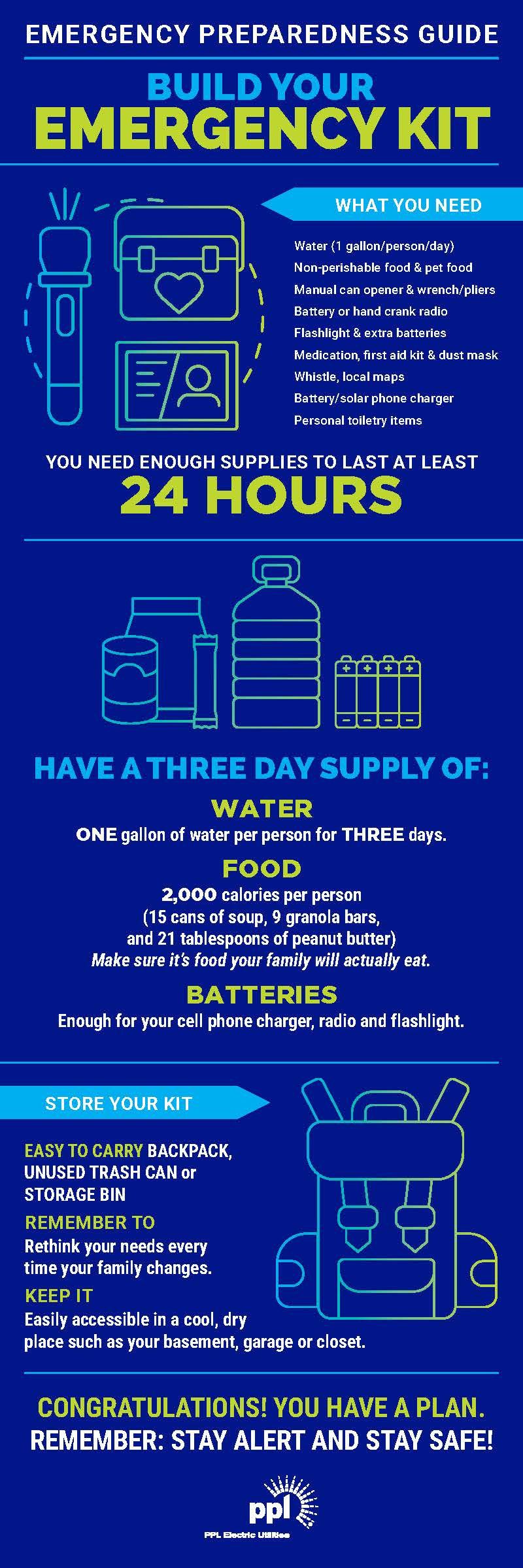
Plan for at least three days’ worth of food and water. Stick with non-perishable items like canned goods, granola bars, or dried fruit, and don’t forget a manual can opener. For water, store at least one gallon per person per day for drinking and basic needs.
3. First aid kit
Be ready for minor injuries. Stock bandages, antiseptic wipes, and any prescription medications your family needs. Adding common medicines like pain relievers, cold medicine, and allergy medicine is also helpful.
4. Battery-powered or hand-crank radio
Information is critical during an emergency. A portable radio can keep you updated if the power is out. Be sure to have extra batteries on hand.
5. Blankets and warm clothing
Weather can be unpredictable. Keep extra blankets, sleeping bags and warm clothing like hats and gloves in your kit. Even in summer, a blanket can add comfort.
6. Hygiene items
Good hygiene keeps you healthier in tough times. Include hand sanitizer, wet wipes, toothpaste, toothbrushes, deodorant and other basics. If you have babies or small children, add diapers and wipes.
7. Important documents
Make copies of key documents such as insurance policies, medical information and birth certificates. Store them in a waterproof container along with a list of important phone numbers.
8. Portable phone charger
A portable charger will help you stay connected. Keep it charged so it’s ready when you need it.
9. Cash in small bills
In some emergencies, ATMs and card readers may not work. Having cash on hand — especially small bills — can help you buy supplies or fuel when electronic payments aren’t available.
Putting it all together
Once you’ve gathered your items, store them in a sturdy container like a plastic bin or duffle bag. Keep the kit in an easy-to-reach spot, and make sure everyone in your household knows where it is.
With your emergency kit ready, you’ll have peace of mind knowing you’re prepared for the unexpected. Stay safe, and be ready for whatever comes your way!

Sep 1, 2025 | Safety and Security
National Preparedness month is a great time to create and review your emergency plan so your family knows what to do during an emergency.
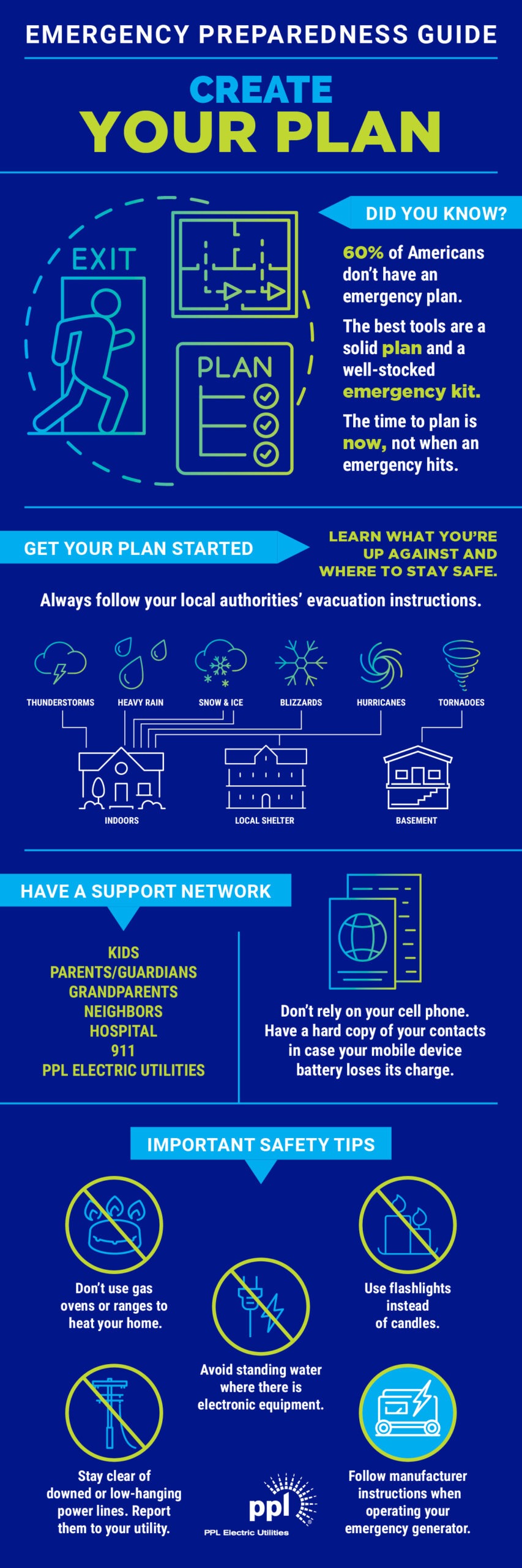
Does your family have a plan in case of a natural disaster or another emergency? You might be surprised to learn that many Americans still don’t.
We take steps every day to keep our loved ones safe. We childproof our homes, buckle up in the car and install smoke detectors. But are we truly ready for an emergency, like a power outage or a severe storm?
What would your family do if the power went out for several days? Do you have enough food, water and other supplies? Every family’s needs are different, and your plan should reflect that. For example, families with young children, pets or someone with medical needs may require extra planning.
Why planning matters
Having a plan in place before an emergency hits can make all the difference. It’s much easier to stay calm and focused when you’ve already thought through the details. Knowing where to go, who to contact and what to have on hand will help you keep your loved ones safe.
National Preparedness Month is a great time to review and update your emergency plan. Even if you already have one, check to make sure it still matches your family’s current needs.
Get started on your plan
If you don’t have a plan yet, now is the perfect time to create one. Ask yourself:
- Does everyone know who to contact and where to go if an emergency happens when you’re not home?
- Do you have an emergency kit with enough supplies for at least three days?
- Does everyone know how to stay informed with the latest news?
- Do you have backup power options, like a generator or battery packs, if an outage lasts longer than expected?
Resources to help you prepare
We’ve gathered essential information from trusted sources like FEMA, the U.S. Department of Homeland Security, the Red Cross and the U.S. Department of Health & Human Services. Our guide combines their best practices into one convenient place, making it easier for you to review and follow.
Key tips:
- Keep a paper copy of your emergency contacts: If your phone dies, you’ll still have access to important numbers.
- Use our checklist to build your emergency kit: It’s designed with all the details you need to be ready.
- Teach your kids what to do in an emergency: Help them stay calm and know what to expect.
Check out the infographics below for more detailed guidance on building your emergency kit and preparing your family.
National Preparedness Month is a reminder to make or update your emergency plan. Being ready helps protect not just you, but everyone who depends on you.