Aug 26, 2025 | Reliability
 Fewer Outages, Brighter Days
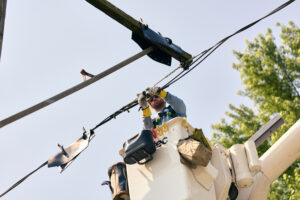
When you flip your light switch, you expect one thing: the lights to come on — and stay on. That simple moment is at the heart of everything we do. In 2025, thanks to our ongoing work, we’re delivering on that promise with real improvements.
Results You Can See — and Feel
So far this year, our customers have experienced 510,000 fewer interruptions compared to the same period in 2024. That’s not just a number, it’s hundreds of thousands of evenings uninterrupted, workdays powered through and family moments kept bright. These improvements aren’t by chance. They’re the direct result of our investments in reliability and resilience.
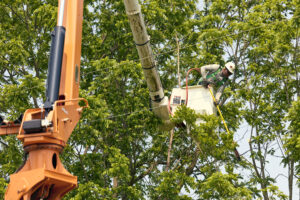
One major game-changer has been our comprehensive tree trimming program. By regularly trimming and removing trees along our power lines, we’ve slashed tree-related outages by 11%. Fewer branches mean fewer outages — simple as that.
 Building a Stronger, Smarter Grid
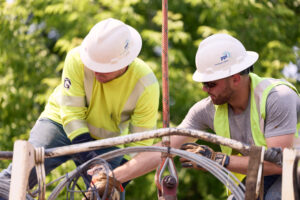
We’re investing nearly $7 billion between 2025 and 2028 in upgrades to our distribution and transmission systems. Our goal? A grid that’s tougher, smarter and ready to handle whatever Mother Nature throws our way.
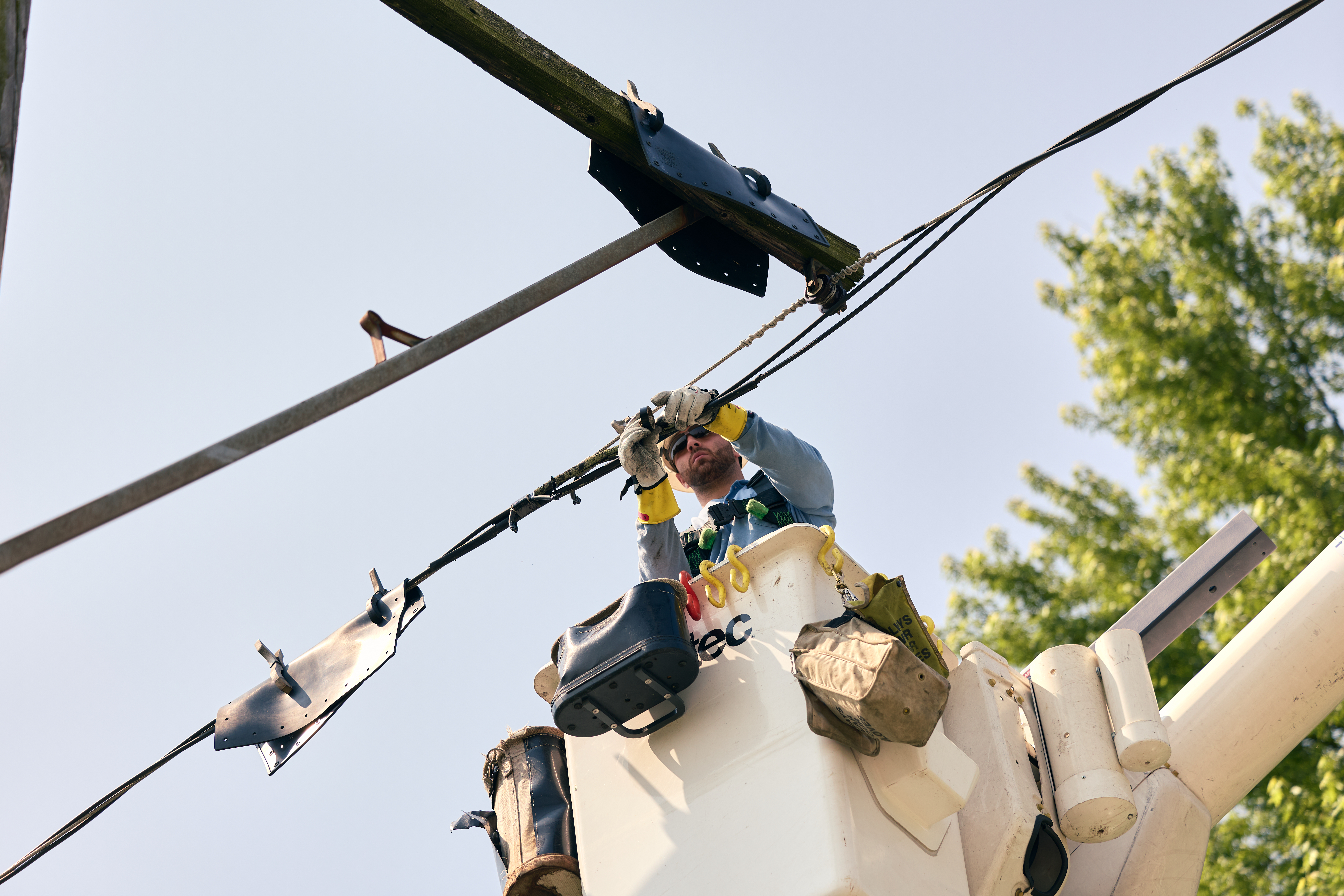
Our teams are hard at work replacing and upgrading lines and equipment. Dozens of comprehensive storm hardening projects are happening across our 29-county service territory to further reduce outage frequency and duration.
Our ongoing work includes:
- Trimming and removing trees along our power lines to prevent outages before they happen.
- Replacing aging equipment, adding stronger poles, pole-top equipment and wires, and installing animal, avian and lighting guards.
- Adding smart grid devices and sensors across our system to optimize the ability to reroute power remotely and automatically, decreasing the number of customers affected by an outage and the outage duration. Since 2015, our smart grid has avoided more than 3 million outages.
- Continuing proactive inspections and maintenance to assess the performance and health of the system and proactively replacing aging or damaged equipment before an outage occurs.
 Our Promise: Reliability You Can Count On
Every day, our mission is to make sure you can go about your life without interruption. We’re not done yet; the work continues, and each improvement we make we do it for you.
Stay tuned for more updates on how our investments are keeping your lights on, your life powered and your moments uninterrupted. We’re proud to be your partners in power.
Aug 14, 2025 | Community Involvement, Customer Service
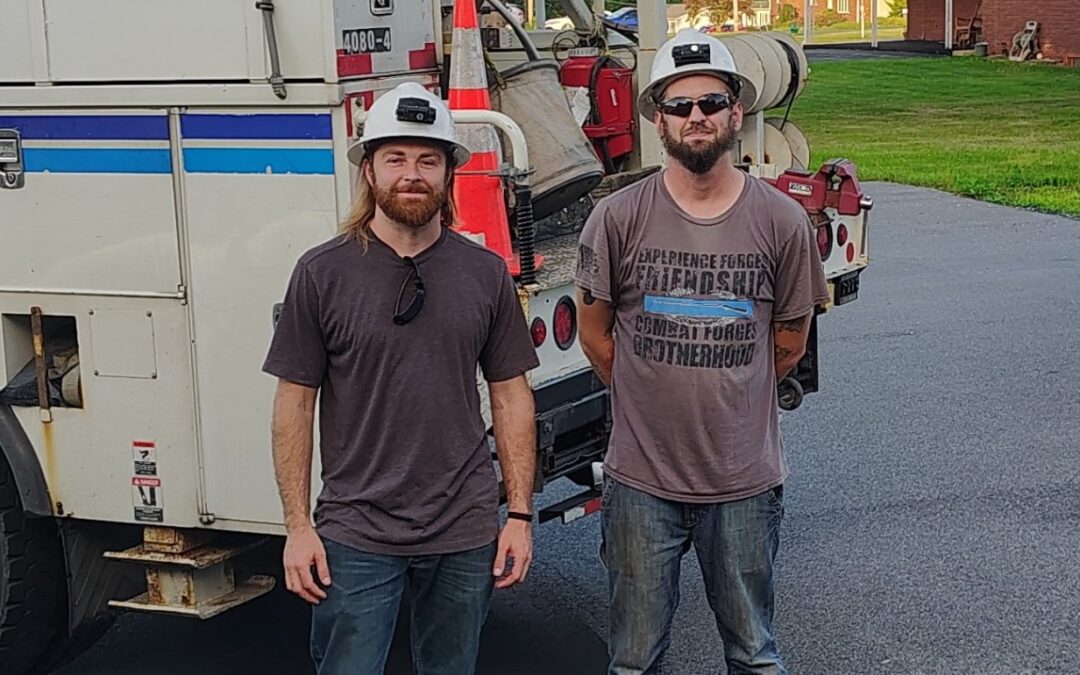
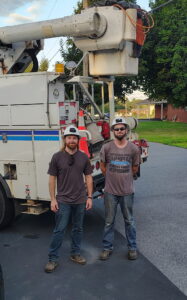 A pair of PPL Electric Utilities lineworkers are being praised as “heroes” for the work they did recently to rescue a bird that had gotten itself caught in an overhead utility line.
Justin Steidinger, a troubleman, and Dan Thomas, a journeyman lineworker trainee, were called to assist in the bird-saving mission after a homeowner in the Coplay area of Lehigh County spotted the bird stuck overhead.
The woman called PPL Electric and asked about the possibility of using their bucket trucks to get in the air and assist the sparrow.
Steidinger and Thomas were in the area and obliged, eventually determining that the bird managed to get its toe stuck in a communication line, apparently by getting its foot inside of a piece of wiring that holds multiple communications lines together.
Thomas said he and Steidinger both raised their bucket trucks to the line and were able to safely remove the bird in seconds.
“She was really happy that we came to bring the bird down safely,” Thomas said.
Wildlife rescue advocate Barbara Miller praised Steidinger and Thomas for their “magnificent” work, took it from there.
Miller, who has a capture and transport permit from the Pennsylvania Game Commission, had provided instructions to the woman who made the initial call to have the bird placed in a box so it could be transported and evaluated. Miller wanted to make sure it was safe to release the bird. Sparrows must have both legs and feet to be able to survive.
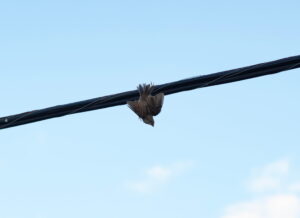 She transported the bird to Renae Yeager, a retired PPL employee who is also a licensed songbird rehabilitator.
Yeager examined the bird and determined the sparrow had a bruised – not broken – toe and could be cleared for release.
Miller, who is also part of a statewide network of volunteers known as Wildlife in Need, then brought the sparrow near the location where it originally got snagged in the wire and let it free.
“I took it about 100 yards from the line where it got stuck and let it fly out of my carrier into the trees. She snuggled in there and roosted and rested for the night.”
Miller said the work the lineworkers did that day was “a big deal.”
“In a situation like this, it’s not just the bird that’s suffering,” Miller said. “It is truly heart-wrenching for people to have to see an innocent, beautiful animal thrashing and dying on a utility line when it could be freed.
“These two guys should be proud of themselves. They made a miracle happen.”
Jul 22, 2025 | Community Involvement, Safety and Security
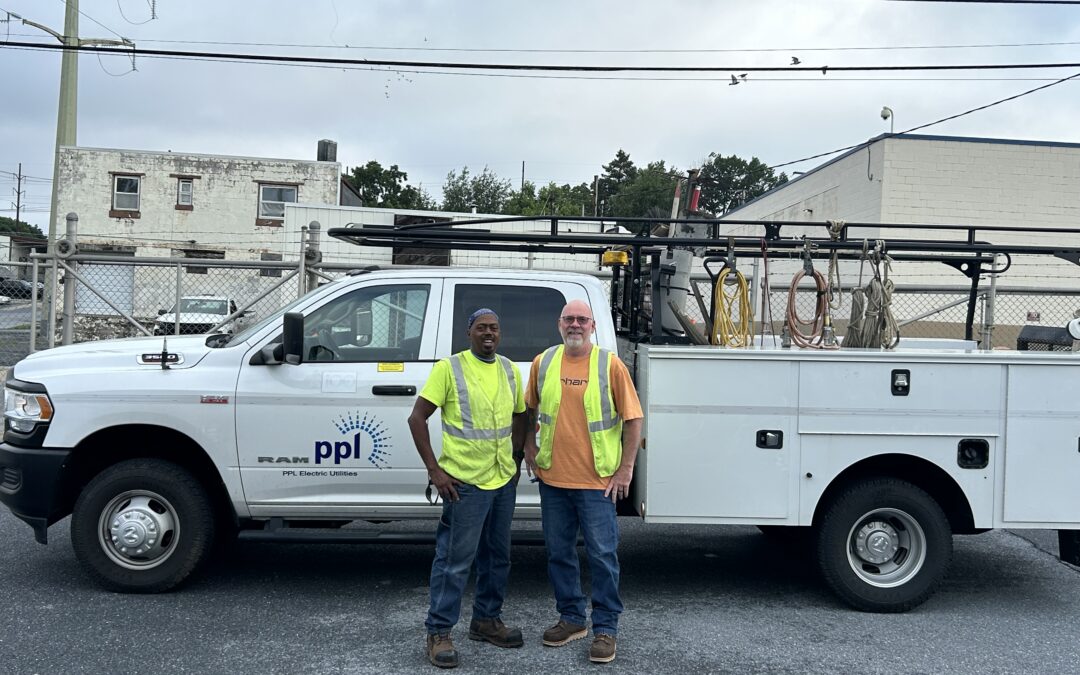
If Preston Edrington’s 35 years at PPL has taught him one thing, it’s that nothing is more important than safety and the safety of those we work with each day.
Edrington, a journeyman mechanic, credits his experience at PPL Electric Utilities and the company’s safety culture for helping him to know what to do — and how to do it safely — when he happened upon a vehicle accident in the Newport area of Perry County recently.
Edrington was traveling on Route 322 from a job site to the Harrisburg Service Center Annex building when unexpected severe weather — heavy rain and wind — began, prompting him to slow down. He soon noticed a vehicle in front of him swerving and striking a guard rail, apparently after hydroplaning and before rolling over multiple times.
That’s when Edrington’s instincts kicked in. He found a safe place along the shoulder of the road to pull over and he safely made his way over to the vehicle after calling 911.
Once at the vehicle, he and another motorist that stopped to assist worked together to determine the condition of the driver inside and find a way to get him out of the vehicle, which was on its side.
“We finally were able to get him out and I said, ‘Are you OK?’ He had a cut on his knee, and I had a first-aid kit, so I brought him to my truck so that he could treat it. The whole time I was watching him closely to make sure he was alright because I knew he was in shock.”
As the man treated himself and awaited help from medics, Edrington’s coworker, Glenn Klinger, worked together to set up traffic cones and triangles to help make other motorists aware of the overturned vehicle and keep everyone safe.
Eventually, state police officers arrived to secure the area and investigate, and medics arrived to provide medical assistance.
“The [emergency medical technicians] came and checked him out and some other volunteers came to assist and they complimented us on how we set up the traffic cones and triangles (to control traffic),” Edrington said.
“Our training all these years at PPL really is what prepared us to respond to something like that.”

Jul 16, 2025 | Safety and Security
Eliminating electrical hazards around swimming pools and outdoor hot tubs helps ensure everyone stays safe while enjoying their time in the water this summer.
Here are some pool and spa safety tips provided by the Electrical Safety Foundation, a leading authority on electrical safety issues for consumers, workers and the media.
- Keep all outdoor receptacles covered so they remain dry.
- Use a ground fault circuit interrupter (GFCI) for electrical devices used outside to help prevent electrocutions and electric shock injuries.
- Make sure all electrical equipment used for swimming pools (even the cleaning equipment) is grounded.
- Keep electrical devices and cords at least 10 feet away from water sources.
- Never handle electrical devices when you are wet.
- Make sure there are no power lines over a swimming pool.
- Do not swim during thunderstorms.
- Have a licensed electrician inspect your pool to make sure electrical components are up to code and safe.

Jun 29, 2025 | Safety and Security
Each year, approximately 40 million lightning strikes hit the ground in the United States and cause approximately six to 15 deaths in Pennsylvania, according to the National Weather Service.
While being struck by lightning is rare, it’s better to protect yourself and stay out of harm’s way when thunder and lightning are approaching. The general rule of thumb: when thunder roars, go indoors.
Electrical Safety Foundation International offers some other lightning safety tips:
- When you see lightning, count until you hear thunder. If that time is 30 seconds or less, the thunderstorm is within 6 miles of you and is dangerous. Immediately seek shelter.
- Do not touch concrete surfaces, including those in a basement or garage. Lightning can travel through the metal wires in concrete walls and flooring.
- Stay off corded phones and plugged-in electronics.
- Avoid plumbing and water, including bathing or doing laundry.
- Never seek shelter under trees, poles or other tall structures, as they are more likely to be struck by lightning.
Here’s what you can do to protect your property:
- Unplug appliances and other electrical items, such as computers and televisions, to prevent damage from lightning strike surges.
- Surge protection can help prevent damage to your electronics. There are two types of surge protection:
- Point-of-use surge protection – protects items directly plugged into the device from most electrical surges.
- Whole home surge protection – located at your main electrical panel or base of the electric meter. This device provides protection for your entire electrical system.