Apr 1, 2015 | Safety and Security
This is a guest blog post by Mark Santayana, project manager for PPL Electric Utilities’ Underground Facilities and Damage Prevention.
I love living in Pennsylvania! The character of the state runs the full spectrum of history and commerce, through the world-class cities of Pittsburgh and Philadelphia to the bucolic serenity of Lancaster County and the great woods of the Northeast.
We’re also blessed with four unique and distinct seasons – Almost Winter, Winter, Still Winter and Dig Season!
Typically, April 1 is the unofficial start of what is considered Dig Season in Pennsylvania. Of course, we all know April 1 as April Fools’ Day, but in my world as PPL Electric Utilities’ project manager for Underground Facilities and Damage Prevention, Dig Season and safe digging is no joke.
As warmer weather approaches, it is often pondered: What is the true sign that spring has officially, definitely, totally sprung? Some say it is the sighting of a robin. Others will point to the crocuses and tulips peeking through the earth.
The strongest indicators from our point of view are the daily, steady surge of dig notifications submitted to PA One Call by excavators, followed quickly by multiple sightings of yellow, blue, red and green flags and mark-out paint pinpointing the locations of underground utility lines throughout the communities we serve.
It’s also visible in the early morning presence of backhoes and augers accompanied by a small army of workers dressed in hard hats and high-visibility vests swarming the rights of way, highways and byways of the state’s road system.
This April 1 marks the fifth anniversary of National Safe Digging Month.
National Safe Digging Month is formally recognized by the U.S. House of Representatives and Senate and has traditionally earned the support of nearly every governor across the country.
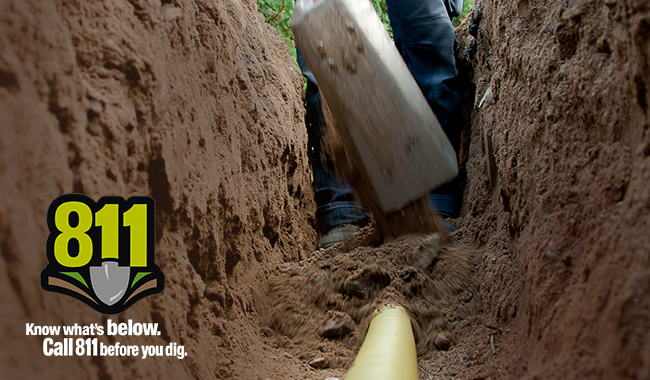
We’d like to remind homeowners and contractors to always call PA One Call at 811 at least three business days before beginning any digging project. The first layer of defense for all excavations is to know where all the underground utility lines are located before you dig.
According to Common Ground Alliance data, an underground utility line is unintentionally damaged by digging once every three minutes nationwide, and one-third of those incidents are caused when no call is made to 811. During 2014, some 34 percent of all PPL Electric Utilities’ dig-in damages were a result of someone neglecting to call PA One Call.
We urge residents and contractors to “Make the 811 Promise” and visit www.the811promise.com. The 811 Promise serves as a reminder to make the call and to also promote the importance of 811. The site features a real-time promise tracker that allows all site visitors to view the campaign’s progress.
We’re advocating The 811 Promise as a simple reminder to always call 811 to avoid accidentally striking an underground utility line.
Spring is traditionally the peak time of the year for digging, and calling 811 is the safe way to learn the approximate location of underground utilities that include gas, electric, phone, Internet, water and sewer.
Throughout April, we’ll be promoting National Safe Digging Month. Won’t you join us?
For more information about 811, visit www.paonecall.org or www.call811.com.
Call 811 Before You Dig – Know What’s Below.

Mar 17, 2015 | Energy Efficiency
This St. Patrick’s Day, along with green food, beverages and attire, you can go green at home. There are so many gadgets on the market that can help you save electricity. I personally love finding tech toys that make saving energy easy, convenient and fun!
I’ve put together a short list of gadgets that are easy to find, easy to install and make saving energy a no-brainer.

Kill-A-Watt Electricity Usage Monitor
Did you ever wonder how much energy your gadgets use – or if they’re using energy even when not in use? All you need to do is plug this monitor into an outlet and plug your electronic device into it. You can measure its energy use and play detective to find out where you might be wasting energy and where you are using the most energy. Pretty cool! Uncover your own energy-saving opportunities or find out what Project Envolve families discovered about their energy use with the Kill-A-Watt monitor.

Programmable or Smart Thermostats
Thermostats can control half of your home’s energy. Half! That’s a pretty big deal. A correctly programmed thermostat can save about 20 percent on your heating and cooling bill, according to nest.com. These thermostats give you total control. You can program the thermostat to avoid wasting energy heating or cooling your home when you’re asleep or away. You can save about 1-3 percent per degree, according to the U.S. Department of Energy. Learn what settings are recommended by the DOE.

Smart Power Strips
Take your power strips to the next level. Smart strips work especially well for entertainment centers. No more gaming systems and accessories drawing phantom power 24/7. Smart power strips will automatically turn your DVD player, game system and other peripherals off when you shut off the television. And you have the ability to always power the DVR. If you have a regular power strip, simply turn the power strip off to turn off all the devices at the same time. Devices left on are wasting energy and your money.

LED Light Bulbs
Replace your light bulbs with LEDs. They use up to 75 percent less energy than incandescent bulbs and last up to 20 times longer. And because they produce light without producing much extra heat, they’re cooler than traditional incandescent bulbs. Through our E-power programs, customers can receive instant in-store discounts on select ENERGY STAR LEDs. Find a participating retailer near you.

Slow Cooker or Microwave
Switch up how you cook and spruce up your recipe repertoire. By using smaller, more efficient appliances like slow cookers and microwaves, you can use less electricity for food preparation. Plus you’ll save time, too. These appliances are very versatile and have the ability to make appetizers, entrees and even desserts.
Occupancy Sensors
If you tend to forget to turn the lights off, consider installing occupancy sensors. They’ll automatically turn the lights on when you enter the room and off when it’s empty. They’re great for the powder room or laundry room.

Solar Exterior Lights
Spring and summer are right around the corner. You can find all sorts of walkway lights and decorative lights to highlight your landscape.

ENERGY STAR
Are you in the market for any new appliances or electronics? Buy ENERGY STAR. You’ll save energy for years to come.
Going green around the house St. Patrick’s Day is easy thanks to these energy-saving gadgets and electronics. How are you going green?

Feb 23, 2015 | Safety and Security
This is a guest post written by Jacque Creamer of PPL Electric Utilities’ Health and Safety group. He also is chief of the Fogelsville Volunteer Fire Department in Lehigh County.
Electrical hazards exist in some form for nearly all of us.
Whether you’re a homeowner working around your yard, a contractor on a job site, or a first responder out on a call, you need to know what to do to stay safe.
Hazards multiply for anyone involved in cleanup and recovery efforts following major disasters and storms. One particular danger exists around downed or low-hanging electrical wires.
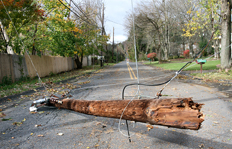
Always consider any downed line to be energized.
Above all else, always consider any downed line to be energized. Be cautious. If you notice downed wires or damaged electrical equipment, contact your utility company. For PPL Electric Utilities, that’s 1-800-DIAL-PPL.
Remember: Electrical circuits don’t always turn off when a power line falls into a tree or onto the ground. Even if they are not sparking or humming, downed power lines can kill you if you touch them. Even the ground nearby can be energized.
Downed wires can energize other objects, including fences, water pipes, bushes and trees, buildings and phone and cable wires. Even manhole covers and reinforcement bars in pavement can become energized by downed wires. During storms, wind-blown objects such as canopies, aluminum roofs, siding, sheds, etc., can also be energized by downed wires.
Here are some rules to live by:
- Do NOT assume a downed wire is safe simply because it is on the ground or is not sparking. Everything should be considered energized until tested to be otherwise.
- Do NOT assume that all coated, weatherproof or insulated wire is just telephone, television or fiber-optic cable.
- Never go near a downed electric power line. Always assume that it is energized. Touching it could be fatal.
- Electricity can spread outward through the ground in a circular pattern from the point of contact. As you move away from the center, large differences in voltages can be created.
- Never drive over downed power lines. Assume that they are energized. Even if downed lines are not energized, they can become entangled in your equipment or vehicle.
- If contact is made with an energized power line while you are in a vehicle, remain calm and do not get out unless the vehicle is on fire. If possible, call for help.
- If you must exit any equipment or vehicle because of fire or other safety reasons, try to jump completely clear, making sure that you do not touch the equipment and the ground at the same time. Land with both feet together and shuffle away in small steps to minimize the path of electric current and avoid electrical shock. Be careful to maintain your balance.
Always stay away, and call 911 and your local utility company. Safety is everyone’s responsibility!

Nov 19, 2014 | Energy Future
We were among the utilities that received a shout out at the White House on Nov. 18 for helping advance the electric vehicle market.
With U.S. Secretary of Energy Ernest Moniz, who cited the industry’s progress and commitment to electric transportation, the Edison Electric Institute (EEI) announced that 73 utilities have committed to spend at least 5 percent of their annual fleet acquisition budgets on plug-in electric vehicles.
For our part toward achieving that goal, next year we plan to purchase 15 Chevrolet Volt plug-in hybrid electric vehicles. We’ve been using three Chevy Volts since the summer of 2011 as part of an industry study to determine the effect of electric cars on the grid.
In September, we were awarded a $116,100 state grant toward the purchase of the Volts, which will be used for field visits and travel between work locations. They will replace 15 older gas-powered cars in our fleet.
The national recognition that the we and our industry peers received is appreciated as we continue our support for the growth of plug-in electric vehicles. We’re using them as part of our business and at the same time showing the public that electric cars are a viable and environmentally conscious means of transportation.
We were one of about 25 utilities in the research project led by the Electric Power Research Institute and General Motors that studied the effect of electric vehicles on the grid.
That study helped us determine that our infrastructure and delivery system can handle the commercial growth of these vehicles.
Oct 6, 2014 | Safety and Security
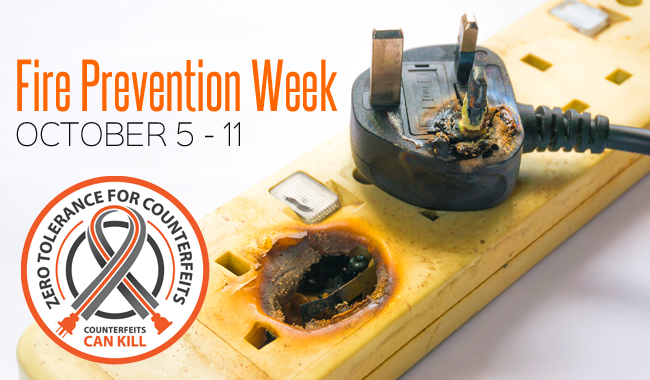
Did you know that 2/3 of deaths from fires happen in homes with no smoke alarms or where smoke alarms aren’t working? This week is Fire Prevention Week, and we want to share tips to help keep you and your family safe.
Smoke detectors can save lives, but only if they’re working properly. The Electrical Safety Foundation International recommends that you:
- Test the batteries in your smoke detectors monthly, and replace the batteries at least yearly.
- Replace the smoke detector itself every 10 years.
- Install at least one smoke detector for every floor of your house, outside each sleeping area and in every bedroom.
Here are some other tips from ESFI:
Avoid counterfeit electrical products – Counterfeit electrical products are a growing problem. ESFI reports that over the past decade, U.S. seizures of counterfeit products have increased more than 325 percent. Cheap cell phone chargers may look like a bargain, but they could damage your phone or cause a fire. Never buy electrical products that don’t have the mark of a nationally recognized testing laboratory such as UL, CSA or ETL.
Install AFCI Outlets – Arc fault circuit interrupters are advanced outlets that shut down power when unsafe conditions are detected. They can reduce the chance of an electrical fire.
Safely use extension cords – Don’t overload an outlet or extension cord, and never use one that has been damaged. More than 3,000 home fires are caused each year by extension cords, according to ESFI.
Pay attention to switches and outlets – Are your switches and outlets working properly? Do they make crackling, buzzing or sizzling sounds? If you notice anything unusual about your switches and outlets, contact a qualified electrician immediately to have them inspected.
Stay safe in the kitchen – Cooking is a leading cause of home fires. Never leave a child alone when you’re cooking or when an electrical appliance is within reach. Don’t leave the stove or toaster oven unattended.
Maintain your clothes dryers – Clean the lint filter after each use, and be sure to keep your vents clear of lint buildup. The lint will reduce the efficiency of your dryer, but more importantly, could cause a fire.
Be cautious when using space heaters – Keep space heaters at least 3 feet away from flammable material such as furniture and blankets. Avoid using extension cords if possible and never leave space heaters turned on while unattended.