Sep 30, 2026 | Customer Service
Economic development plays a growing role in shaping the future of the communities PPL Electric Utilities serves. From supporting new business opportunities to helping communities prepare for long-term growth, the work involves collaboration across teams, organizations and regions. In the Q&A below, Jason Hunt, manager of Business and Economic Development, shares more about what economic development means for PPL Electric, why it matters and what’s ahead.
Q: What is economic development, and what does it mean for PPL Electric?
A: When we’re talking about economic development, we’re talking about more than just bringing in a new business or responding to a site selection consultant’s inquiry about land. The goal is to drive sustainable growth and community vitality across our entire service territory by aligning what businesses need, what community priorities are and identifying long-term investment opportunities.
It’s also an important bridge. Because we work with the state, local leadership and community organizations, we can help tie different players together and position the company as a trusted partner.
Q: Why is economic development important for our company and our customers?
A: We can’t grow as a company unless our communities are growing – so economic development is obviously good for PPL. But it is also good for our customers. It brings new career opportunities, gives people a reason to live and work in our service territory, and supports growth in related industries like suppliers and local businesses. From a utility standpoint, growth supports a broader customer base to share system costs, and large energy users contribute proportionally based on usage—helping lower system costs and support long-term affordability for all customers.
Q: What makes PPL Electric’s approach to economic development different from other utilities?
A: Many utilities once had strong economic development programs, but a lot of them reduced those efforts after deregulation. For PPL Electric, the need to reestablish this work comes from the increasing demand for power — especially from industrial customers. Projects today require more power than they did just a few years ago, which means we need to get involved in the conversation earlier than we have for the last 15 years or so.
This work is also an extension of our Go BEYOND initiative for customer service. These economic development stakeholders aren’t customers yet, but we need to treat them like customers by being responsive, collaborative and solutions-oriented from the beginning.
Q: Where does PPL Electric fit into the site selection process?
A: The site selection process is like a funnel. Companies often begin with a large list of possible locations across several states before narrowing down those options over time.
Our goal is to ensure sites within PPL’s territory stay in the running for as long as possible and ultimately make it to the shortlist. That starts with responsiveness—providing quick, accurate information and helping companies understand timelines, opportunities and potential challenges.
Q: What progress has been made over the past year?
A: One of the first major steps was commissioning a competitiveness analysis to benchmark PPL Electric’s service territory against neighboring regions and national best practices.
The study identified both strengths and opportunities for improvement, including a lack of shovel-ready industrial sites. To address that, the company hired a consultant to evaluate land across its Pennsylvania service territory and identify sites with strong potential for future industrial development.
Communities will ultimately receive recommendations on how to improve those sites and make them more competitive for future projects.
We’ve also worked to strengthen relationships with local economic development organizations by providing technical assistance, training opportunities and employee involvement on local boards.
Q: What’s next for economic development at PPL Electric?
A: A major next step is completing the industrial site study, which is expected to wrap up by the end of the summer.
Another focus area is improving how projects and inquiries are tracked internally by digitizing and streamlining processes so teams across the company can better collaborate and share visibility into projects.
I think fostering that sense of camaraderie and teamwork among people who don’t normally work together on a day-to-day basis is an important ongoing part of the work.
Economic development is still relatively new at PPL Electric, so making sure people are aware of it and know when to involve me is a really important piece of what we’re building.
As PPL Electric continues building its economic development efforts, collaboration across teams and communities will remain a key focus. By strengthening partnerships, improving processes and supporting long-term growth opportunities, the work aims to help position both PPL Electric and the communities it serves for future success.
About Jason
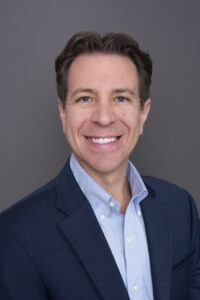
Jason Hunt is the manager of business & economic development for PPL Electric Utilities’ service territory within Pennsylvania. PPL Electric provides electric delivery services to 1.5 million customers in eastern and central Pennsylvania. PPL Electric is part of PPL Corporation which operates and maintains a vast electric delivery system that spans 10,000 square miles and serves a population of more than 3 million.
In his role with PPL Electric, Hunt works to help companies locate and expand their businesses within PPL Electric’s service territory. He works in partnership with consultants, economic developers and state government stakeholders.

Nov 7, 2024 | Community Involvement
As a staple of central and eastern Pennsylvania for over 100 years, we understand the critical importance of economic development. Through our growth as a company, we have powered businesses and empowered growth within communities throughout our 29-county service area.
We are committed to doing what we can to not only attract new businesses to our region, but also supporting the existing businesses and communities that have helped make Pennsylvania what it is today.
One of the ways we support our communities is through the Pennsylvania Department of Economic Development’s (DCED) Neighborhood Partnership Program (NPP). Whether it’s affordable housing, community services, crime prevention, job training or neighborhood assistance, we’re helping support nonprofit agencies working to better their neighborhoods through community development projects. We have been a long-time participant in the NPP program, and we value the positive impact this approach makes in each community.
We are currently assisting six nonprofits across Lancaster, Wilkes-Barre and the Greater Lehigh Valley.
“We could not have the level of beautification that we’ve had in downtown Wilkes-Barre without the assistance of PPL’s NPP contributions,” said Larry Newman, executive director of Wilkes-Barre’s Diamond City Partnership. “Having the partnership with PPL and other contributors allows us to leverage resources and punch far above our weight.”
Here are the six organizations we’re currently partnered with:
Community Action Development of Allentown (CADA) – Upside Allentown
We are involved in a six-year partnership with Upside Allentown to provide support for several youth-serving organizations in distressed Allentown neighborhoods:
- Generation Next at William Allen High School
- AfterZone, Allentown’s after-school initiative
- Allentown Police Department’s Youth Police Academy
- James Lawson Freedom School
Support through our partnership also includes the acquisition and renovation of a community center.
Community Action Development of Bethlehem – Southside Tomorrow
Our six-year partnership with Southside tomorrow seeks to address a number of community-based needs:
- A lack of quality, affordable renter and owner-occupied housing in an area of Bethlehem with the highest percentage of cost-burdened homeowners and renters
- A lack of access to fresh food and grocery stores
- A lack of vegetation and green spaces, as well as quality parks and recreational outlets
- A need for improved lighting and walkability of south Bethlehem
- A need for more connection between the community and the community’s institutions
- Challenges with cleanliness
Diamond City Partnership – Wilkes-Barre
“We work to improve downtown Wilkes-Barre’s environment, image and economy,” Newman said. “We have goals to help improve these areas. The downtown is still feeling the impacts from COVID, and NPP funding is helping us achieve our goals more broadly and at a higher level.”
Our six-year partnership with the Diamond City Partnership supports the nonprofit’s efforts to revitalize and beautify downtown Wilkes-Barre.
“Our goal is to shape a downtown that is a point of pride for everyone in our region, not just the downtown,” Newman said. “You simply cannot have a healthy community or region without a healthy downtown at its core. That’s what drives us every day.”
The organization was highlighted in a recent announcement for the Neighborhood Assistance Program (NAP). The partnership program is a part of the NAP. In an event held at the Diamond City Partnership, Pennsylvania announced it would be doubling its funding for the NAP program from $36 million to $72 million.
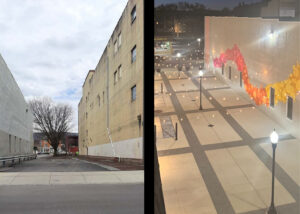
An alley in downtown Wilkes-Barre (left) was cleaned up and revitalized by the Diamond City Partnership. It has been repurposed into the SOMA Arts District (right), a new space for citygoers to visit and enjoy. This project was completed thanks in part to NPP funding.
“It was a chance to showcase to the Commonwealth and the media just what these partnerships can accomplish,” Newman said. “And we’re just very pleased and happy with the support that PPL has provided us because they understand how important this work is. They’ve been there for us.”
Hispanic Center Lehigh Valley
“At the base of our partnership is helping people meet their basic needs,” said Raymond Santiago, executive director of the Hispanic Center. “Meeting these needs allows people to flourish in their education, careers and family life, which in turn helps make a positive impact in the Lehigh Valley.”
Hispanic Center Lehigh Valley is supported on a year-to-year basis through the NAP program. We support economic recovery efforts serving vulnerable populations, with a focus on providing bilingual services to Hispanic/Latino residents. We are also supporting:
- A new bilingual Cultural and Linguistic Workforce Development Center
- The Social Service Program’s case management services
- Programming to support older adults’ health and wellness at the Hispanic Center’s senior center
- Meeting an increased demand for emergency food at the center’s food pantry
“We understand the importance of the work we do in making sure these groups are an active piece of the future of the Lehigh Valley,” Santiago said. “Right now, we’re able to meet the need of the community because of funding from PPL and our other partners.”
Spanish American Civic Association (SACA) – Tec Centro
Our six-year partnership with SACA’s Tec Centro program helps provide basic education and job training to low-income Latino individuals in Lancaster. The funding has helped SACA create two new occupational training areas for broadband training and renewable energy. Funding has also been used to invest in affordable housing, which is helping balance over-gentrification in the community. Furthermore, these contributions have been used to help leverage additional investments from Lancaster City and Lancaster County totaling $1 million. These investments will help develop a welding and metal fabrication occupational training area at Tec Centro.
Tenfold
We also have a six-year partnership with Lancaster’s Tenfold. Tenfold serves low-income residents of the City of Lancaster and Columbia Borough to help those experiencing housing and financial instability due to rising costs, stagnant wages and the aftermath of a global pandemic. The organization is using NPP funds to:
- Make critical home repairs to homeowners
- Support local affordable housing projects
- Provide eviction prevention assistance
The funds are also being used by Tenfold’s Financial Empowerment Center to provide one-on-one financial counseling, as well as workshops on budgeting, savings, improving credit scores and first-time homebuyer’s courses.
We take great pride in our NPP partnerships, and in the work that these organizations are doing to help build up their communities. We also know that these effects will be felt well beyond those directly impacted by these partnerships. A commitment to economic development is a commitment to community, and we look forward to continuing to support the places where we live and work.
“Even before I began working with the Hispanic Center, I worked closely with PPL on a number of campaigns,” Santiago said. “I know how much they care. It’s not only about the financial support, but also the time and talent that PPL employees donate.”
Feb 21, 2024 | Community Involvement
Being part of the communities we serve goes beyond delivering safe, reliable electricity. Through PPL Foundation Empowering Communities Grants, we support local programs focused on environmental stewardship and education, economic development and/or workforce development.
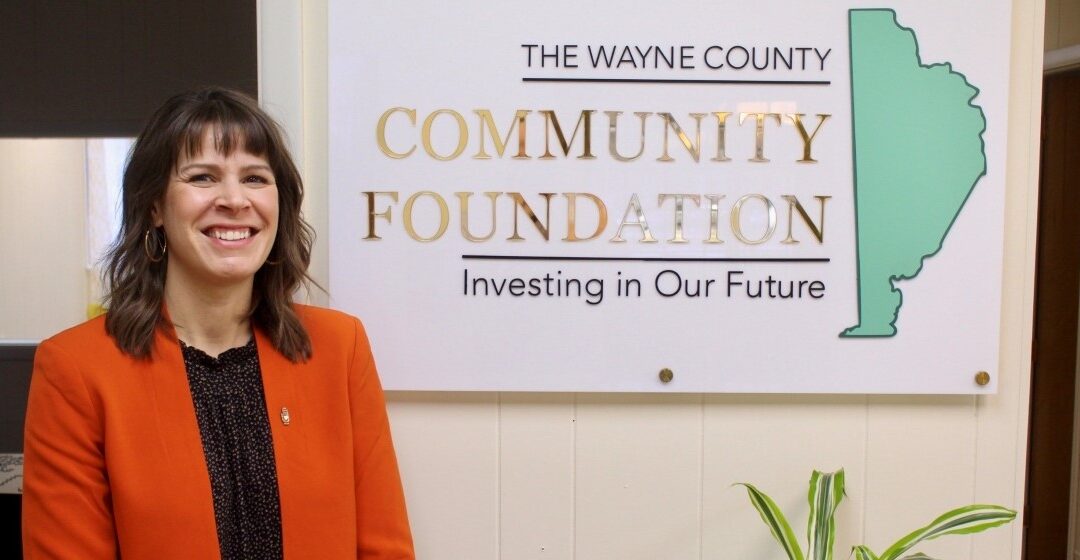
The Wayne County Community Foundation, located in Honesdale, is a recent PPL Foundation grant recipient. The Community Foundation is allocating these dollars toward supporting its Worker Crisis Relief fund. For 30 years, the organization has used resources from the community to help those in need. The Worker Crisis Relief fund is one of almost 150 different funds established to address areas of need.
“Our goal is to improve the quality of life for everyone here in Wayne County,” said Ryanne Jennings, president and CEO of the Wayne County Community Foundation. “That involves addressing poverty at a systemic level.”
Located in rural northeast Pennsylvania, Wayne County presents challenges for employees with transportation issues. The Worker Crisis Relief fund has mostly helped cover expenses for repairs and down payments on used vehicles. The Community Foundation works with the Wayne Pike Workforce Alliance to find the best solution for funding.
“A car is an essential item in this area,” Jennings said. “It’s not only essential for working, it also keeps families in their homes and provides food security.”
“This fund has been a valuable resource for several community members who have faced a crisis and needed immediate assistance,” said Katheryne Hait, executive director of the Wayne Pike Workforce Alliance. “By partnering with the Community Foundation, we have been able to help these individuals bounce back quickly and regain stability in their lives.”
The fund has helped 10 people address transportation issues since it began over a year ago. Jennings says she hopes the foundation can expand in the coming years to continue to meet the evolving variety of needs of the community.
“The word ‘empowering’ is a strong one; that’s what this Worker Crisis Relief fund does,” Jennings said. “We want to say that, as a community, and PPL is included in that community, we are here to support people when they need it the most. The empowerment is a big reason why we sought this funding.”