Oct 6, 2026 | Safety and Security
Fire Prevention Week (October 4-10) is a great time to think about how we can keep our homes and families safe. According to the Electrical Safety Foundation International (ESFI), home electrical fires are responsible for around 500 deaths, 1,400 injuries and $1.3 billion in property damage.
The good news is that many house fires can be prevented by following a few simple electrical safety tips. Electricity powers our everyday lives, but it should always be treated with care.
Here are some important reminders to help prevent electrical fires:
Check your power cords
Take a look at the cords around your home. If a cord is frayed, cracked, or damaged, replace it right away. Never put nails, staples, or other objects through electrical cords because they can damage the protective covering and create a fire hazard.
Don’t force plugs into outlets
Plugs should fit securely into outlets. If a plug feels loose or needs to be forced into place, stop using it and have the outlet inspected. Damaged outlets can increase the risk of electrical problems and fires.
Use the right light bulbs
Always use light bulbs with the recommended wattage for your lamp or fixture. Using bulbs that are too powerful can cause overheating and potentially start a fire.
Be careful with space heaters
When the weather gets cold, many people use space heaters. Keep them on a flat surface and away from furniture, curtains, blankets, and other flammable materials. Never plug a space heater into an extension cord or power strip, and don’t leave it running unattended.
Protect areas near water
Bathrooms, kitchens, and other places where water is present should have Ground Fault Circuit Interrupters (GFCIs). These safety devices can quickly shut off power if they detect a problem, helping to prevent shocks and electrical hazards.
A few simple safety habits can make a big difference. This Fire Prevention Week, take a few minutes to check your home’s electrical equipment and talk with your family about electrical safety. Working together can help keep everyone safe and reduce the risk of electrical fires.
Sep 30, 2026 | Customer Service
Economic development plays a growing role in shaping the future of the communities PPL Electric Utilities serves. From supporting new business opportunities to helping communities prepare for long-term growth, the work involves collaboration across teams, organizations and regions. In the Q&A below, Jason Hunt, manager of Business and Economic Development, shares more about what economic development means for PPL Electric, why it matters and what’s ahead.
Q: What is economic development, and what does it mean for PPL Electric?
A: When we’re talking about economic development, we’re talking about more than just bringing in a new business or responding to a site selection consultant’s inquiry about land. The goal is to drive sustainable growth and community vitality across our entire service territory by aligning what businesses need, what community priorities are and identifying long-term investment opportunities.
It’s also an important bridge. Because we work with the state, local leadership and community organizations, we can help tie different players together and position the company as a trusted partner.

Q: Why is economic development important for our company and our customers?
A: We can’t grow as a company unless our communities are growing – so economic development is obviously good for PPL. But it is also good for our customers. It brings new career opportunities, gives people a reason to live and work in our service territory, and supports growth in related industries like suppliers and local businesses. From a utility standpoint, growth supports a broader customer base to share system costs, and large energy users contribute proportionally based on usage—helping lower system costs and support long-term affordability for all customers.
Q: What makes PPL Electric’s approach to economic development different from other utilities?
A: Many utilities once had strong economic development programs, but a lot of them reduced those efforts after deregulation. For PPL Electric, the need to reestablish this work comes from the increasing demand for power — especially from industrial customers. Projects today require more power than they did just a few years ago, which means we need to get involved in the conversation earlier than we have for the last 15 years or so.
This work is also an extension of our Go BEYOND initiative for customer service. These economic development stakeholders aren’t customers yet, but we need to treat them like customers by being responsive, collaborative and solutions-oriented from the beginning.
Q: Where does PPL Electric fit into the site selection process?
A: The site selection process is like a funnel. Companies often begin with a large list of possible locations across several states before narrowing down those options over time.
Our goal is to ensure sites within PPL’s territory stay in the running for as long as possible and ultimately make it to the shortlist. That starts with responsiveness—providing quick, accurate information and helping companies understand timelines, opportunities and potential challenges.
Q: What progress has been made over the past year?
A: One of the first major steps was commissioning a competitiveness analysis to benchmark PPL Electric’s service territory against neighboring regions and national best practices.
The study identified both strengths and opportunities for improvement, including a lack of shovel-ready industrial sites. To address that, the company hired a consultant to evaluate land across its Pennsylvania service territory and identify sites with strong potential for future industrial development.
Communities will ultimately receive recommendations on how to improve those sites and make them more competitive for future projects.
We’ve also worked to strengthen relationships with local economic development organizations by providing technical assistance, training opportunities and employee involvement on local boards.
Q: What’s next for economic development at PPL Electric?
A: A major next step is completing the industrial site study, which is expected to wrap up by the end of the summer.
Another focus area is improving how projects and inquiries are tracked internally by digitizing and streamlining processes so teams across the company can better collaborate and share visibility into projects.
I think fostering that sense of camaraderie and teamwork among people who don’t normally work together on a day-to-day basis is an important ongoing part of the work.
Economic development is still relatively new at PPL Electric, so making sure people are aware of it and know when to involve me is a really important piece of what we’re building.
As PPL Electric continues building its economic development efforts, collaboration across teams and communities will remain a key focus. By strengthening partnerships, improving processes and supporting long-term growth opportunities, the work aims to help position both PPL Electric and the communities it serves for future success.
About Jason
Jason Hunt is the manager of business & economic development for PPL Electric Utilities’ service territory within Pennsylvania. PPL Electric provides electric delivery services to 1.5 million customers in eastern and central Pennsylvania. PPL Electric is part of PPL Corporation which operates and maintains a vast electric delivery system that spans 10,000 square miles and serves a population of more than 3 million.
In his role with PPL Electric, Hunt works to help companies locate and expand their businesses within PPL Electric’s service territory. He works in partnership with consultants, economic developers and state government stakeholders.
Sep 29, 2026 | Safety and Security
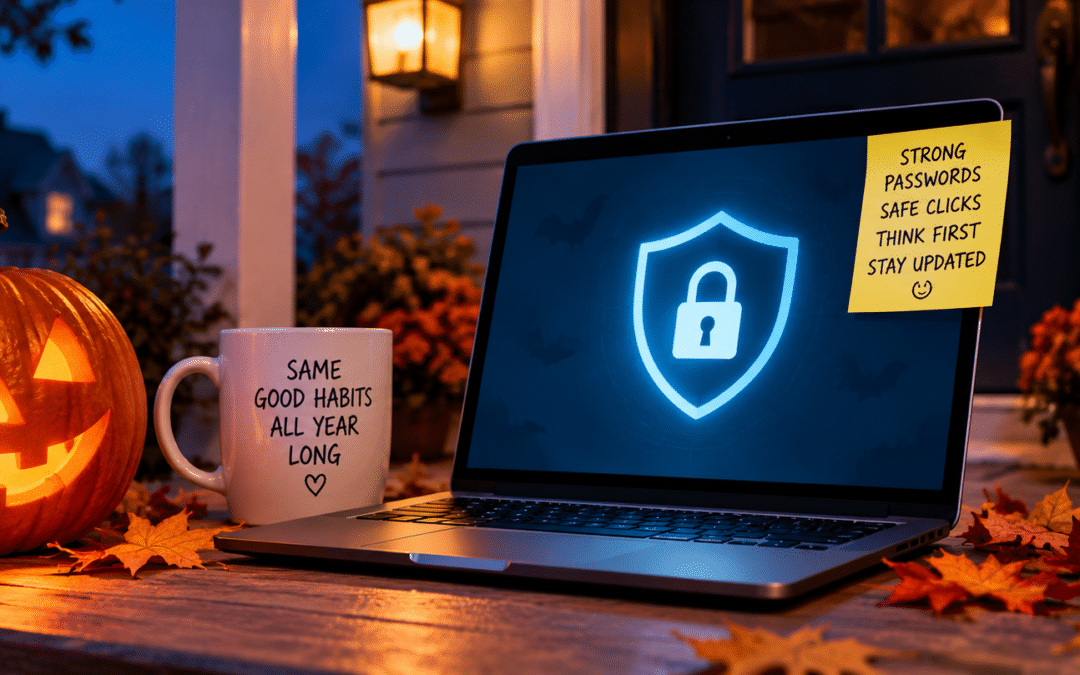
October brings pumpkins, costumes and trick-or-treating. It’s also Cybersecurity Awareness Month — a good reminder that some of the scariest tricks aren’t at your front door. They can show up in your inbox, text messages or search results.
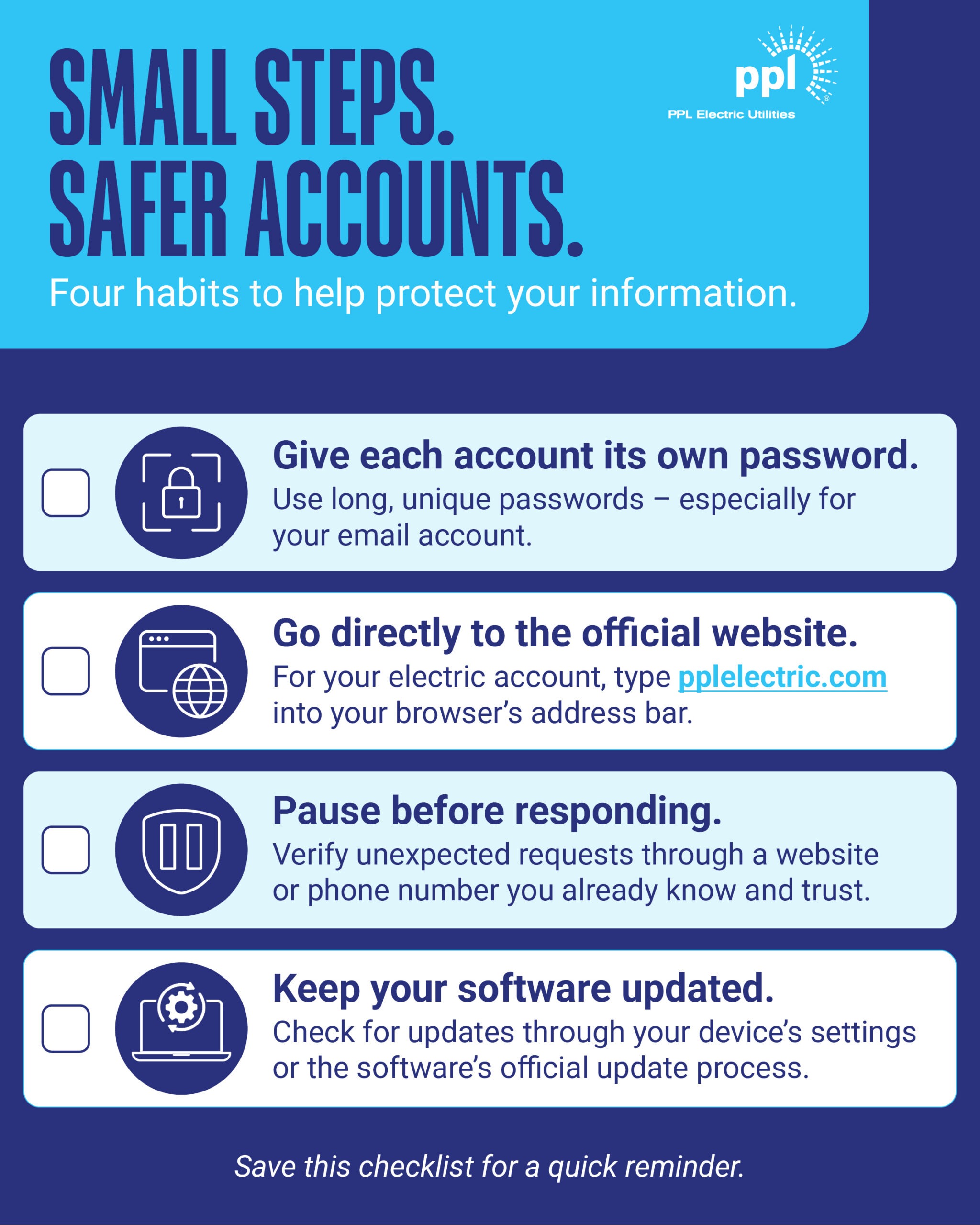
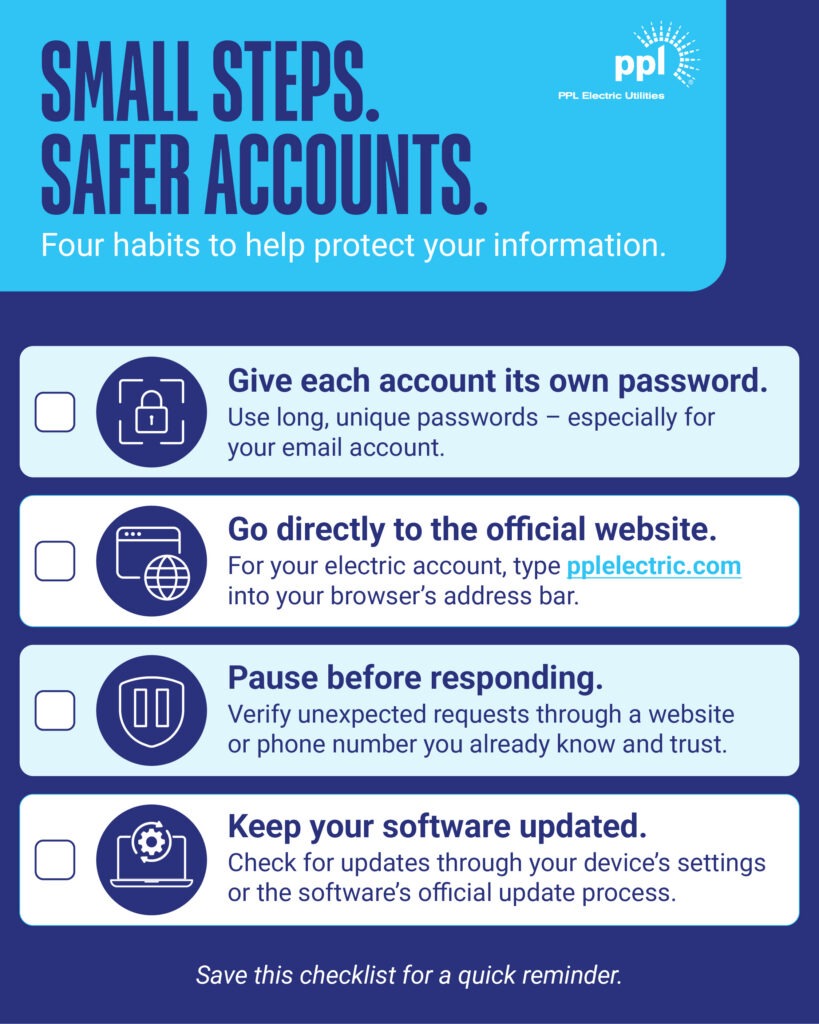
The good news: You don’t need to be a technology expert to protect yourself. A few smart habits can help you spot the tricks, avoid the traps and keep your electric account — and other online accounts — safer.
1. Don’t let one password unlock the whole haunted house.
Reusing the same password across several accounts may feel convenient, but it can put more than one account at risk. If a scammer gets that password, they may try it on your email, banking, shopping or utility accounts.
Choose a long, unique password for each account. A password manager can help you create and store different passwords so you don’t have to memorize them all.
Another option is a passphrase: several random words used together as a password. Avoid familiar sayings, song lyrics or movie quotes that could be easier to guess.
What does a passphrase look like? Think of unrelated words strung together, such as “cactus ribbon planet otter velvet lantern.” This is just an example — not a password to copy. Create your own combination and use it for only one account.
Give your email account special attention. Password-reset links for other accounts often arrive in your inbox. Someone who gets into your email could use those links to gain access to other accounts, so protecting your inbox helps protect more than your messages.
A useful first step: Replace a password you’ve reused with one you don’t use anywhere else.
2. Look twice before you enter the digital doorway.
Scammers can set up lookalike websites or buy search ads that use a trusted company’s name. At a glance, those pages can seem legitimate — but they may be designed to collect payments, passwords or personal information.
For your PPL Electric account, type pplelectric.com directly into your browser’s address bar, rather than searching for a payment page. Don’t assume a search result or advertisement belongs to PPL Electric just because it includes our name.
The same habit applies to other bills: use the website address or phone number printed on your bill instead of relying on unfamiliar search results.
3. Treat urgent messages like a jump scare: pause first.
An unexpected text says your bill is overdue. An email claims there’s a problem with your payment information. A message asks you to confirm account details right away. These urgent requests can be a trick to get you to share information or follow a harmful link. A familiar company name or logo can be part of the disguise — it doesn’t prove a message is legitimate.
Before responding, check the request through a separate, trusted channel. Don’t click suspicious links or open unexpected attachments. Use a website or phone number you already know is legitimate — not the contact information provided in the questionable message.
For a message about your PPL Electric account, open your browser and type pplelectric.com directly into the address bar to check your account. You can also call 1-800-342-5775 to verify a concern. You don’t have to decide whether a message is real based on its appearance alone.
4. Keep your devices from turning into a haunted house.
Software updates aren’t just about new features or a fresher look. They can also fix security weaknesses in the phones, computers, browsers and apps you use to manage your accounts. Install available updates and turn on automatic updates where available.
Be careful about where you get those updates. Scammers also advertise fake software downloads and use pop-up security warnings to get people to contact fraudulent tech-support services. Don’t follow an unfamiliar download advertisement or call a number displayed in an unexpected security pop-up.
Instead, check for updates through your device settings or the software’s official update process. Start with the phone or computer you use to pay bills or check email, and check whether automatic updates are turned on.
If the trick worked, take action quickly.
There are steps you can take. If you shared a password, change it through the account’s official website and on any other account where you used the same password. If you paid a scammer, promptly contact the bank, card issuer, or payment service you used and ask whether the payment can be reversed.
If you think a scammer has your personal or financial information, the Federal Trade Commission’s IdentityTheft.gov website provides steps based on the information involved.
This fall, make cybersecurity part of your routine.
Start with one simple step today: replace a reused password, check your device for updates or go directly to the official website before signing in. Small habits like these can help you avoid online tricks — not just at Halloween, but all year long.
For more information about recognizing and avoiding utility scams, visit pplelectric.com/scams. To verify a concern or report a suspected PPL Electric scam, call 1-800-342-5775.
Sep 15, 2026 | Environment
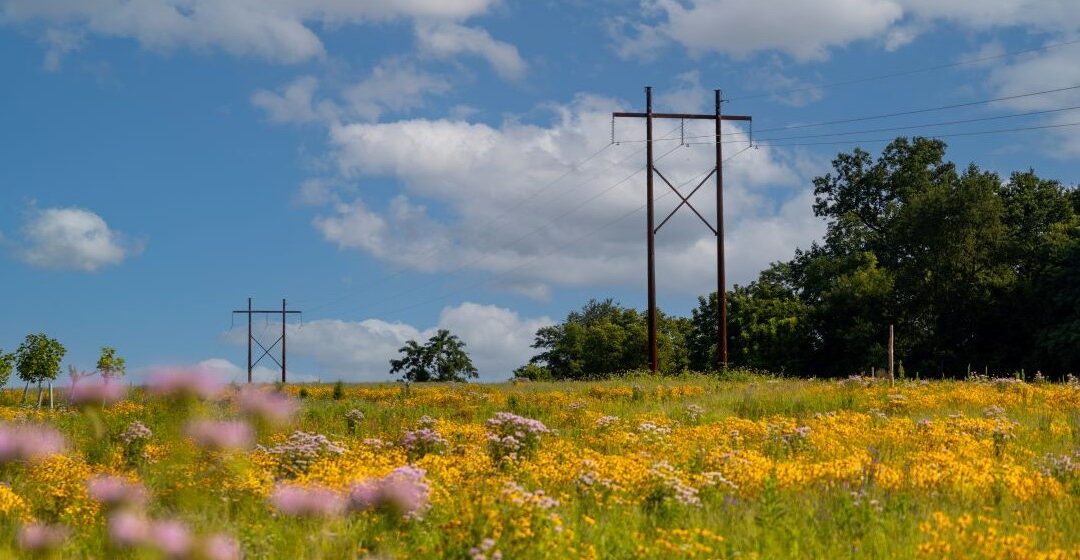
Wildflowers swaying in the summer breeze. Butterflies drifting from bloom to bloom. Bees buzzing among a colorful meadow of native plants. Visitors walking the trails at Lancaster Conservancy’s Safe Harbor Nature Preserve can now experience a landscape bursting with life and color.
Just a short time ago, this thriving habitat consisted of only farm-like grasslands.
“Woodlands are crucial, but these functioning meadows have been steadily declining, leading to declines in nesting birds and pollinator species,” said Eric Roper, a forester for the Lancaster Conservancy. “When we can create these havens to provide habitats for all these important species, it also has an impact on us and our way of life.”
The story of this transformation actually began more than a decade ago. In 2011, PPL Electric Utilities donated the land that now makes up Safe Harbor Nature Preserve to Lancaster Conservancy as part of a major conservation effort. Today, the 213-acre preserve contains a mix of fields, forests and woodland edges that provide habitat for a wide variety of wildlife and outdoor recreation opportunities for the community.
Then, in 2024, our teams returned to the preserve for an important reliability improvement project. Crews replaced 52 transmission poles — many stretching through the corridor at Safe Harbor — to help maintain reliable electric service for communities in and around West Hempfield Township and the surrounding communities.
When the work was complete, the conservancy saw an opportunity and worked with us to create something more than a utility corridor.
Together, the organizations developed a habitat enhancement plan for the transmission right-of-way. The goal was to establish the right mix of native plants and shrubs that would support wildlife while remaining compatible with the safe operation and maintenance of the electric transmission system. PPL Electric also provided some of the native plant and shrub species now seen in the meadow.

“To see the preserve where it’s at today, it’s pretty amazing,” said Tom Eby, lead environmental professional at PPL Electric Utilities. “During the project, it looked nothing like it does now, so it really is nice to see all the wildlife out here and open it up to the public.”
Over the next two years, those newly planted species took root and flourished.
As of the summer of 2026, the corridor has transformed into a sprawling native meadow. The area now provides food and shelter for pollinators and other wildlife while creating a beautiful natural experience for visitors, who can walk directly through the meadow along public trails.
The success at Safe Harbor builds on an ongoing partnership between PPL Electric and the Lancaster Conservancy. The organizations previously worked together at Kellys Run Nature Preserve, where a native pollinator habitat was established within a transmission line corridor. That project expanded pollinator-friendly meadows and created valuable habitat for bees, butterflies, moths and other species.
“It’s great to have a partnership like this where we can help them while they help us,” Eby said. “Really, it’s about the environment and the public benefiting from this collaboration.”
At Safe Harbor, the results are easy to see. What was once simply a right-of-way beneath power lines has become a vibrant native landscape that supports wildlife, welcomes visitors and demonstrates how reliable energy infrastructure and environmental stewardship can grow side by side.

Sep 1, 2026 | Safety and Security
Get prepared with our Emergency Preparedness Guide.
September is National Preparedness Month, a time to think about how we can protect ourselves, our families and our communities when unexpected emergencies happen. Whether it’s a severe storm, a power outage or another type of emergency, being prepared can make all the difference.
At PPL Electric, preparedness is something we focus on all year long. We strengthen and modernize the energy grid, monitor the health of the electric system, use technology to identify needed repairs and invest in smart grid technology that can automatically reroute power around trouble spots. We also closely monitor weather forecasts and prepare additional crews and resources when severe weather is expected so we can respond safely and efficiently when outages occur.
We work year-round to prepare for storms and emergencies, and we encourage our customers to do the same. National Preparedness Month is the perfect reminder to review your plans, refresh your supplies and make sure you know how to stay informed.
Create an Emergency Plan
One of the most important things you can do before an emergency is create a plan. When a storm or power outage happens, it’s much easier to stay calm and focused if you’ve already thought through what your family will do. Knowing where to go, who to contact and what supplies you’ll need can help keep everyone safe.
Start by talking with your family about different scenarios, such as severe weather, extended power outages or other emergencies. Identify a meeting place, make sure everyone knows how to contact one another and practice your plan regularly.
As you build your plan, ask yourself:
- Does everyone know who to contact if an emergency happens while family members are in different locations?
- Does everyone know where to meet if communication is difficult?
- Have you planned for the needs of children, pets or family members with medical conditions?
- Do you have enough supplies to get through several days if services are disrupted?
- Does everyone know where to find emergency information and updates?
It’s also a good idea to keep a paper copy of important contacts. If your phone battery dies or cell service is unavailable, you’ll still have access to the numbers you need.
Even if your family already has an emergency plan, September is a great time to review it and make sure it still meets your current needs. Families change, and your preparedness plan should change with them.
Assemble an Emergency Kit
A well-stocked emergency kit can help your family stay safe and comfortable during an emergency. Experts recommend having enough supplies to last at least three days.
Your emergency kit should include:
Food and Water
Store enough non-perishable food and water for every member of your household. Foods such as canned goods, granola bars and other shelf-stable items work well. Don’t forget a manual can opener if you’re storing canned food. Plan for approximately one gallon of water per person per day.
Flashlights and Batteries
Keep flashlights available throughout your home along with extra batteries. Flashlights are a much safer option than candles, which can create a fire hazard during a power outage.
First Aid and Medications
Include a first aid kit with bandages, antiseptic supplies and any prescription medications your family may need. You may also want to keep common over-the-counter medicines on hand.
Communication Tools
A battery-powered or hand-crank radio can help you receive important news and weather updates if internet or cellular service is limited. A portable phone charger is also a valuable addition to any emergency kit.
Clothing and Comfort Items
Pack blankets, warm clothing and other seasonal items that may be needed if temperatures change. Emergencies can happen at any time of year, so plan accordingly.
Hygiene and Personal Care Items
Include basic hygiene supplies such as hand sanitizer, wet wipes, toothpaste and toothbrushes. Families with infants or young children should also pack diapers and baby wipes.
Important Documents
Store copies of important documents, insurance information and emergency contact lists in a waterproof container. Having quick access to these documents can be extremely helpful during an emergency.
Once your kit is assembled, place everything in a sturdy container and store it somewhere that is easy to access. Make sure everyone in your household knows where it is located.
Stay Informed and Stay Connected
During an emergency, information is one of your most important tools. Staying informed can help you make good decisions, stay safe and know what to expect.
Before severe weather arrives, sign up for local emergency alerts and pay close attention to weather forecasts. Charge phones and other devices and keep backup charging options available.
PPL Electric customers can also stay connected in several ways:
- Report outages online at pplelectric.com, via the PPL Electric mobile app or by texting “Outage” to TXTPPL (898775).
- Follow PPL Electric on social media for storm preparation, outage and restoration updates.
It’s also a good idea to keep a battery-powered radio nearby and maintain a written list of important phone numbers in case electronic devices become unavailable.
Preparedness Starts Today
Emergencies rarely happen when it’s convenient. That’s why National Preparedness Month serves as an important reminder to take simple steps today that can make a big difference tomorrow — create an emergency plan, build an emergency kit and stay informed.
Preparedness isn’t about expecting the worst — it’s about being ready for the unexpected. The more prepared you are today, the more confident and resilient you’ll be when challenges arise.