Nov 7, 2024 | Community Involvement
As a staple of central and eastern Pennsylvania for over 100 years, we understand the critical importance of economic development. Through our growth as a company, we have powered businesses and empowered growth within communities throughout our 29-county service area.
We are committed to doing what we can to not only attract new businesses to our region, but also supporting the existing businesses and communities that have helped make Pennsylvania what it is today.
One of the ways we support our communities is through the Pennsylvania Department of Economic Development’s (DCED) Neighborhood Partnership Program (NPP). Whether it’s affordable housing, community services, crime prevention, job training or neighborhood assistance, we’re helping support nonprofit agencies working to better their neighborhoods through community development projects. We have been a long-time participant in the NPP program, and we value the positive impact this approach makes in each community.
We are currently assisting six nonprofits across Lancaster, Wilkes-Barre and the Greater Lehigh Valley.
“We could not have the level of beautification that we’ve had in downtown Wilkes-Barre without the assistance of PPL’s NPP contributions,” said Larry Newman, executive director of Wilkes-Barre’s Diamond City Partnership. “Having the partnership with PPL and other contributors allows us to leverage resources and punch far above our weight.”
Here are the six organizations we’re currently partnered with:
Community Action Development of Allentown (CADA) – Upside Allentown
We are involved in a six-year partnership with Upside Allentown to provide support for several youth-serving organizations in distressed Allentown neighborhoods:
- Generation Next at William Allen High School
- AfterZone, Allentown’s after-school initiative
- Allentown Police Department’s Youth Police Academy
- James Lawson Freedom School
Support through our partnership also includes the acquisition and renovation of a community center.
Community Action Development of Bethlehem – Southside Tomorrow
Our six-year partnership with Southside tomorrow seeks to address a number of community-based needs:
- A lack of quality, affordable renter and owner-occupied housing in an area of Bethlehem with the highest percentage of cost-burdened homeowners and renters
- A lack of access to fresh food and grocery stores
- A lack of vegetation and green spaces, as well as quality parks and recreational outlets
- A need for improved lighting and walkability of south Bethlehem
- A need for more connection between the community and the community’s institutions
- Challenges with cleanliness
Diamond City Partnership – Wilkes-Barre
“We work to improve downtown Wilkes-Barre’s environment, image and economy,” Newman said. “We have goals to help improve these areas. The downtown is still feeling the impacts from COVID, and NPP funding is helping us achieve our goals more broadly and at a higher level.”
Our six-year partnership with the Diamond City Partnership supports the nonprofit’s efforts to revitalize and beautify downtown Wilkes-Barre.
“Our goal is to shape a downtown that is a point of pride for everyone in our region, not just the downtown,” Newman said. “You simply cannot have a healthy community or region without a healthy downtown at its core. That’s what drives us every day.”
The organization was highlighted in a recent announcement for the Neighborhood Assistance Program (NAP). The partnership program is a part of the NAP. In an event held at the Diamond City Partnership, Pennsylvania announced it would be doubling its funding for the NAP program from $36 million to $72 million.
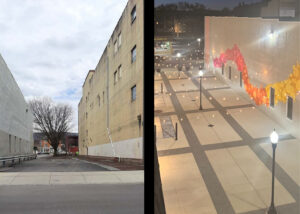
An alley in downtown Wilkes-Barre (left) was cleaned up and revitalized by the Diamond City Partnership. It has been repurposed into the SOMA Arts District (right), a new space for citygoers to visit and enjoy. This project was completed thanks in part to NPP funding.
“It was a chance to showcase to the Commonwealth and the media just what these partnerships can accomplish,” Newman said. “And we’re just very pleased and happy with the support that PPL has provided us because they understand how important this work is. They’ve been there for us.”
Hispanic Center Lehigh Valley
“At the base of our partnership is helping people meet their basic needs,” said Raymond Santiago, executive director of the Hispanic Center. “Meeting these needs allows people to flourish in their education, careers and family life, which in turn helps make a positive impact in the Lehigh Valley.”
Hispanic Center Lehigh Valley is supported on a year-to-year basis through the NAP program. We support economic recovery efforts serving vulnerable populations, with a focus on providing bilingual services to Hispanic/Latino residents. We are also supporting:
- A new bilingual Cultural and Linguistic Workforce Development Center
- The Social Service Program’s case management services
- Programming to support older adults’ health and wellness at the Hispanic Center’s senior center
- Meeting an increased demand for emergency food at the center’s food pantry
“We understand the importance of the work we do in making sure these groups are an active piece of the future of the Lehigh Valley,” Santiago said. “Right now, we’re able to meet the need of the community because of funding from PPL and our other partners.”
Spanish American Civic Association (SACA) – Tec Centro
Our six-year partnership with SACA’s Tec Centro program helps provide basic education and job training to low-income Latino individuals in Lancaster. The funding has helped SACA create two new occupational training areas for broadband training and renewable energy. Funding has also been used to invest in affordable housing, which is helping balance over-gentrification in the community. Furthermore, these contributions have been used to help leverage additional investments from Lancaster City and Lancaster County totaling $1 million. These investments will help develop a welding and metal fabrication occupational training area at Tec Centro.
Tenfold
We also have a six-year partnership with Lancaster’s Tenfold. Tenfold serves low-income residents of the City of Lancaster and Columbia Borough to help those experiencing housing and financial instability due to rising costs, stagnant wages and the aftermath of a global pandemic. The organization is using NPP funds to:
- Make critical home repairs to homeowners
- Support local affordable housing projects
- Provide eviction prevention assistance
The funds are also being used by Tenfold’s Financial Empowerment Center to provide one-on-one financial counseling, as well as workshops on budgeting, savings, improving credit scores and first-time homebuyer’s courses.
We take great pride in our NPP partnerships, and in the work that these organizations are doing to help build up their communities. We also know that these effects will be felt well beyond those directly impacted by these partnerships. A commitment to economic development is a commitment to community, and we look forward to continuing to support the places where we live and work.
“Even before I began working with the Hispanic Center, I worked closely with PPL on a number of campaigns,” Santiago said. “I know how much they care. It’s not only about the financial support, but also the time and talent that PPL employees donate.”
Oct 25, 2024 | Community Involvement
VIDEO: PPL making fitness accessible to all at the Bloomsburg Area YMCA
Through its grants, the PPL Foundation invests in building communities. There are a number of grant cycles year-round that support different initiatives. Every summer, the foundation awards Powering Equity grants to organizations that specifically work to promote greater equity and inclusion in the neighborhoods we serve.
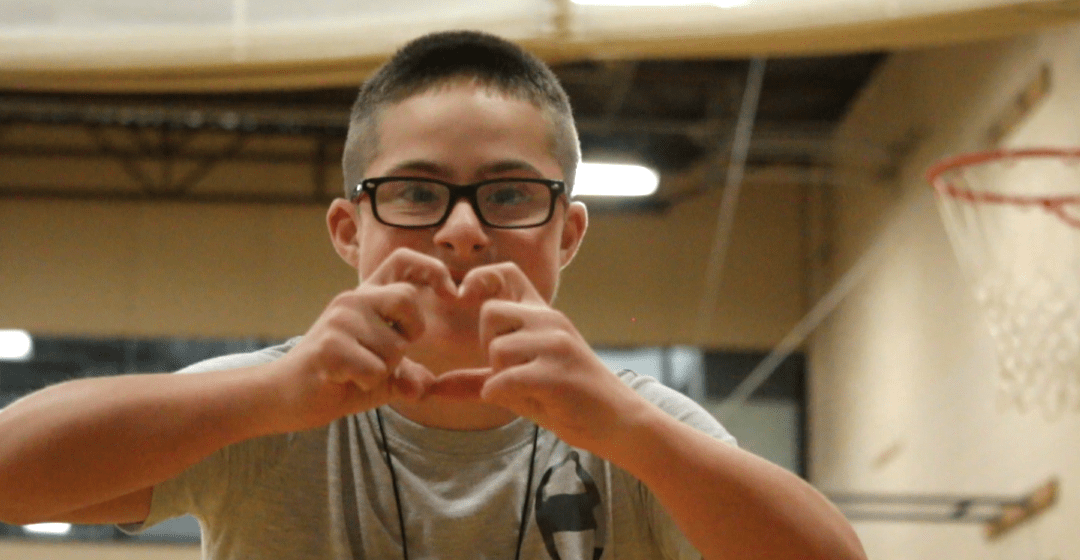
The Bloomsburg Area YMCA is a recent recipient of a Powering Equity grant. It serves Columbia and Montour counties and is dedicated to youth development, healthy living and social responsibility. The YMCA is using the Powering Equity grant to support its growing Adaptive Health and Recreation Program for children with disabilities.
“This adaptive program is meant for kids ages three to 13,” said Collin Benfield, director of programs and membership development at the YMCA. “We try to offer a myriad of different sporting and recreational opportunities for kids that may not otherwise get them in a safe manner and in a manner that helps aid their physical therapy.”
The program kicked off in 2023, and it is currently offering its second cycle of classes. It’s quickly becoming popular in the area, growing from 10 children to 22 in the first year.
“The kids and the families love it,” said Wayne Stump, chief executive officer at the YMCA. “It’s evidenced by just how quickly this program has grown.”
There are two sessions during the year during the spring and fall. The current fall session is held on Wednesday nights, which is becoming the highlight of these kids’ weeks.
“Their feedback is that they want it more often – every day, if they could,” Benfield said. “It feels amazing knowing that we’re providing wellness for all…regardless of ability or disability.”
As the program expands and the numbers grow, the need for funding becomes more important.
“We wouldn’t be able to do it without the funding that we do get. We’re really appreciative of the PPL Foundation and others,” Stump said. “With the amount of costs that families have, this might be a burden if they had to pay for it.”
The YMCA says it looks forward to accepting more kids into the program and continuing to provide accessibility to all.
“To me and the rest of the grants committee, when programs benefit a wide range of diverse groups, that really makes them special,” said Jonah Howe, PPL Electric Utilities’ regional affairs director in the area. “We’re proud to support the Adaptive Health Program at the Bloomsburg YMCA.”
Oct 1, 2024 | Community Involvement
We value more than delivering safe and reliable power to our 1.5 million customers. For over 100 years, we’ve served communities throughout central and eastern Pennsylvania, not just because it’s our job, but because this is our home. It’s where our children go to school. We’re all neighbors.
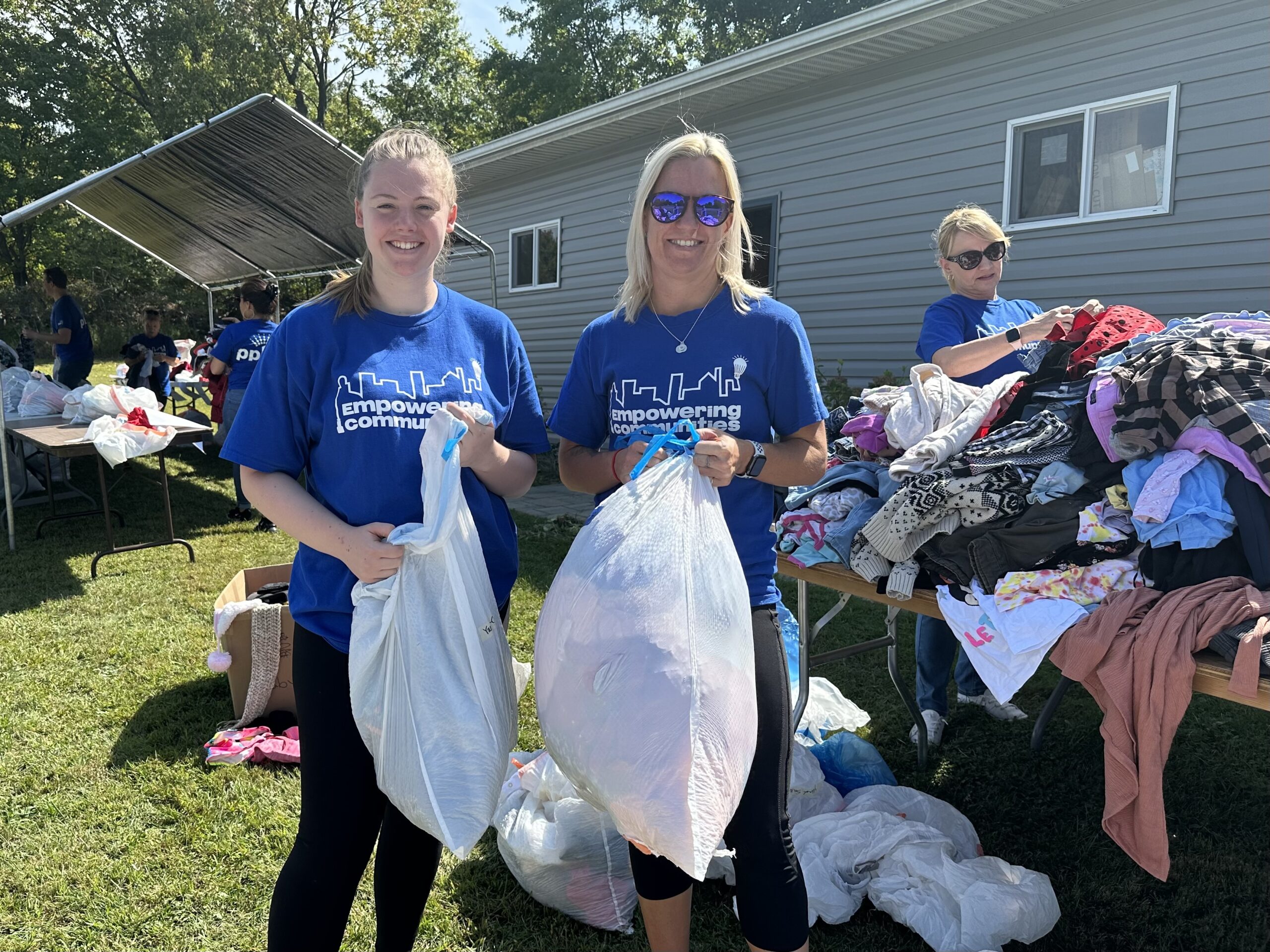
That’s why we’re proud to support our communities in a number of ways, including volunteerism. Over 460 PPL employees recently took part in the United Way’s annual Day of Caring. Our employees painted, planted, packed, shopped and beautified 20 different organizations across our service area.
It takes a lot of coordination to make this come together. A team captain from PPL was assigned to each of the 20 organizations. The captains worked with the organizations to address their biggest needs and figure out how to provide the most assistance possible with our groups. From there, captains worked with their fellow volunteers to organize supplies and execute safety protocols.
This event is always our favorite. More PPL employees join in to make a positive impact in their communities every year. In fact, our participation has more than doubled over the last two years. In addition to the United Way’s Day of Caring, we follow up our efforts with a Family Day of Caring. This allows for our employees to share in this great work with their loved ones.
We look forward to keeping this momentum going, and we can’t wait to go even bigger in 2025.
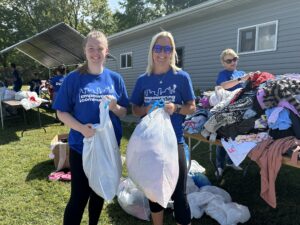
In the meantime, we’re excited to continue this commitment to our neighborhoods. We take part in countless volunteer events year-round. In 2023, our employees volunteered over 15,000 hours. That equals more than one full day of volunteering each year for each of our 1,700 employees.
Giving back isn’t something we do because it looks good on paper, it is in the fabric of who we are.

Aug 20, 2024 | Community Involvement
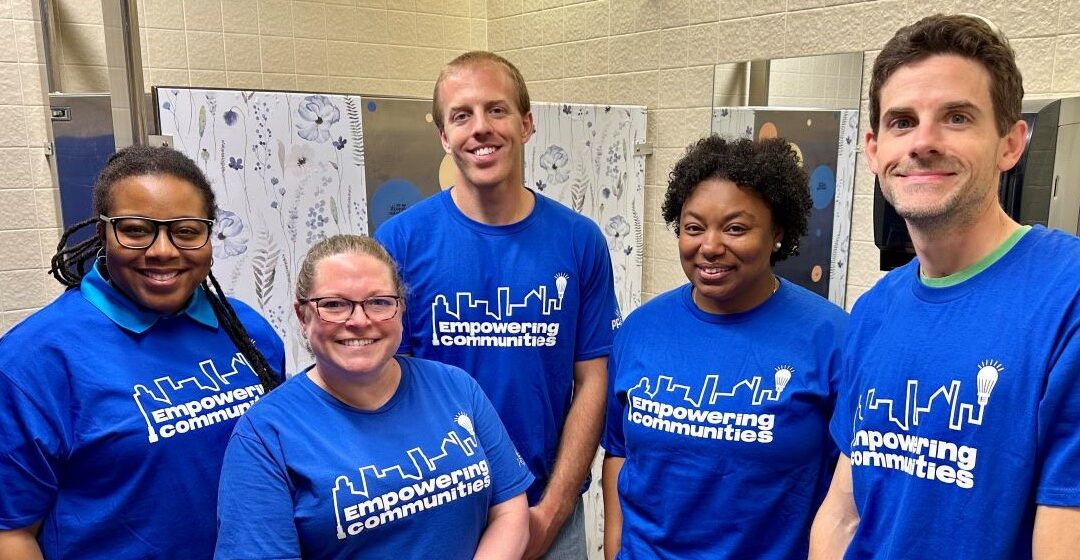
Being part of the communities we serve goes well beyond delivering safe, reliable electricity. Through PPL Foundation’s Empowering Communities grants, we support local programs focused on environmental stewardship and education, economic development and/or workforce development.
Lehigh Carbon Community College in Schnecksville is a recent recipient of an Empowering Communities grant. The college used this funding to both buy new heating, ventilation and air conditioning (HVAC) equipment and update older equipment for its students to use in the classroom.
“We teach the students the basics for refrigeration and air conditioning, and we push a lot of hands-on learning,” said Tim Brady, associate professor of the HVAC program at LCCC. “So, we need to maintain equipment that keeps up with the changes and certifications in the industry.”
The new equipment, which includes a refrigeration training unit and hydrocarbon and carbon dioxide manifolds, was introduced and used for the first time this year during LCCC’s summer session. Roughly 50 more students will benefit from these new tools during the fall semester.
“When we initially purchased the equipment in October of 2023, it felt like Christmas came early,” Brady said. “So many aspects of our daily lives depend on these skilled workers.”
From office buildings to hospitals to the air conditioners in our homes, HVAC’s impacts can be found everywhere. Furthermore, the college says that there’s a demand for trade workers nationwide. That need is proven by an increase in professional demand for LCCC’s students.
“I used to get one call at the end of a semester from employers,” Brady said. “Now, I get two or three calls per semester. They used to tell me they were looking for a student, and now they’re asking me how many I can send them.”
Through this Empowering Communities grant, students are learning how to work with equipment they’ll run into while out in the workforce. By the time they leave the program, the students earn 14 different certifications, including certificates for newer and more environmentally friendly refrigerants that are becoming standard in the industry. This learning isn’t just important for the students’ professional development, but LCCC students can use their expertise to make a positive impact in communities throughout central and eastern Pennsylvania.
“Our HVAC students could be working in the hospital that your parents are staying in,” said Dr. Andrea Grannum-Mosley, dean of the School of Workforce at LCCC. “We’re happy that PPL was able to support this. PPL is helping Lehigh Carbon Community College help everyone, and it really warms our heart.”
May 28, 2024 | Community Involvement
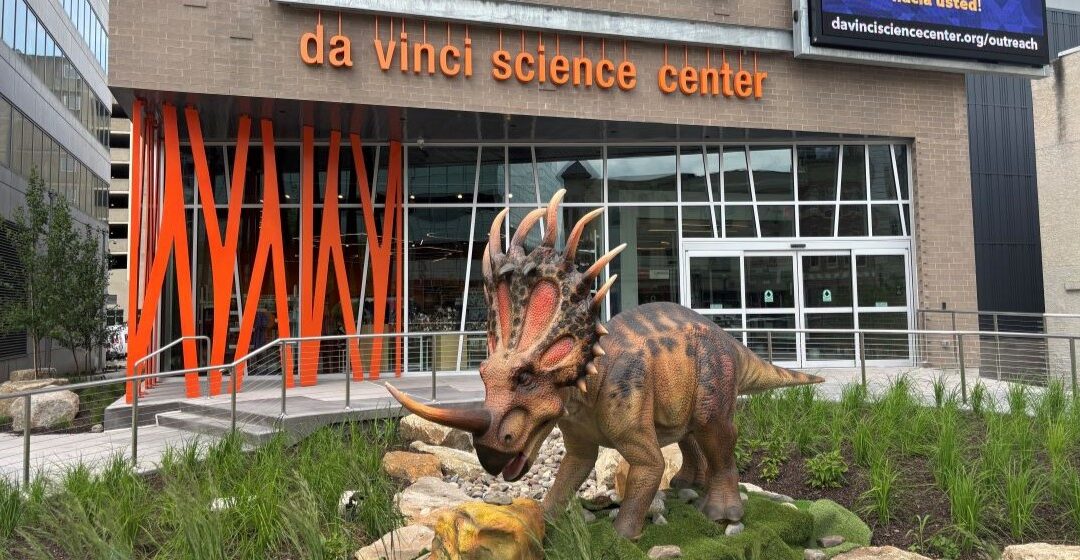
With the snip of a ribbon, the Da Vinci Science Center at PPL Pavilion is ready to open the doors to its 67,000-square-foot facility.
The Da Vinci Center had been housed at Cedar Crest College for the last 18-plus years, offering engaging learning opportunities through a series of exhibits. The new location in downtown Allentown offers twice the space, and twice the fun.
“I have been waiting for the moment when I can see kids, families and teachers interacting with the experience,” said Lin Erickson, Executive Director and CEO of the Da Vinci Science Center. “We’ve been working really hard to raise money and design exhibits, and it’s all about the impact and how the community engages with the experiences.”
A walk through the two-story center is a scientific adventure. There are numerous exhibits designed to teach visitors about topics that are relevant to our everyday lives – health, biology and the environment, to name a few – including one of our own.
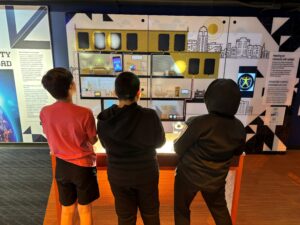
Situated along the back wall on the first floor, our exhibit features an interactive lesson in how solar energy can power a home. Using light from the ceiling, visitors control a series of mirrors to reflect light on to a number of solar panels. Each panel powers a different room or appliance within the home, simulating how sunlight can charge our lives. Walking along the back wall, children and adults alike can read about the power of electricity, and some of the careers at PPL Electric Utilities that help keep the lights on every day.
“It’s been really fun working with local companies like PPL and tapping into their expertise to develop these exhibits,” Erickson said.
PPL has been a longtime partner with the science center, and we are thrilled to continue this relationship in a new space. We believe supporting a strong foundation in STEM education is critical to the success of today’s students and it helps create the highly skilled workforce of the future. We also believe this learning should be accessible to all.
“We want to encourage access to STEM programs for all students,” said Lissette Santana, senior manager of Corporate Responsibility and Sustainability. “One of our requests was to make sure that this world-class science center was accessible to the community; we want people who live and work in the area to come and enjoy this space, regardless of income.”
After 18-plus years at its old location, the Da Vinci Science Center is excited for fun and education at PPL Pavilion for generations to come.
“Thanks to PPL’s and many others’ support, we’ve built a science center for our children and grandchildren,” Erickson said. “And it will be right here in the Lehigh Valley; that is so cool.”