

Smart planting today helps prevent outages tomorrow
As the weather warms up and many of us start dreaming about new flowers, trees and shrubs, it’s a great time to think about how your landscaping choices can support both a beautiful yard and reliable electric service. Trees and shrubs do so much good for our environment — they clean the air, offer shade, support wildlife and add natural beauty to our homes. But when planted too close to power lines, they can also cause avoidable outages, especially during storms.
That’s why choosing the right tree or plant for the right place is so important. The trees and shrubs you plant today will continue to grow for decades and giving them the proper space now helps ensure they won’t interfere with power lines or create safety concerns in the future. By selecting the right species and planting them in the right spots, you can help prevent outages, protect your home and keep your landscaping healthy as it matures.
To make planning easier, we offer a list of trees and shrubs that can be safely planted near power lines. It includes options of all sizes — from beautiful flowering trees like Dogwoods and Eastern Redbuds, to larger shrubs such as Black Elderberry and American Witch-Hazel, to smaller favorites like Mountain Laurel, Black Huckleberry and even common berry bushes. You can explore the full list and get more tips at pplelectric.com/KnowBeforeYouGrow.
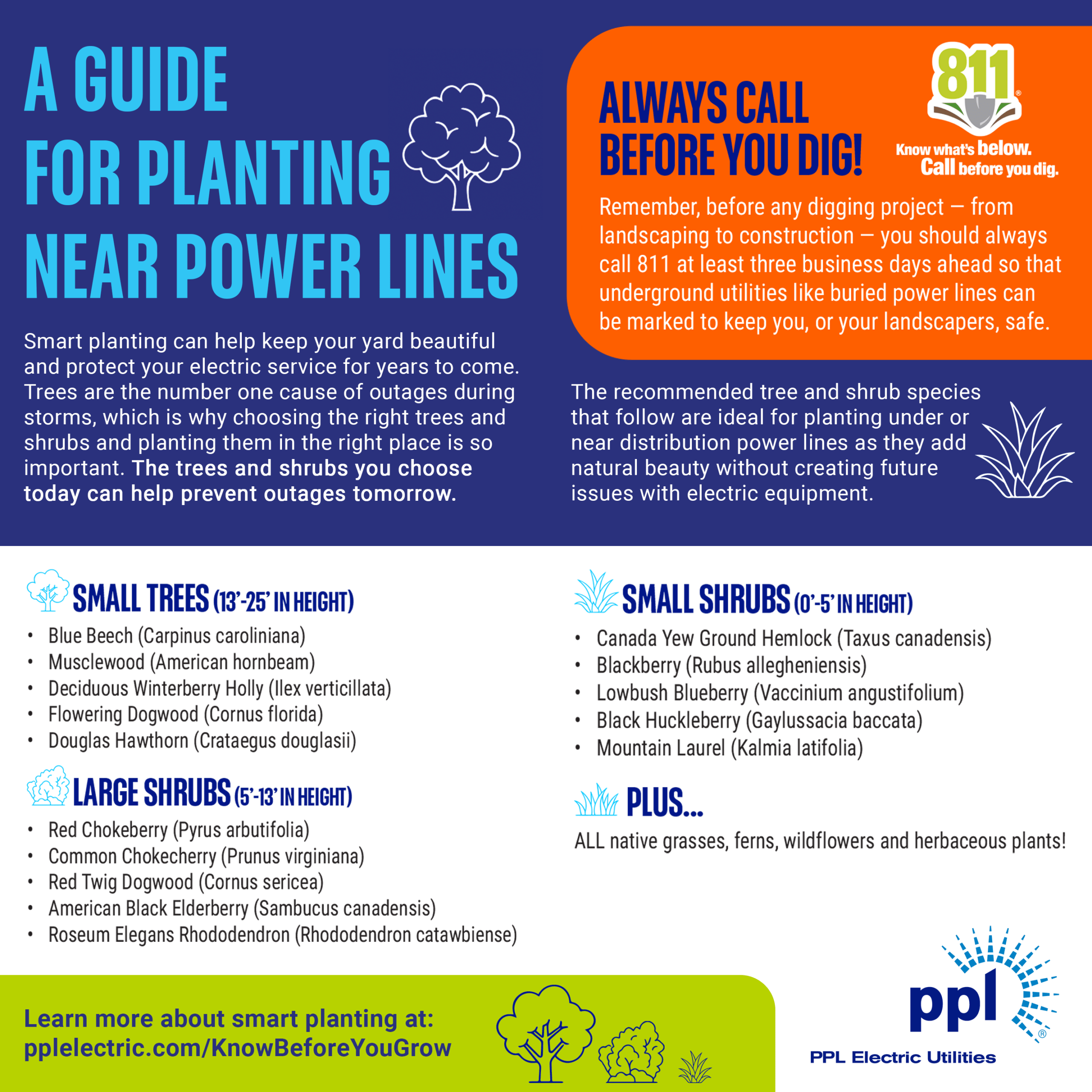
When it comes to tall-growing trees, be sure to give them plenty of room to reach their mature height. Anything that will grow taller than 25 feet should be planted at least 50 feet away from overhead power lines to prevent issues down the road. It’s also helpful to keep ground-mounted transformers clear of any new vegetation. Doing so ensures our crews can work safely and quickly whenever maintenance or repairs are needed.
Spring planting often means digging too, so don’t forget one of the most important steps: calling 811 at least three business days before you start. This free service marks underground utilities, including buried power lines, so you or your landscapers can work safely and avoid damaging critical infrastructure.
If you’re maintaining existing trees on your property, remember that pruning near power lines should always be left to trained professionals. Working close to electric lines is extremely dangerous and could result in serious injury or death. For work near the service wire that runs from our pole to your home, we can temporarily de-energize the line and lower it so you or your contractor can safely handle the job. Just give us a call at 1-800-342-5775 at least five business days before the work begins.
And if you see our crews trimming trees or working on equipment in your neighborhood, please keep a safe distance. A little space helps keep both you and our employees safe while they complete important reliability work.
If you’re looking for extra guidance or inspiration as you plan your spring projects, the Arbor Day Foundation offers helpful tools and resources for choosing the right tree or shrub and selecting the best location for planting. It’s a great place to learn more, visit the Arbor Day Foundation’s website.
A little planning goes a long way — for your safety, your yard and the reliability of the electric service we provide to you and your neighbors. Together, we can ensure that the planting we do today grows and blooms well into the future.

 Avoid planting trees and other vegetation near power lines when possible. Check out the graphic on the right for recommended spacing between trees and power lines.