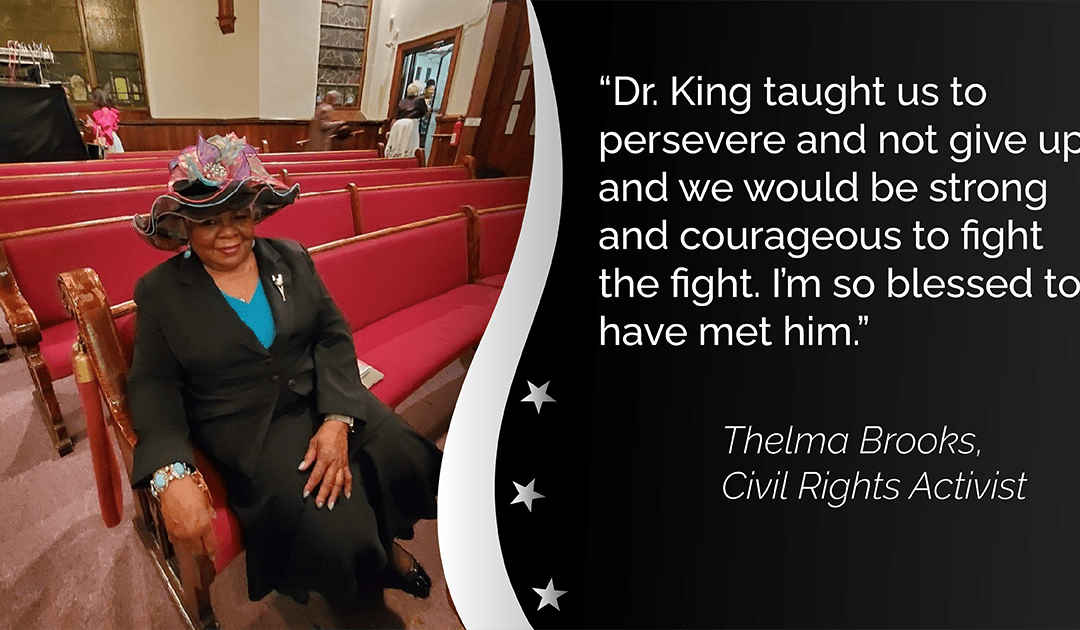
Courage is defined by Webster’s Dictionary as the mental or moral strength to venture, persevere and withstand danger, fear or difficulty. It is this word that perfectly defines Thelma Brooks’ journey as a civil rights activist in the 1960s.
Growing up in the segregated south, Brooks – the mother of PPL’s Monica Brooks – was no stranger to inequity and injustice. Because even though the constitution said that all men are created equal, she was not completely free.
As a young teacher at Selma University in Alabama, she bore witness to the horror of Bloody Sunday. On March 7, 1965, in Selma, more than 600 of her “brothers and sisters” were violently restrained and attacked for peacefully marching for Black voting rights. These events shocked the nation and fueled the fight against racial injustice.
“That Sunday afternoon, I looked out of my window and saw ambulances and cars bringing people to the hospital,” said Brooks, who watched from the window of her dormitory. “I was petrified, but it gave me a sense of being courageous. I knew I had to intervene in some way because I am my brother’s keeper.”
Later that month, Brooks would have the chance.
“I had the opportunity to be with Martin Luther King Jr. when he instituted the march from Selma to Montgomery. During 1964 to 1965, Dr. King held mass meetings at churches around the city, and I went to those even though I was afraid.
“He was so organized and nonviolent, and he really cared for people — he had compassion for people. He taught us not only how to march and stand up for what we believe in, but to do so in a nonviolent way. He taught us to persevere and not give up, and we would be strong and courageous to fight the fight. I’m so blessed to have met him and been in his presence during that particular time,” said Brooks.
On March 24, 1965, Brooks joined thousands in a five-day, 54-mile march from Selma to Montgomery, Alabama, in a nonviolent demonstration to achieve voting rights for Black people. Brooks joined the march from the St. Jude campus, which hosted the Stars for Freedom rally on the night of March 24, the final night of the Selma to Montgomery marches.
“We camped overnight to start the march to the state Capitol early the next morning. There were entertainers from all over the country. Martin Luther King told us that no matter what happened just to stay focused, remain courageous and keep your eyes straight ahead. I could see people on top of buildings and on the street, even women and children, waving confederate flags and calling us all sorts of names, but we kept marching. When we got to the Capitol, Martin Luther King presented to the governor our needs for voting rights. It was very exciting and scary, but we had the courage to keep on pushing,” said Brooks.
When asked what kept her going, Brooks says courage – and the teachings of King. His messages of peaceful civil rights progress resonated deeply within her.
The events of March 24, 1965, along with others, helped lead to the passing of the Voting Rights Act that was signed into law on August 6, 1965.
These experiences shaped Brooks then, and they continue to inspire her daughter today.
“The thing that I hear most in my mom’s story is courage and perseverance,” said Monica Brooks, manager of diversity and inclusion for PPL Electric Utilities. “I thank my mother for instilling these values in me — it gives me courage and inspires me to speak up for what is right and be an advocate for others. This is really what Dr. King’s legacy means. It impacts us all, even today.”
Ever wonder how you can save electricity? It doesn’t have to be expensive or complicated! In fact, there are many no- and low-cost ways you can use less energy. Here are 80 tips to have you save energy and money year-round.
Heating
Heating your home accounts for more than 30 percent of an average home’s energy bill – the single biggest energy expense in your home. Here are some ways that you can be more energy-efficient when heating your home:
Turning the thermostat down about one degree saves about 2 percent on your heating bill. Turning it down five degrees saves about 10 percent.
To save energy, set your thermostat at 68° F in the winter and 78° F in the summer, if possible.
Set your thermostat cooler overnight.
A programmable thermostat lets you easily lower the temperature when no one is home and while you’re sleeping. You could save as much as 20% on your heating costs.
A tightly sealed home keeps the air you heat or cool inside and the outdoor air outside. Make sure your walls and attic are properly insulated. Adding insulation is one of the best savings measures you can do.
Sealing leaks in your air ducts can reduce heating costs by up to 20 percent.
Electric outlets let cold air into the house. Remove the outlet covers and insert special insulation underneath. Use special insulating plugs in outlets that are not being used.
Your house will not warm up any faster if you raise the thermostat setting. When your heating system is on it runs at the same rate regardless of the temperature setting.
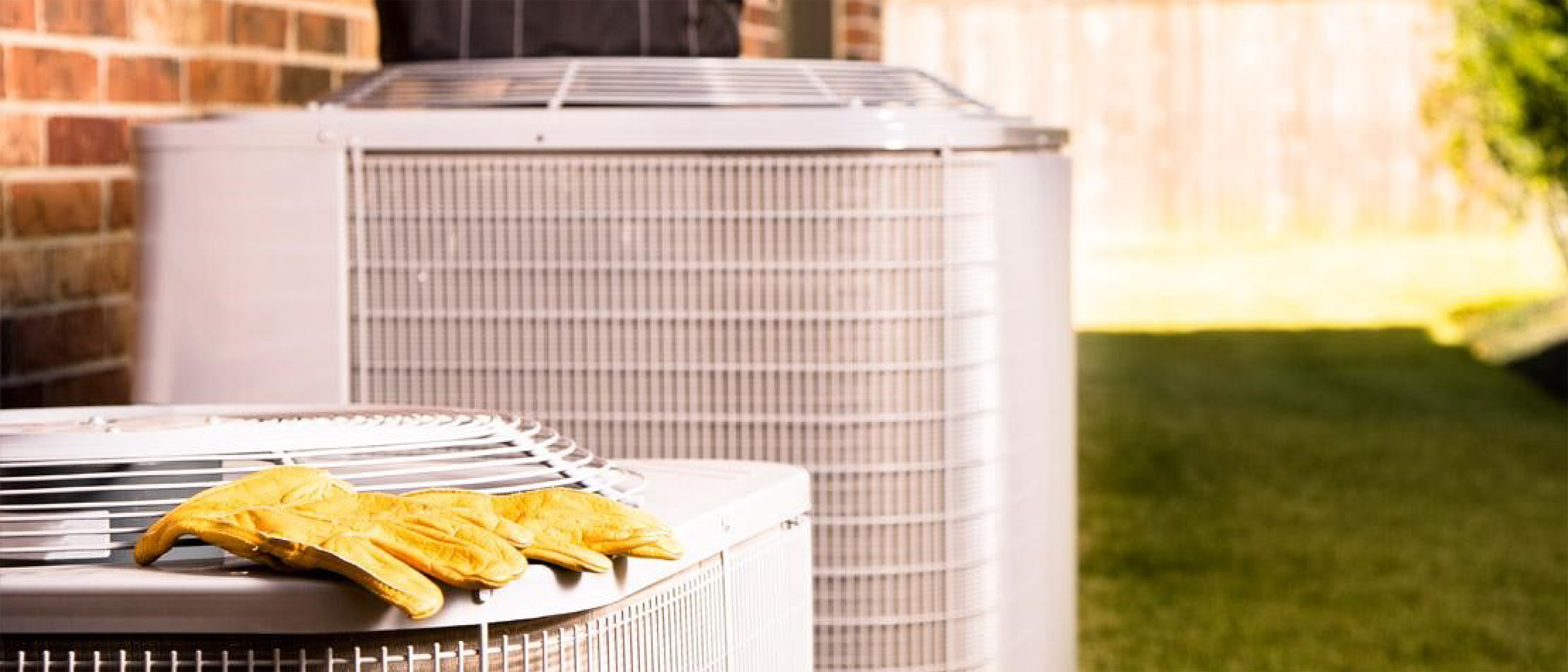
Regular maintenance of your heating and cooling system will improve its efficiency and extend its life. Have your system inspected and serviced each year in the spring or early summer by a professional technician. Keep in mind that the longer you put off service, the less efficient your system becomes and the more money you will spend running it.
Lighting
Did you know about 10 percent of your electricity bill is spent on lighting? Here are some easy ways to save energy.
Switch to light-emitting diode (LED) bulbs. LEDs use up to 75 percent less energy and last up to 20 times longer than traditional incandescents. Because they’re so energy-efficient, LEDs can save you up to $135 over the life of the light bulb.
Keep light bulbs clean. Dirt can absorb as much as 50 percent of the light.
When buying new lighting fixtures or bulbs, look for the ENERGY STAR® label. They are the most energy-efficient on the market.
Turn off the lights when you leave a room. This energy-saving measure has been around since Edison, and it’s as effective as ever.
Have trouble remembering to turn the lights off? Occupancy sensors automatically switch them off once you leave a room – saving you money.
Operating outdoor lights all night adds up. Use outdoor lighting with motion sensors.
Timers that automatically turn lights on and off can reduce your energy use and improve safety by making a house seem occupied even when you’re away.
Unplug unnecessary lights. When unplugging lights, pull on the plug not the cord. Pulling on the cord will damage it and create a safety hazard.
Keep lights off during the day. Use daylight whenever possible, rather than turning on overhead lighting.
Buy ENERGY STAR light fixtures and lamps; they can use one-quarter of the energy traditional fixtures use.
Home Electronics
About 75 percent of the power used by electronics is wasted energy called “phantom power.” Don’t let phantom power raise your electricity bill.
Use smart power strips with electronics such as your home entertainment center and computer. Smart strips automatically power down electronics you’re not using, while continuing to provide power to those that need it.
Unplug chargers and power adapters when not in use. When your cell phone, digital camera or laptop is finished charging, the charger still draws energy unless you unplug it.
Make sure your computer’s “sleep” mode is enabled. The computer will switch automatically to a low-energy mode when you’re away, cutting energy usage by more than half.
Screensavers don’t save energy. The best way to reduce your computer’s energy use is to turn it off when you are not using it.
Appliances
Energy-efficient appliances and equipment can save money for years to come. If you’re purchasing a new appliance, check out the ENERGY STAR® models. They help you go green by using less energy. Here are some low-cost and no-cost ways to save:
Check refrigerator and freezer temperatures to make sure they are not wasting energy. Refrigerators should be 36° F to 38° F and freezers should be 0° F to 5° F.
Keep refrigerators and freezers away from heat-producing appliances or direct sunlight and they will not have to work as hard to keep things cold.
Unplug kitchen appliances you’re not using. For example, coffee makers draw electricity 24/7. If you don’t use your coffee maker’s timer for automatic brewing, unplug it when you’ve finished brewing your coffee.
Kitchen
Remember that each of your appliances has two price tags: the purchase price and the price you pay to run that appliance over its lifetime. Choosing the most energy-efficient appliances will help reduce operating costs for years to come. Other tips:
When you’re cooking, don’t open the oven door to take a peek. Each time you open the oven door the temperature drops 25 to 50 degrees and your oven uses more energy.
A clean oven cooks more efficiently. Keep drip pans and oven surfaces bright and shining.
Preheating the oven is only necessary for baked goods that require a precise starting temperature. If you must preheat, keep in mind that most ovens preheat in 10 minutes or less.
Turn off your oven a few minutes before the cooking time is up. The oven will retain enough heat to finish cooking your meal.
Use the microwave for smaller quantities of food. Cooking a potato in an electric oven costs about 10 cents. In a microwave, the cost is about 2 cents.
Glass or ceramic pans are more efficient for cooking than metal pans. You can save money by lowering the oven temperature by 25 degrees and still cook in the same amount of time.
In the self-cleaning mode, your oven reaches temperatures of 850 degrees. You can save energy by starting the self-cleaning cycle after cooking, while the oven is still warm.
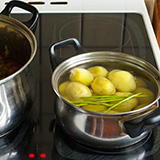
Boiling water doesn’t get any hotter, so once your water is boiling you can turn down the burner.
Thaw frozen foods in the refrigerator instead of the oven. It takes longer, but you’ll save energy. If you are really pressed for time, use the microwave for thawing.
The fridge and freezer account for almost 6 percent of the average home’s utility bill. Stick to the right temperature. Keep your fridge between 36° F and 38° F. Set your freezer between 0° F and 5° F.
Oversized appliances waste energy. Choose an extra-large dishwasher or fridge only if you have a large family that needs it.
Use an exhaust fan to pull hot air out of your kitchen while cooking. The savings in cooling costs outweigh the cost of running the fan.
Make sure your refrigerator has enough room behind it, and if you have have an older model, vacuum behind your refrigerator at least once a year to remove dirt and dust from the coils. Dust buildup not only increases energy use, but it also may cause the unit to break down.
Use your dishwasher. You can save 5,000 gallons of water each year and $40 in utility costs instead of hand-washing dishes, according to ENERGY STAR.
Let your dishes air dry; if you don’t have an automatic air-dry switch, turn off the control knob after the final rinse and prop the door open slightly so the dishes will dry faster.
Water Heating
Water heating is the second largest use of energy in most homes. Check out these ways to reduce that expense:
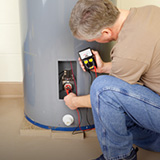
Set the water heater thermostat to 120 degrees. It’s one of the easiest ways to save.
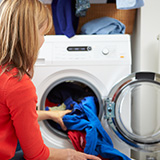
Ninety percent of the energy used by a washing machine is to heat the water. Go green by washing clothes in cold water, which cleans clothes just as effectively as warm or hot water in most situations.
Wrapping your water heater with an insulating blanket can help you save on your electric bill. To see if your tank needs insulation, place your hand on the tank. If it feels warm, a blanket could help.
Insulate your hot water pipes. It’s easy to do and inexpensive. Pipe insulation made of fiberglass or foam can be found in building supply stores.
Minimize water use while you’re brushing teeth, shaving and washing your hands.
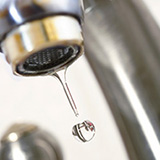
Stop the drips. A faucet that drips once per second can waste 400 gallons of water a year. If the drip is hot water, that will cost you if you have an electric water heater.
Replacing older showerheads with low-flow units could save a family of four as much as 15,000 gallons of water per year, reducing water heating costs by over $150.
If you’re going on vacation, turn down the thermostat on your water heater. If there is no risk of freezing you can turn it off completely when you’ll be away for several days.
Buy a water heater that fits your needs. If you buy one that’s too big you’ll pay to heat up water you don’t need.
Take short showers; they use less hot water than baths.
Laundry
There are two ways to reduce the amount of energy used for washing clothes: use less water and use cooler water. Here are some tips:
Cold water can clean clothes just as effectively as hot water in most situations. Wash in cold water to save energy and money.
Two small loads of laundry use about twice the energy as one full load. By combining loads together you reduce your energy use.
If you have to wash a partial load, be sure to match the load setting on your washing machine to the size of the load. The load setting determines how much water is used.
If you are thinking about a new clothes washer, look for ENERGY STAR® models. These are the most energy efficient models on the market and can cut utility bills by an average of $50 per year.
Dry towels and heavier cottons in a separate load from lighter weight clothes.
Don’t over-dry your clothes. If your machine has a moisture sensor, use it.
Consider air-drying your clothing on clothes lines or drying racks. Plus air drying is recommended by clothing manufacturers for some fabrics.
Water Conservation
Fix leaks. Small leaks add up to many gallons of water and dollars wasted each month. Water conservation saves energy and money.
Use water-saving faucets, showerheads and toilets to save water.
If buying a new water heater, always buy the most efficient model possible.
When landscaping, use plants native to Pennsylvania that require minimal watering and possess better pest resistance. If local code allows, consider diverting “gray water” for irrigation.
Cooling
Nearly half of the average home’s electricity use goes to cooling and heating the home, according to ENERGY STAR. If you’d like to reduce your cooling costs, try these tips:
Before you turn on the air conditioner, reduce your need for cooling. Use fans and natural ventilation first.
A breeze on a non-humid summer day can keep you cool if you’re able to open the windows. Instead of turning on the air conditioner, open doors and windows on opposite sides of the house for cross-ventilation.
Clean your filters monthly. Dirty or clogged filters block airflow and reduce efficiency.
Fans use less energy than air conditioning. Use a ceiling fan if you have one because they are more effective than other fans.
As long as indoor humidity is not very high running a ceiling fan allows you to set the thermostat four degrees higher without a noticeable change in comfort.
If you are thinking about a new air conditioner, look for ENERGY STAR® models. They are the most efficient on the market and will save energy.
Your house will not cool any faster if you lower the thermostat setting. Lowering the thermostat just makes the air conditioner run longer and use more energy.
Do not add heat or humidity to your home, particularly during the hottest parts of the day. For example, turn on the dishwasher at night or when you leave the house.
Each degree you raise the thermostat on your air conditioner saves 2 percent on your electric bill. Set your thermostat at 78 degrees or higher, if possible, for maximum savings.
Close drapes and shades on windows during the day to keep heat from the sun out of your house. In the evening, open drapes and shades to let heat escape through the windows.
Use a dehumidifier instead of turning on the air conditioner. You will be comfortable at higher temperatures if you reduce the humidity in your house.
Use an attic fan to get rid of heat buildup. Heat from the attic eventually finds its way into your home.
Room air conditioners work best when they are not exposed to the sun. Install your air conditioner on the north side of the house or take advantage of shade from trees.
Make sure room air conditioners are installed tightly to avoid the cool air escaping. Seal any gaps along the sides of your room air conditioners with foam insulation. Your air conditioner needs to work much harder if the cool air is escaping.
When you’re using central air conditioning, a programmable thermostat allows you to adjust the temperature when you’re away or sleeping.
Look around the house and check the air vents and registers. If they are blocked by furniture or drapes, the air will not reach the rest of the room.
Make sure air conditioner thermostats are not near electronics or other items that produce heat; the thermostat will read higher than it should.
You may be able to lower your cooling costs by switching light bulbs. LEDs emit very little heat, unlike traditional light bulbs.
PPL recognizes the vital part we play in our customer’s lives and serving them is at the heart of all we do. We recognize that our communities are diverse, and our goal is to empower others to celebrate differences and raise understanding. We’re committed to promoting an inclusive culture through volunteerism and partnerships with nonprofit organizations devoted to furthering diverse, inclusive communities.
That’s why those of us at PPL Electric Utilitiesare driving action through our Empowering Equitable Communities program. Tailored to the specific needs of the communities we serve, the program fosters diversity, equity and inclusion through a multi-layered approach, including a youth mentor program.
The mentorship program gives fifth grade students the opportunity to learn from eight PPL mentors who were trained by Big Brothers Big Sisters. In monthly one-hour sessions, students and mentors talk about homework, peer relationships, future career ideas, sports, family and anything else that’s on their minds.
Meet Forrest Jordan, support engineer, and Trevor Whaley, distribution technician, two of our youth mentors in the Susquehanna region.
Meet Forrest Jordan
As a baseball coach, helping kids learn and grow is part of Forrest’s DNA. So, when he was presented with the opportunity to become a mentor for Eddie — a student in the Berwick School District — it was a no brainer.
“Eddie has had a rough home life so meeting with him for 30 minutes each week gave him a sense of normalcy,” said Forrest. “We would work through school assignments, play games and talk about what we do for fun on the weekends. It was such an amazing experience.”
For Forrest, seeing Eddie smile and giving him a safe space to talk about whatever was on his mind was such a rewarding experience.
“Sometimes help is just being a listening ear,” he said. “I firmly believe this mentor program will have a big impact on his life.”
Meet Trevor Whaley
Trevor’s passion for giving back to his community inspired him to become a mentor for a student at Curtin Middle School in Williamsport. The pair met every two weeks to talk about a variety of things including sports, schoolwork and personal feelings.
“One of our main topics was about how to be a better student in school,” said Trevor. “It was surprising to learn how much some of his behavior related issues were affected by things that happened outside of the classroom.”
Trevor established a big brother, little brother relationship with his student and focused establishing achievable goals for him to improve.
When asked if he would recommend the mentor program to others, he replied:
“Yes, I feel the same things that kids go through happen in our lives and mentoring is a great way to teach them good life lessons we’ve learned.”
Delivering safe reliable power to our customers is our top priority.
But our commitment to customers goes far beyond keeping your lights on.
As 2020 dawned, no one could have imagined the difficulties we now face because of the COVID-19 pandemic.
The crisis is far from over. Financial challenges continue to grow for many as more jobs are lost and lives are upended.
We want you to know that we’ve expanded our programs and payment plans for those of you who need help during these times. Regardless of your income or circumstances, we can help reduce your burden and keep you from falling too far behind.
We added funds to our Operation HELP assistance program, and we’ve expanded eligibility for other programs that offer reduced payments and debt forgiveness. We also can help by setting you up with a payment arrangement, where you can pay down your balance over time.
Maybe something as simple as moving your bill due date to better align with your finances, or getting onto a budget billing plan could help.
Many people have been spending more time at home. That, plus the fact that we’ve had quite a hot and humid summer, means that electric bills are higher than usual.
Getting help with your electric bill means peace of mind in uncertain times. Visit pplelectric.com/billhelp today or call 1-800-342-5775 to learn more.
Let us know how we can help!
Warm regards,
Lori Mueller, Vice President, Customer Services, & Your PPL Customer Service Team
While you’re spending most of your spare time outdoors enjoying the summer sun, you could be wasting electricity inside the house. Routine cleaning does more than leave your home looking great. It can also help you save money every month.
Whether you’re dusting or disinfecting, here are some ways to reduce your energy use, and save a few bucks:
Redirect ceiling fans. Change the direction of your ceiling fans according to the season. In the summer, they should rotate counter-clockwise to push cool air downward. That will help keep your rooms cooler and give your air conditioning a break.
Clean your oven. A clean oven can reach temperature faster and cook more efficiently. Self-cleaning ovens make the process easier, and they’re more energy efficient because they have better insulation. Only run the cleaning cycle on your self-cleaning oven once a month, but do it immediately after you use the oven. You’ll use less energy because the oven will already be hot.
Dust your electronics. Televisions, smart speakers, DVD players, video game consoles, and internet routers are just a few surfaces where dust loves to settle. Keeping these areas dust-free helps motors run better, extending their shelf life and performance.
Vacuum refrigerator coils. When’s the last time you looked behind your refrigerator? If it’s been a while, you may want to roll it out. Dust tends to build up on the coils, forcing your refrigerator to work harder to do its job. So, go ahead, give it a quick vacuum or wipe-down.
Tune up your HVAC system. Heating and cooling can add up to 50% of your in-home energy use. Routine HVAC maintenance may require a small out-of-pocket expense, but the return on investment is incomparable. Regular maintenance keeps your system running efficiently throughout the year.
PPL’s Energy Efficiency Programs can offer simple tips and tools to reduce your electricity use inside and outside your home. Check out more ways to save.