How transmission costs work and what they mean for your electric bill
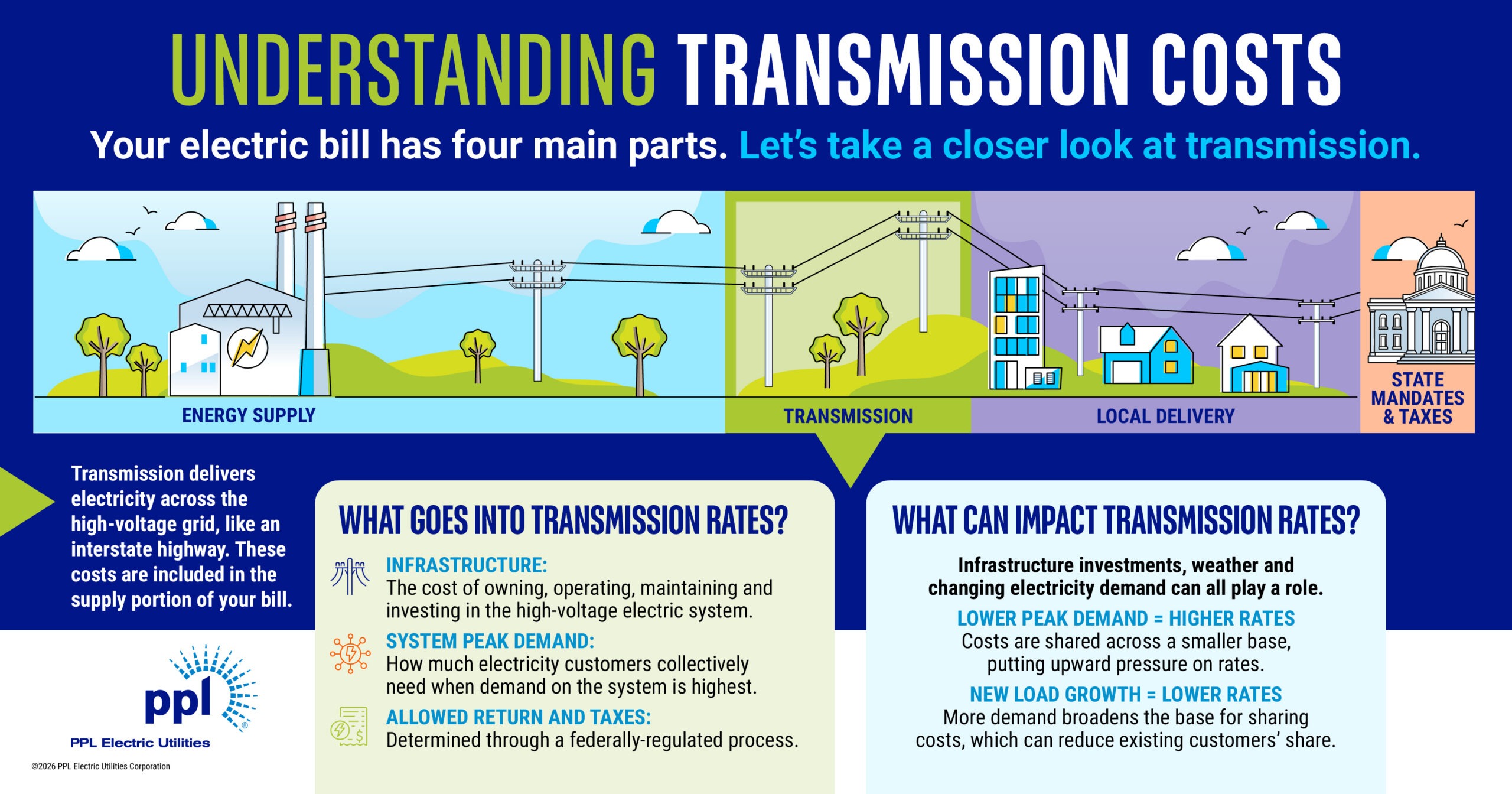
Electric bills have several different components, and understanding what goes into each one can be complicated. We get it.
That’s why we’ve been helping customers understand where each dollar of their electric bill goes. One part of that bill is transmission, which helps pay for moving electricity across the high-voltage electric system.
Here’s a closer look at what transmission costs cover, why they can change and how new large energy users can affect how those costs are shared.
What is the transmission system?
Think of the transmission system as the interstate highway for electricity. It moves large amounts of electricity over long distances before it reaches the local distribution system that delivers power to homes and businesses.
Transmission costs are included in the supply portion of customers’ electric bills. For customers on PPL Electric’s default supply, transmission is included as one component of the Price to Compare. Customers who choose a competitive energy supplier also pay transmission costs to their competitive energy supplier through the supply portion of their bill. No matter what, transmission costs are established through federally regulated processes.
What goes into transmission costs and why do they change?
Transmission rates help recover the costs of owning, operating, maintaining and investing in the high-voltage electric system.
But infrastructure costs aren’t the only factor. How those costs are shared also matters.
One important factor is how much electricity customers collectively need when demand on the system is highest, known as peak demand. Peak demand can vary depending on weather, the total number of customers served and the number of large energy users.
That creates an important dynamic:
- When overall peak demand is lower, transmission costs are spread across less megawatts of electricity, which can put upward pressure on transmission rates.
- As additional load connects and contributes to the peak demand, those costs can be allocated across a larger base of electricity use, which can put downward pressure on the share being paid by existing, non-large load customers.
Where do data centers and other large energy users fit?
There are two different concepts that are important to understand: how transmission costs are shared and who pays for infrastructure needed to serve a new large-load customer.
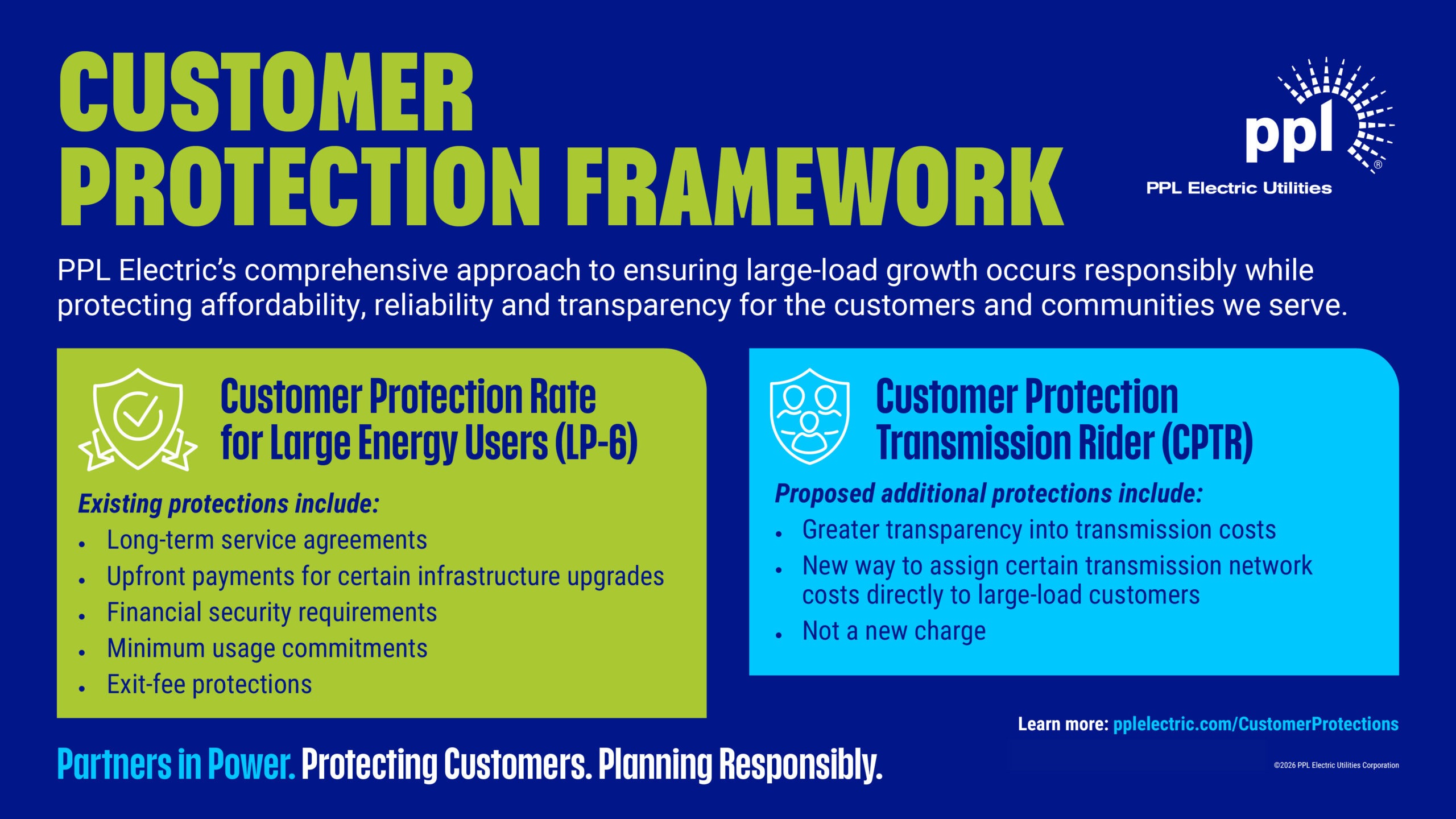
PPL Electric already has protections in place for qualifying large-load customers through its LP-6 rate. Large-load customers are responsible for infrastructure needed specifically to serve their projects and are subject to financial security, minimum usage commitments and exit protections intended to reduce the financial risk to other customers if a project does not develop as planned.
And we’ve proposed an additional layer of protection.
Some transmission investments associated with connecting new large energy users have broader benefits and can become part of the electric system that serves everyone. Under the traditional way those costs are recovered, some costs can ultimately be shared across customers.
That’s why we proposed a Customer Protection Transmission Rider, which would allow us to directly assign certain transmission network costs associated with large-load development to our large-load customer class. It would also make transmission costs more visible on customer bills, giving customers greater transparency into what they are paying for.
At the same time, when new large-load customers actually connect and contribute to system peak demand, they are expected to take on a larger share of transmission system costs based on their electricity use. That can reduce the share allocated to existing customers, although the actual impact will vary based on transmission costs, system peak, and the timing and level of new load.
Our focus: protecting customers
Pennsylvania’s energy needs are changing, but our responsibility to our customers is not.
We believe growth should occur responsibly, with strong protections to help ensure existing customers aren’t left paying costs that should appropriately be borne by new large energy users.
That’s why we’re working to make transmission costs easier to understand, strengthen protections and give customers greater transparency into how the changing energy landscape can affect their bills.