Oct 29, 2026 | Value
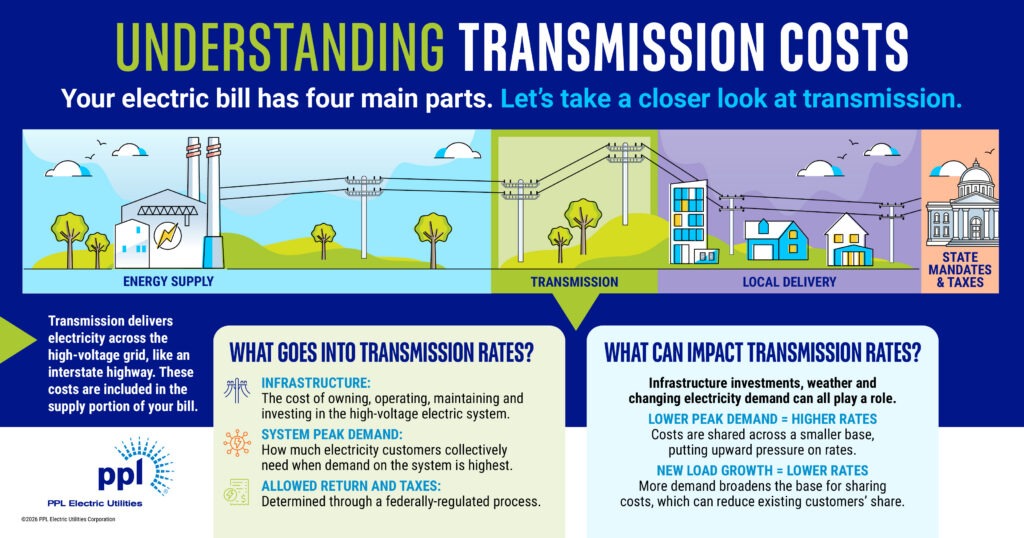
Electric bills have several different components, and understanding what goes into each one can be complicated. We get it.
That’s why we’ve been helping customers understand where each dollar of their electric bill goes. One part of that bill is transmission, which helps pay for moving electricity across the high-voltage electric system.
Here’s a closer look at what transmission costs cover, why they can change and how new large energy users can affect how those costs are shared.
What is the transmission system?
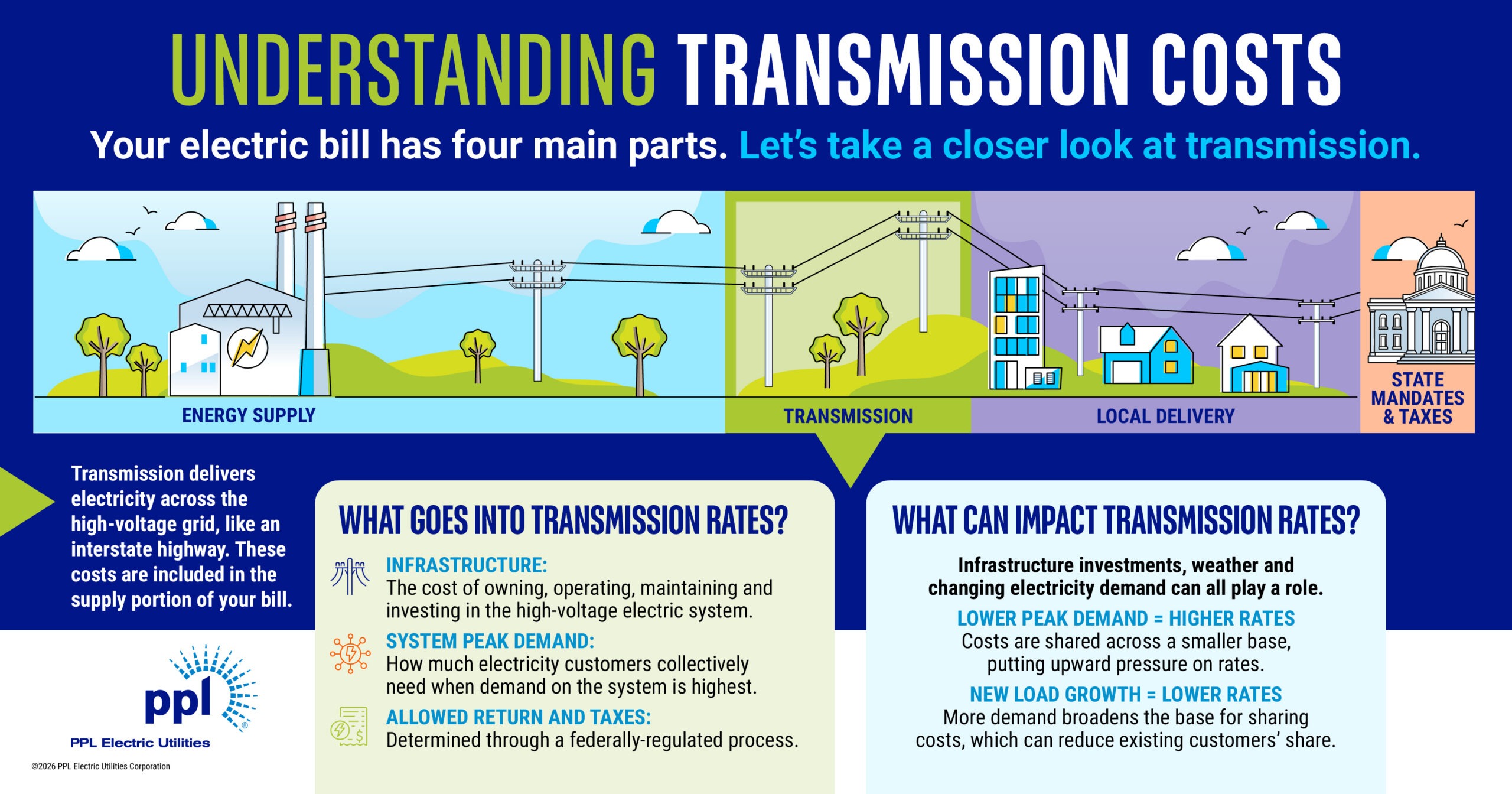
Think of the transmission system as the interstate highway for electricity. It moves large amounts of electricity over long distances before it reaches the local distribution system that delivers power to homes and businesses.
Transmission costs are included in the supply portion of customers’ electric bills. For customers on PPL Electric’s default supply, transmission is included as one component of the Price to Compare. Customers who choose a competitive energy supplier also pay transmission costs to their competitive energy supplier through the supply portion of their bill. No matter what, transmission costs are established through federally regulated processes.
What goes into transmission costs and why do they change?
Transmission rates help recover the costs of owning, operating, maintaining and investing in the high-voltage electric system.
But infrastructure costs aren’t the only factor. How those costs are shared also matters.
One important factor is how much electricity customers collectively need when demand on the system is highest, known as peak demand. Peak demand can vary depending on weather, the total number of customers served and the number of large energy users.
That creates an important dynamic:
- When overall peak demand is lower, transmission costs are spread across less megawatts of electricity, which can put upward pressure on transmission rates.
- As additional load connects and contributes to the peak demand, those costs can be allocated across a larger base of electricity use, which can put downward pressure on the share being paid by existing, non-large load customers.
Where do data centers and other large energy users fit?
There are two different concepts that are important to understand: how transmission costs are shared and who pays for infrastructure needed to serve a new large-load customer.
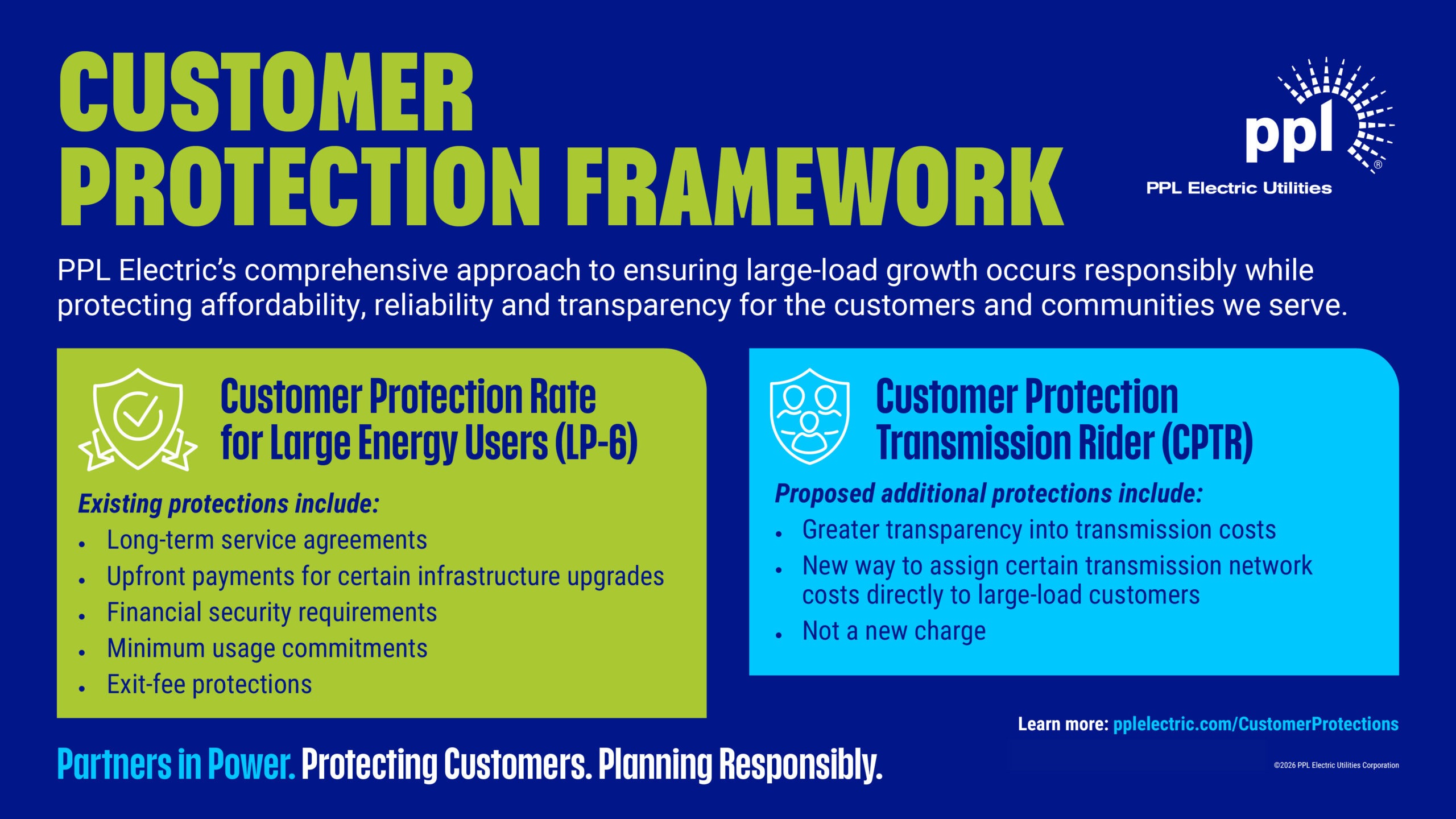
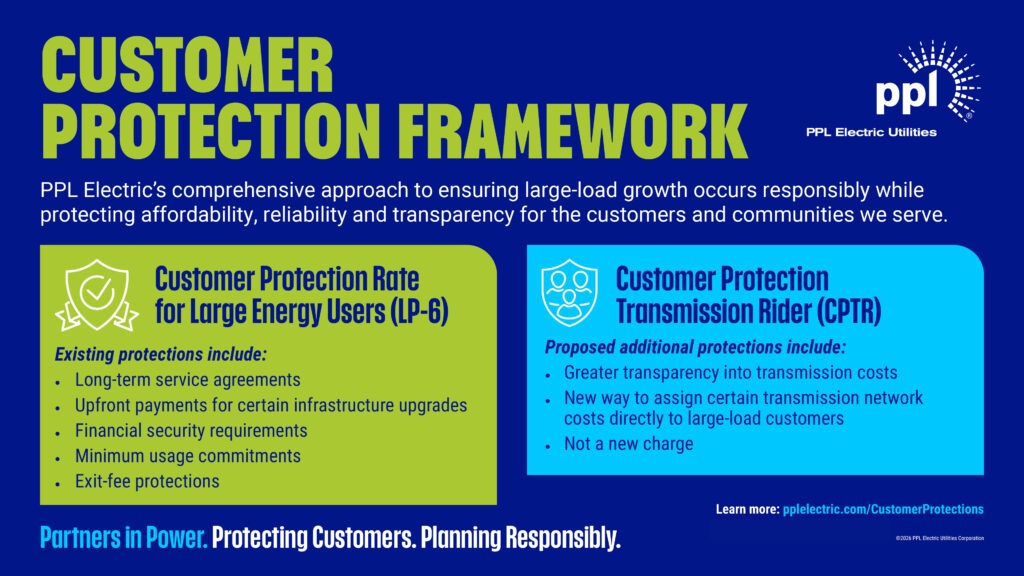
PPL Electric already has protections in place for qualifying large-load customers through its LP-6 rate. Large-load customers are responsible for infrastructure needed specifically to serve their projects and are subject to financial security, minimum usage commitments and exit protections intended to reduce the financial risk to other customers if a project does not develop as planned.
And we’ve proposed an additional layer of protection.
Some transmission investments associated with connecting new large energy users have broader benefits and can become part of the electric system that serves everyone. Under the traditional way those costs are recovered, some costs can ultimately be shared across customers.
That’s why we proposed a Customer Protection Transmission Rider, which would allow us to directly assign certain transmission network costs associated with large-load development to our large-load customer class. It would also make transmission costs more visible on customer bills, giving customers greater transparency into what they are paying for.
At the same time, when new large-load customers actually connect and contribute to system peak demand, they are expected to take on a larger share of transmission system costs based on their electricity use. That can reduce the share allocated to existing customers, although the actual impact will vary based on transmission costs, system peak, and the timing and level of new load.
Our focus: protecting customers
Pennsylvania’s energy needs are changing, but our responsibility to our customers is not.
We believe growth should occur responsibly, with strong protections to help ensure existing customers aren’t left paying costs that should appropriately be borne by new large energy users.
That’s why we’re working to make transmission costs easier to understand, strengthen protections and give customers greater transparency into how the changing energy landscape can affect their bills.
Read PPL Electric Utilities President Christine Martin’s perspective on our Customer Protection Framework

Jul 8, 2026 | Safety and Security
With energy supply prices, summer usage and rates changing, you may see more calls, ads, emails, texts or door-to-door offers about lowering your electric bill.
You have choices when it comes to your electricity supply. Many offers come from licensed suppliers, but others might be a scam. So, it’s important to verify before you switch suppliers, sign a contract or share account information — be sure you understand what you’re being offered and how it could affect your bill.
The best first step is simple: pause, verify who you’re dealing with and read the terms before you decide.
Understand what the offer applies to
Your electric bill includes different types of charges, split between delivery and supply.
- Delivery covers the cost to deliver electricity safely and reliably across our distribution system. This varies based on usage.
- Supply covers the electricity you use, as well as transmission charges. If you do not choose a third-party supplier, we purchase electricity for you and pass on the cost of generation supply without markup or profit. If you do choose a supplier, your supply rate is based on the agreement you make with that supplier.
That distinction matters because supplier offers apply only to the supply portion of your bill, not your entire electric bill.
For more details about the breakdown of charges on your bill, visit our Bill Explainer page.
Know your current rate before you compare
Before reviewing an offer, check your current supply rate. You can find your supplier information and supply rate on your bill or on your online account.
The Price to Compare is the default supply rate you’ll pay if you do not shop for electricity with a third-party supplier. It can be helpful to use the Price to Compare as a reference point when reviewing offers.
You can learn more about shopping at pplelectric.com/shopping.
Questions to ask before you switch
A lower advertised rate may sound good, but the details matter. Before you switch suppliers or agree to a new contract, ask:
- Is the rate fixed or variable?
- Is it an introductory rate?
- How long does the rate last?
- What happens when the introductory period ends?
- Are there any additional charges besides the price per kWh?
- Are there monthly, cancellation or early termination fees?
- Will the contract renew automatically?
- Will I receive written contract terms before I agree?
A clear offer should explain the price, the length of the agreement, fees, renewal terms and what happens when the contract ends.
The Pennsylvania Public Utility Commission’s official shopping website, PA Power Switch, provides more information about supplier contract terms.
Watch for misleading or high-pressure tactics
Be cautious if someone contacts you unexpectedly and:
- Says they represent PPL Electric or are calling “on behalf of PPL” to sell supplier service.
- Says you must switch suppliers to avoid shutoff.
- Pressures you to act immediately.
- Focuses only on a low introductory price without explaining what happens later.
- Offers a gift card or incentive in exchange for account information.
- Asks for personal, financial or account information before you can verify who they are.
- Claims the offer applies to your whole bill.
We do not market or sell supplier services by phone or door to door. If someone claims to represent PPL Electric and you are unsure, stop the conversation and contact us directly.
You can review scam prevention tips on our Scams & Fraud Prevention page and Fraud & Deceptive Marketing page.
Verify before you share information
Scammers can make caller ID look real, create fake websites, send fake payment links or appear in search results through online ads. That’s why it’s important to use official contact information.
If you receive an unexpected call, email, text, ad or in-person visit:
- Do not feel pressured to act right away.
- Go directly to pplelectric.com.
- Call us directly at 1-800-342-5775.
- Avoid clicking on suspicious links.
- Do not provide banking or payment information.
The Federal Trade Commission also recommends contacting your utility directly if someone threatens immediate shutoff or demands payment. You can read more on the FTC’s utility scam guidance page.
The bottom line
Shopping for electricity supply is your choice. Some offers may be legitimate and can help you save, but it’s important to understand the details before you switch, sign or share information.
Before you switch: pause, verify and understand the offer.
For more information, visit PPL Electric’s Rates and Shopping page, Bill Explainer page or Scams & Fraud Prevention page.