Feb 23, 2015 | Safety and Security
This is a guest post written by Jacque Creamer of PPL Electric Utilities’ Health and Safety group. He also is chief of the Fogelsville Volunteer Fire Department in Lehigh County.
Electrical hazards exist in some form for nearly all of us.
Whether you’re a homeowner working around your yard, a contractor on a job site, or a first responder out on a call, you need to know what to do to stay safe.
Hazards multiply for anyone involved in cleanup and recovery efforts following major disasters and storms. One particular danger exists around downed or low-hanging electrical wires.
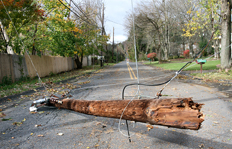
Always consider any downed line to be energized.
Above all else, always consider any downed line to be energized. Be cautious. If you notice downed wires or damaged electrical equipment, contact your utility company. For PPL Electric Utilities, that’s 1-800-DIAL-PPL.
Remember: Electrical circuits don’t always turn off when a power line falls into a tree or onto the ground. Even if they are not sparking or humming, downed power lines can kill you if you touch them. Even the ground nearby can be energized.
Downed wires can energize other objects, including fences, water pipes, bushes and trees, buildings and phone and cable wires. Even manhole covers and reinforcement bars in pavement can become energized by downed wires. During storms, wind-blown objects such as canopies, aluminum roofs, siding, sheds, etc., can also be energized by downed wires.
Here are some rules to live by:
- Do NOT assume a downed wire is safe simply because it is on the ground or is not sparking. Everything should be considered energized until tested to be otherwise.
- Do NOT assume that all coated, weatherproof or insulated wire is just telephone, television or fiber-optic cable.
- Never go near a downed electric power line. Always assume that it is energized. Touching it could be fatal.
- Electricity can spread outward through the ground in a circular pattern from the point of contact. As you move away from the center, large differences in voltages can be created.
- Never drive over downed power lines. Assume that they are energized. Even if downed lines are not energized, they can become entangled in your equipment or vehicle.
- If contact is made with an energized power line while you are in a vehicle, remain calm and do not get out unless the vehicle is on fire. If possible, call for help.
- If you must exit any equipment or vehicle because of fire or other safety reasons, try to jump completely clear, making sure that you do not touch the equipment and the ground at the same time. Land with both feet together and shuffle away in small steps to minimize the path of electric current and avoid electrical shock. Be careful to maintain your balance.
Always stay away, and call 911 and your local utility company. Safety is everyone’s responsibility!

Dec 22, 2014 | Safety and Security
If you received a power tool over the holidays, please use it the right way. Following these great guidelines from the Electrical Safety Foundation International will help you complete your projects the best way — the safe way.
- Use ground fault circuit interrupters (GFCIs) with every power tool to protect against electric shocks.
- When working with electricity, use tools with insulated grips to avoid shocks.
- Always plug power tools into a grounded outlet, unless the tools are double-insulated.
- Never use power tools near power lines or water pipes.
- If a power tool trips a safety device like a GFCI outlet, take the tool to a repair center authorized by the manufacturer.
- Don’t use power tools without the proper guards.
- Don’t use power tools with an extension cord longer than 100 feet.
- Always use appropriate personal protective gear
- Use extreme caution when cutting or drilling into walls with electrical wires or water pipes.
Oct 6, 2014 | Safety and Security
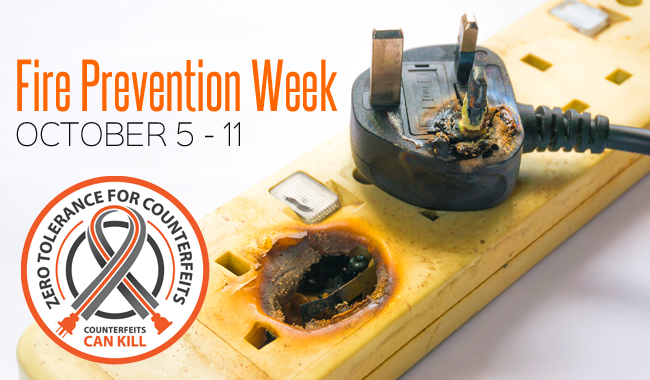
Did you know that 2/3 of deaths from fires happen in homes with no smoke alarms or where smoke alarms aren’t working? This week is Fire Prevention Week, and we want to share tips to help keep you and your family safe.
Smoke detectors can save lives, but only if they’re working properly. The Electrical Safety Foundation International recommends that you:
- Test the batteries in your smoke detectors monthly, and replace the batteries at least yearly.
- Replace the smoke detector itself every 10 years.
- Install at least one smoke detector for every floor of your house, outside each sleeping area and in every bedroom.
Here are some other tips from ESFI:
Avoid counterfeit electrical products – Counterfeit electrical products are a growing problem. ESFI reports that over the past decade, U.S. seizures of counterfeit products have increased more than 325 percent. Cheap cell phone chargers may look like a bargain, but they could damage your phone or cause a fire. Never buy electrical products that don’t have the mark of a nationally recognized testing laboratory such as UL, CSA or ETL.
Install AFCI Outlets – Arc fault circuit interrupters are advanced outlets that shut down power when unsafe conditions are detected. They can reduce the chance of an electrical fire.
Safely use extension cords – Don’t overload an outlet or extension cord, and never use one that has been damaged. More than 3,000 home fires are caused each year by extension cords, according to ESFI.
Pay attention to switches and outlets – Are your switches and outlets working properly? Do they make crackling, buzzing or sizzling sounds? If you notice anything unusual about your switches and outlets, contact a qualified electrician immediately to have them inspected.
Stay safe in the kitchen – Cooking is a leading cause of home fires. Never leave a child alone when you’re cooking or when an electrical appliance is within reach. Don’t leave the stove or toaster oven unattended.
Maintain your clothes dryers – Clean the lint filter after each use, and be sure to keep your vents clear of lint buildup. The lint will reduce the efficiency of your dryer, but more importantly, could cause a fire.
Be cautious when using space heaters – Keep space heaters at least 3 feet away from flammable material such as furniture and blankets. Avoid using extension cords if possible and never leave space heaters turned on while unattended.
Sep 10, 2014 | Safety and Security
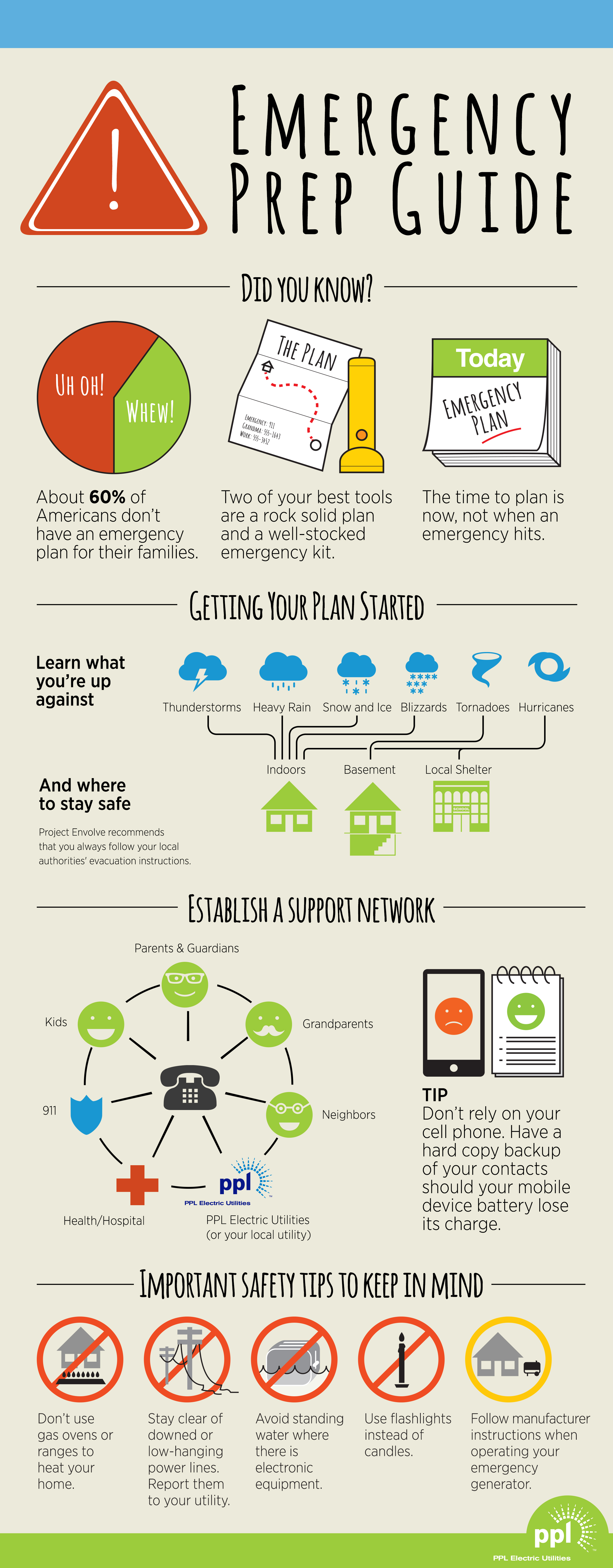
Does your family have a plan in case of a natural disaster or other emergency? According to the Ad Council, half of Americans don’t have an emergency plan for their family. I’m embarrassed to say that I used to be one of them.
We go to great lengths to protect our loved ones. We childproof our homes and install safety gadgets like baby gates, outlet covers, and smoke and carbon monoxide detectors. We wear seatbelts in the car and always make sure our passengers buckle up. I thought my family was prepared and well-protected. Then as part of National Preparedness Month, I read the 50 percent statistic and realized we didn’t have an emergency plan.
What would we do if a severe storm caused us to lose electricity for several days? What would we eat? Would we have enough to drink? What else did my family need to be prepared? Every family has its own needs. Some of us have children, pets or are caring for someone with special medical needs. My plan two years ago would be quite different than my plan today.
Part of being prepared is making these plans ahead of time. Life is bound to throw us a few unfortunate curve-balls. No one likes to think about them, but it’s our responsibility to do so, not just for ourselves, but for those who depend on us. It’s far easier to keep your cool if you have plans and an emergency kit on hand than to try to come up with them on the fly.
In this particular instance, I knew the basics of what to do. But I had never actually sat down and organized “the plan” for my family. September is National Preparedness Month. I use this time as my reminder to re-evaluate my plan, update critical information and make sure my loved ones do the same.
Don’t have a plan? Now is the perfect time to get organized.
Ask yourself:
- Do you have a place to meet if you and your family members get separated?
- Do you have an emergency kit?
- Does everyone in your family know who they’d contact and where to go in an emergency? What if you aren’t at home?
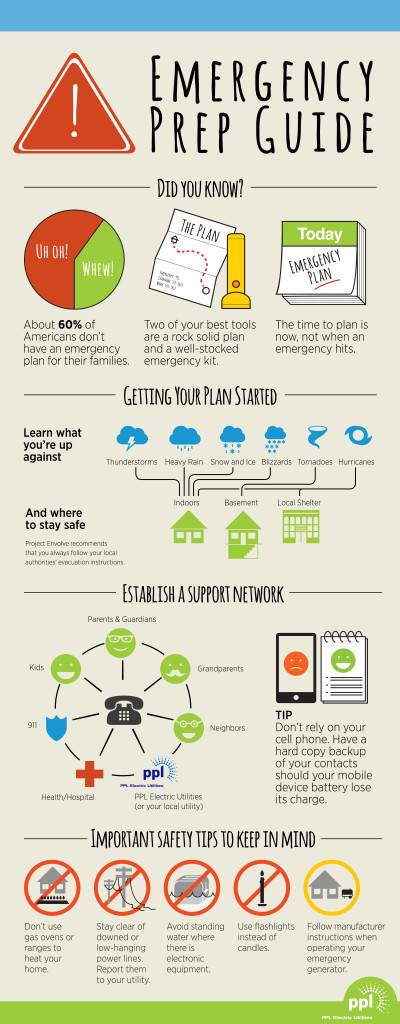
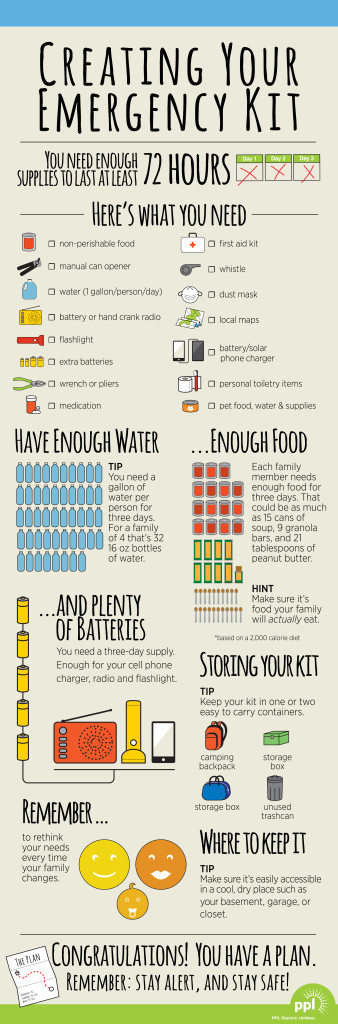
The resources from the Federal Emergency Management Agency at ready.gov will help you make your emergency plans. There are materials for the whole family.
Here are the items I found most helpful:
- Prepare, plan and stay informed. Visit ready.gov
- Remember to keep a paper copy of your emergency contact list. If your phone battery or laptop loses their charge, you won’t be able to get to your saved contacts.
- Use this checklist to build your emergency kit.
- Once you have a kit, learn how to maintain it.
- Let’s not forget about the kids. It’s just as important for them to know what to do so that they can stay calm in an emergency situation: ready.gov/kids
This blog post is my reminder to you. If you don’t have a plan, create one. If you already have one, make sure it still suits your family and meets your particular needs. And always remember, it’s important to stay safe.