
Jun 14, 2016 | Safety and Security
Mother Nature’s electrical fireworks can be deadly. Nearly 50 people are killed by lightning each year in the U.S. and hundreds more are severely injured.
Courtesy of the National Weather Service, check out a few lightning myths and facts to stay safe:
MYTH: If trapped outside during a lightning storm, lie flat on the ground.
FACT: Lying flat just increases your chance of getting hit by potentially deadly ground current. Keep moving toward a safe shelter.
MYTH: If there is no rain or clouds, you’re safe from lightning.
FACT: Lightning has a long reach. “Bolts from the blue” can strike 10-15 miles from a thunderstorm.
MYTH: A lightning victim is electrified and you risk electrocution if you touch them.
FACT: The body does not store electricity and it’s perfectly safe to give first aid. Don’t be afraid to come to their aid. You could save a victim’s life.
For more electrical safety tips, visit pplelectric.com/safety.

Feb 19, 2016 | Safety and Security
Construction workers, law enforcement and firefighters can be around power lines more than most of us.
They may work with digging equipment and cranes, respond to vehicle accidents involving downed wires, and fight building fires. A wide variety of situations can bring them close to power lines. To help them stay safe around electricity, we offer free information kits to assist them in becoming more informed about the potential dangers around them.
The kits for our Worker Beware and First Responder Beware programs include a video, booklets, slide shows and trainer guides so whole groups can become better educated together.
Each year, we send out thousands of fliers to contractors and first responder groups to let them know about our program. But waiting for a mailing isn’t the only way to get great safety information. Our safety website has links where the free kits can be ordered.
We care about the safety of all those who live and work in our service territory. Maybe a free information kit is just what your group needs to help everyone work safer.
Jan 22, 2016 | Safety and Security
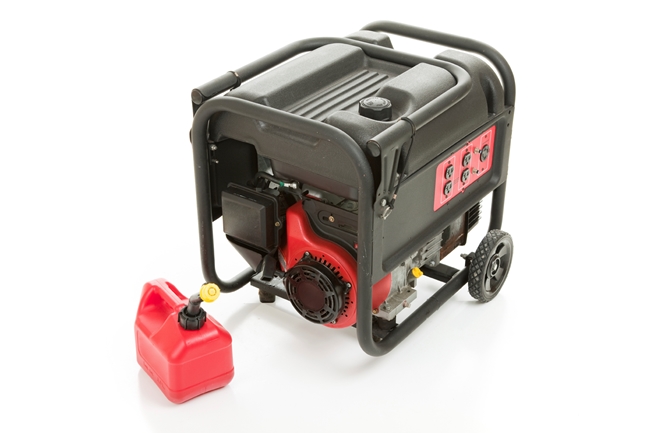
Portable generators can bring you power when storms knock out electricity. But they also can bring heartache if used incorrectly.
Nearly 80 percent of the more than 900 carbon monoxide deaths between 1992 and 2012 were associated with generators. Half of generator-associated carbon monoxide deaths happen between November and February.
If you have a portable electric generator, make sure it’s installed and used correctly. Never operate a generator indoors or in any other enclosed or partially enclosed space, including your garage.
The Consumer Product Safety Commission recommends generators be located at least 20 feet from windows, doors or vents to prevent deadly CO from getting into your home. Of course, CO alarms inside your home also are a smart idea.

May 13, 2015 | Safety and Security
Would you know what to do if you received a phone call telling you that your electricity would be shut off if you did not pay immediately with a prepaid card?
Scam artists nationwide continue to target electric utility customers by threatening to shut off their service based on false claims of overdue bills.
In the past, we’ve received complaints from both business and residential customers about callers claiming to be from the utility. The scammers falsely claim that the customers are behind on their bills. They demand an immediate payment by way of a pre-paid debit card for the customer to avoid having service disconnected.
How can you avoid these scams?
- Be informed about your account. You can check their account balances by logging on to pplelectric.com with your computer, tablet or smartphone. You can also call PPL Electric Utilities for your account balance at 1-800-DIAL-PPL (1-800-342-5775).
- Know your payment options. Be guarded about anyone who requests immediate payment by phone. We accept payment online, by traditional mail, at payment centers and through the use of credit or debit cards.
- Check with us. If you have any doubts about a caller claiming to represent PPL Electric Utilities, or about information given to you, hang up and call us 1-800-DIAL-PPL (1-800-342-5775) for verification. If things don’t check out, you should call your local police department.
- Know when we’d visit your home. Most visits to customer homes by us or our contractors are prearranged by the customer or through a call to the customer. If someone claiming to be from PPL Electric Utilities comes to your door, ask for proper identification that all of our employees and contractors carry. Most service employees also wear company uniforms and drive company vehicles.
Remember: If you have any doubts about whether someone is representing PPL Electric Utilities, you can always contact us for verification.
Apr 1, 2015 | Safety and Security
This is a guest blog post by Mark Santayana, project manager for PPL Electric Utilities’ Underground Facilities and Damage Prevention.
I love living in Pennsylvania! The character of the state runs the full spectrum of history and commerce, through the world-class cities of Pittsburgh and Philadelphia to the bucolic serenity of Lancaster County and the great woods of the Northeast.
We’re also blessed with four unique and distinct seasons – Almost Winter, Winter, Still Winter and Dig Season!
Typically, April 1 is the unofficial start of what is considered Dig Season in Pennsylvania. Of course, we all know April 1 as April Fools’ Day, but in my world as PPL Electric Utilities’ project manager for Underground Facilities and Damage Prevention, Dig Season and safe digging is no joke.
As warmer weather approaches, it is often pondered: What is the true sign that spring has officially, definitely, totally sprung? Some say it is the sighting of a robin. Others will point to the crocuses and tulips peeking through the earth.
The strongest indicators from our point of view are the daily, steady surge of dig notifications submitted to PA One Call by excavators, followed quickly by multiple sightings of yellow, blue, red and green flags and mark-out paint pinpointing the locations of underground utility lines throughout the communities we serve.
It’s also visible in the early morning presence of backhoes and augers accompanied by a small army of workers dressed in hard hats and high-visibility vests swarming the rights of way, highways and byways of the state’s road system.
This April 1 marks the fifth anniversary of National Safe Digging Month.
National Safe Digging Month is formally recognized by the U.S. House of Representatives and Senate and has traditionally earned the support of nearly every governor across the country.
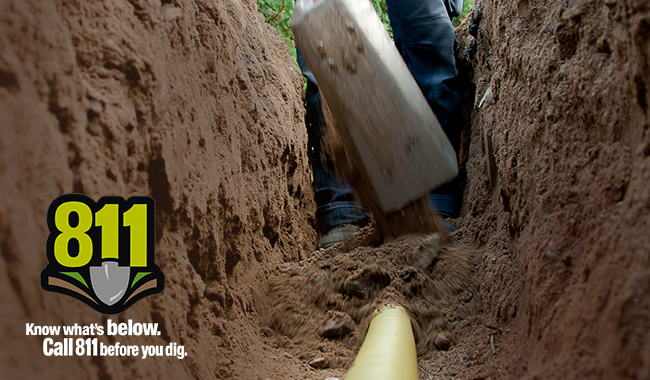
We’d like to remind homeowners and contractors to always call PA One Call at 811 at least three business days before beginning any digging project. The first layer of defense for all excavations is to know where all the underground utility lines are located before you dig.
According to Common Ground Alliance data, an underground utility line is unintentionally damaged by digging once every three minutes nationwide, and one-third of those incidents are caused when no call is made to 811. During 2014, some 34 percent of all PPL Electric Utilities’ dig-in damages were a result of someone neglecting to call PA One Call.
We urge residents and contractors to “Make the 811 Promise” and visit www.the811promise.com. The 811 Promise serves as a reminder to make the call and to also promote the importance of 811. The site features a real-time promise tracker that allows all site visitors to view the campaign’s progress.
We’re advocating The 811 Promise as a simple reminder to always call 811 to avoid accidentally striking an underground utility line.
Spring is traditionally the peak time of the year for digging, and calling 811 is the safe way to learn the approximate location of underground utilities that include gas, electric, phone, Internet, water and sewer.
Throughout April, we’ll be promoting National Safe Digging Month. Won’t you join us?
For more information about 811, visit www.paonecall.org or www.call811.com.
Call 811 Before You Dig – Know What’s Below.