Jun 12, 2017 | Safety and Security
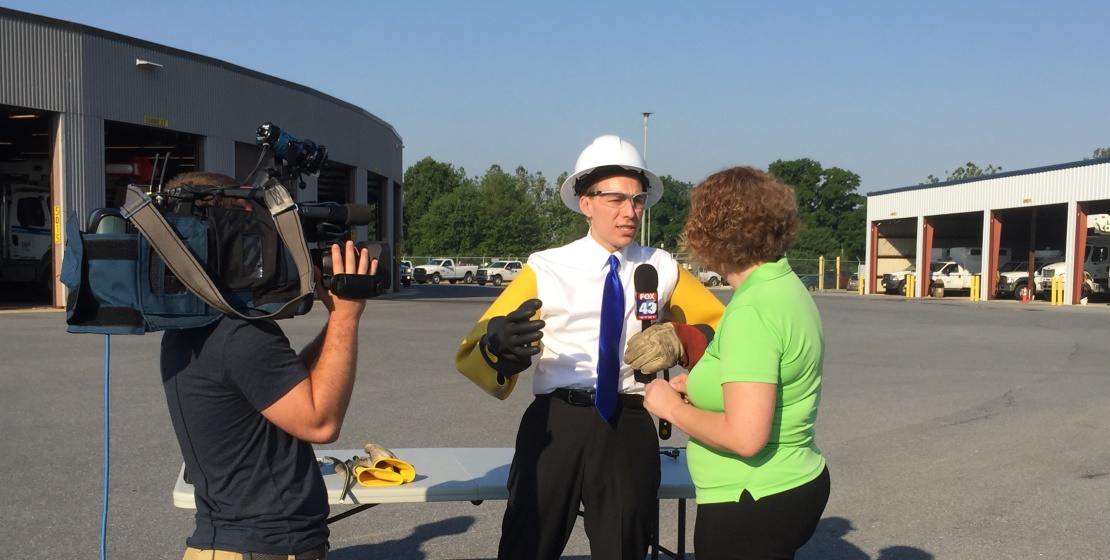
As morning TV watchers might have noticed, we hosted — and hoisted — a special visitor at our Lancaster Service Center early in the morning of Monday, June 12.
Drew Anderson, weatherman at WMPT Fox 43 in York, met with Regional Operations Director Dana Ferber for a series of live shots during the station’s morning program — including one from a bucket truck. We were pleased to have the chance to talk with Drew about safety, reliability and other topics.
For those who couldn’t tune in on the day, here are a few snapshots:
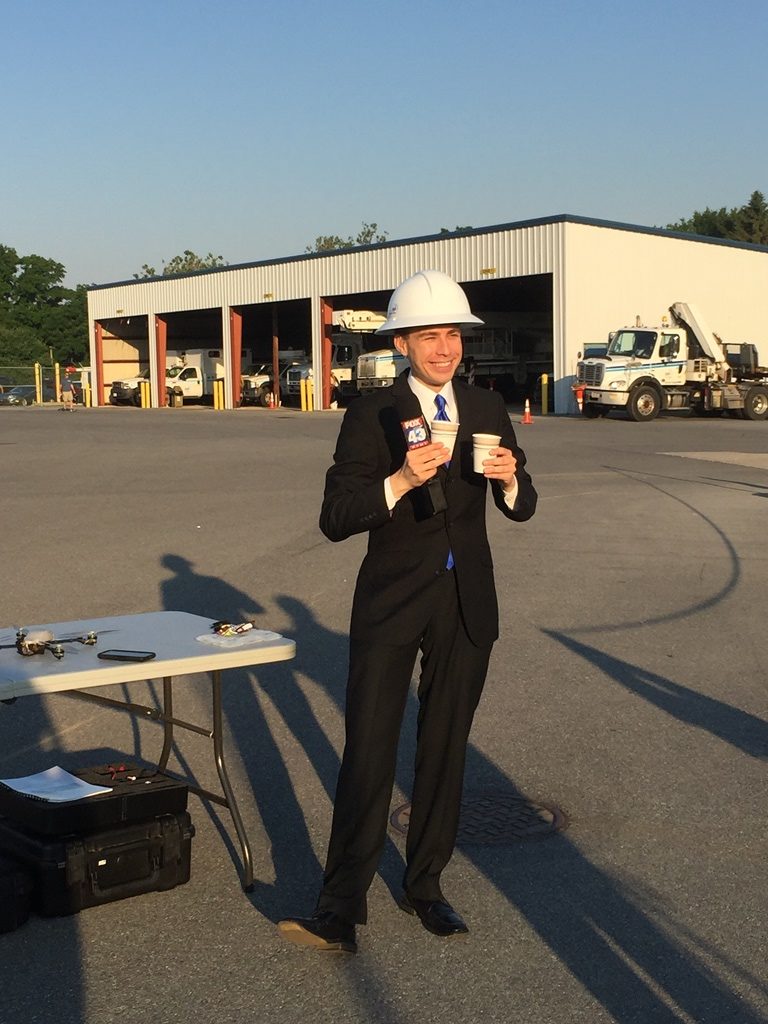 Drew (who wears a hard hat well) used cups of coffee and cold water for a demonstration of infrared cameras. We use infrared cameras for line and equipment inspections — “hot spots” may be a sign of problems that we can fix before they turn into outages.
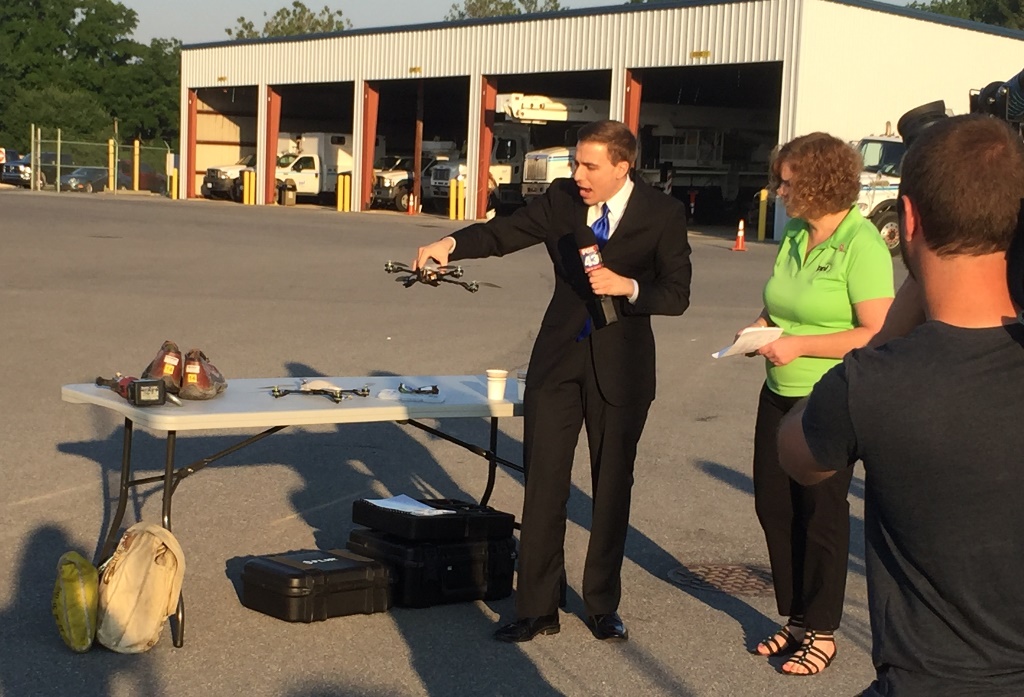
We use drones for some line inspections as well, as Drew and Dana discussed here.
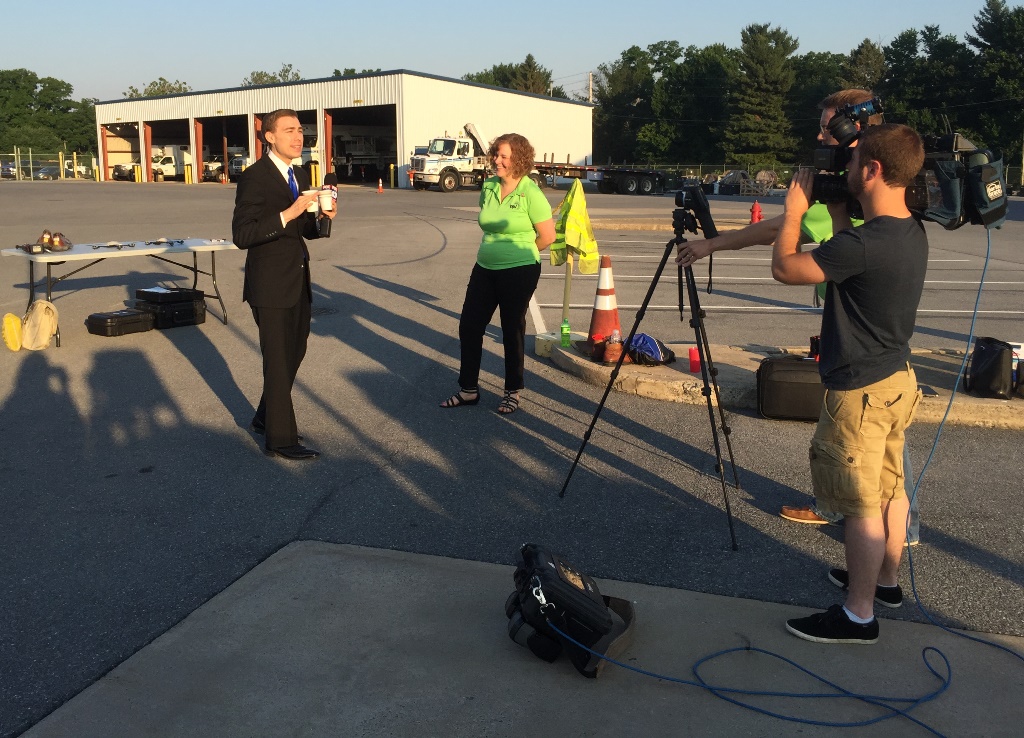
More from the hot-vs.-cold infrared demonstration.
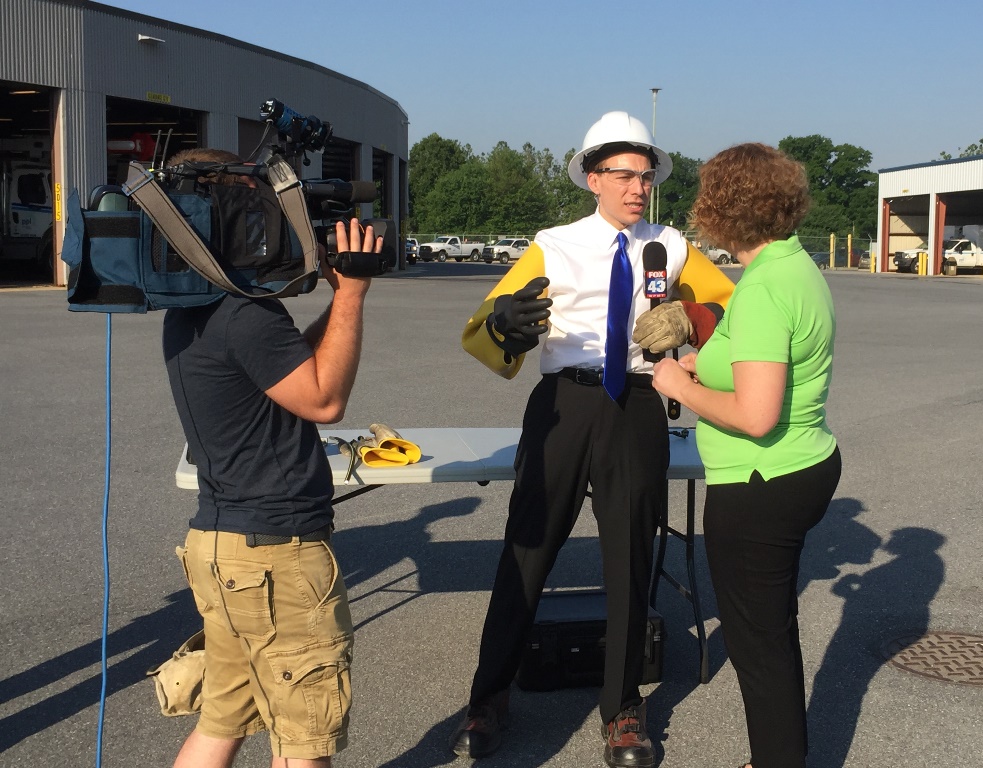
On one of the hottest mornings of the year so far, Drew put on some of the safety gear worn by our line workers for a taste of what it’s like to work in the field.
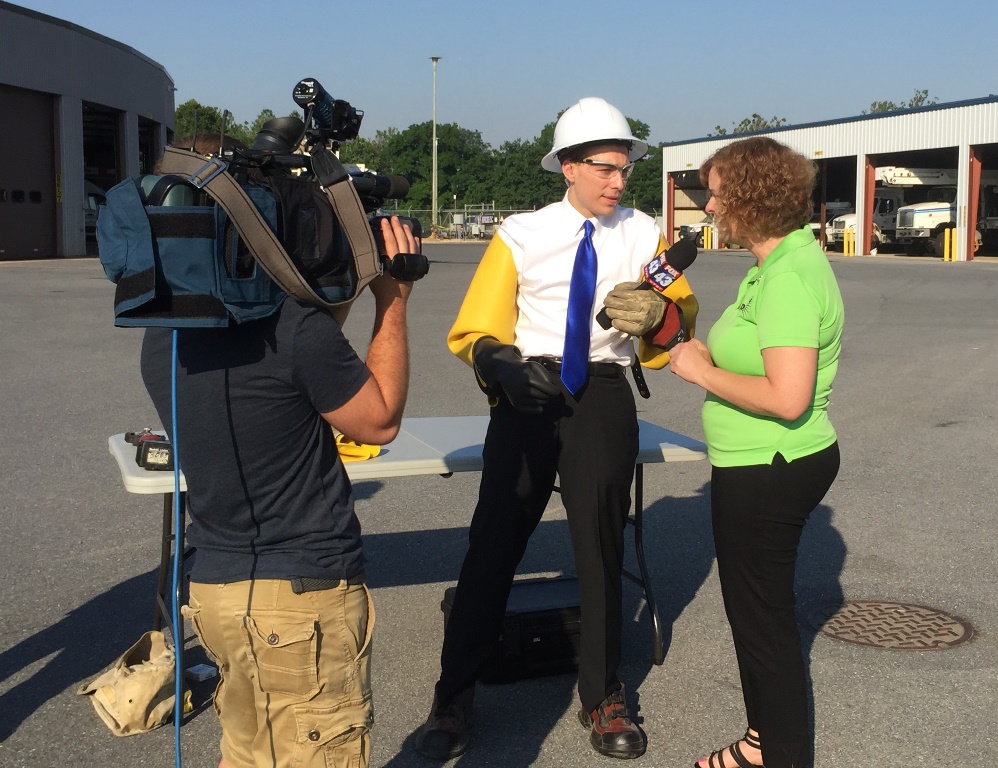
Dana explains the importance of safety in all we do.
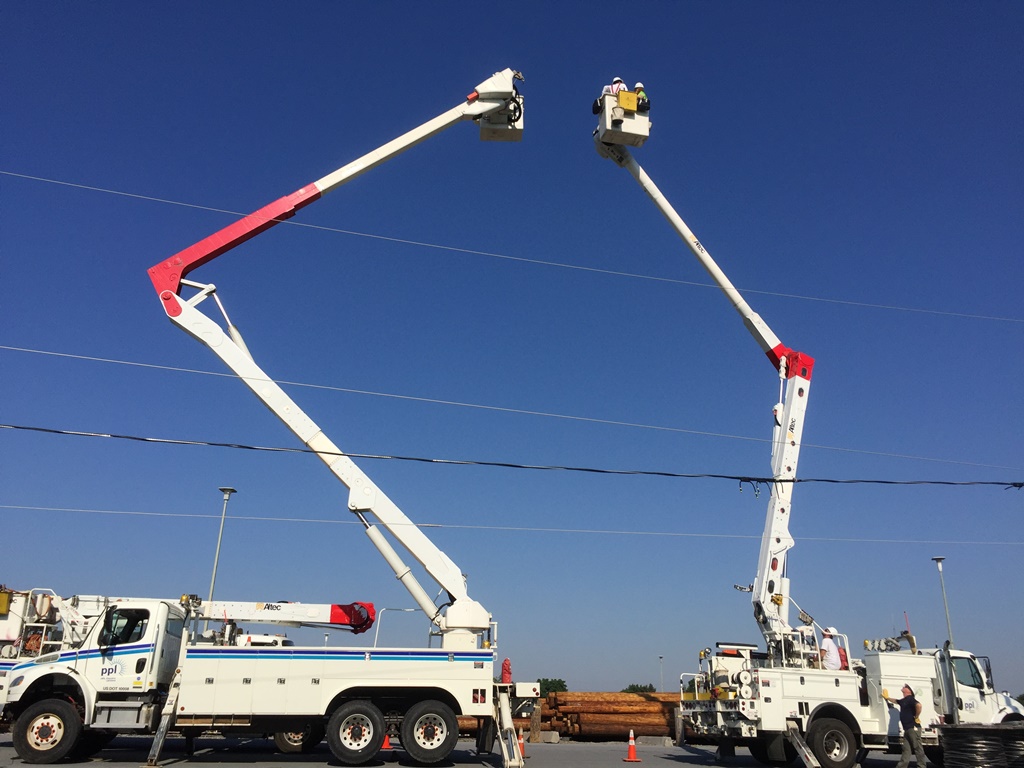
Getting a firsthand look of the line worker’s life, Drew, Dana and a cameraman go up in bucket trucks for a live broadcast.
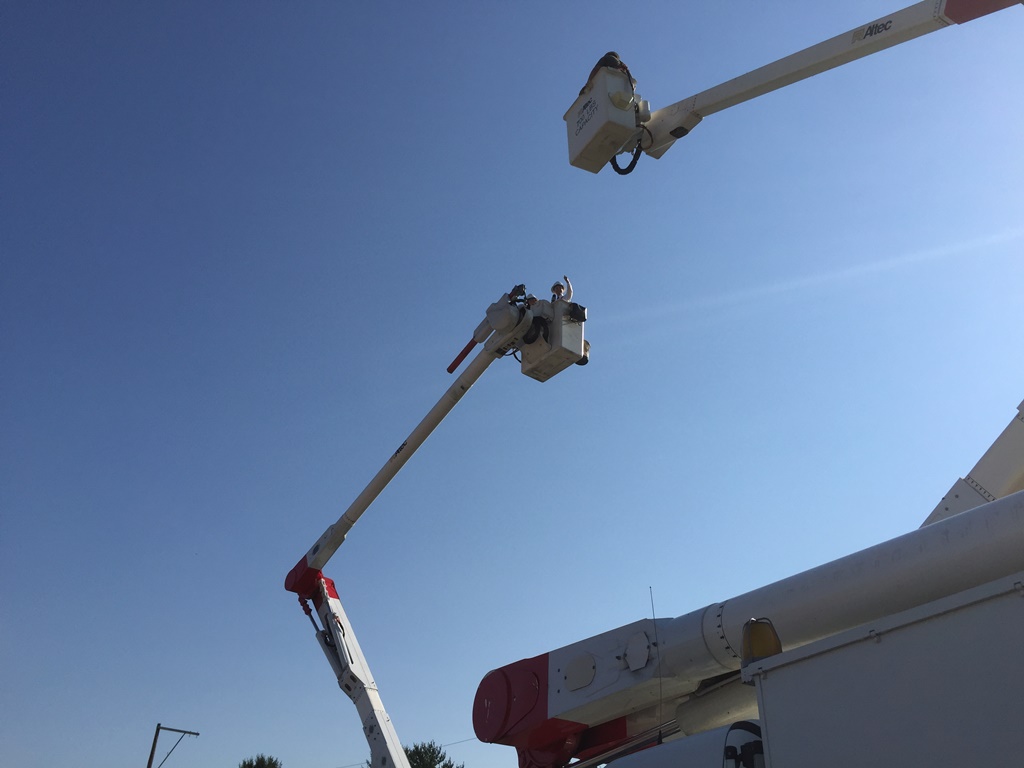
More from the live broadcast — going on the air, from up in the air.
Apr 18, 2017 | Safety and Security
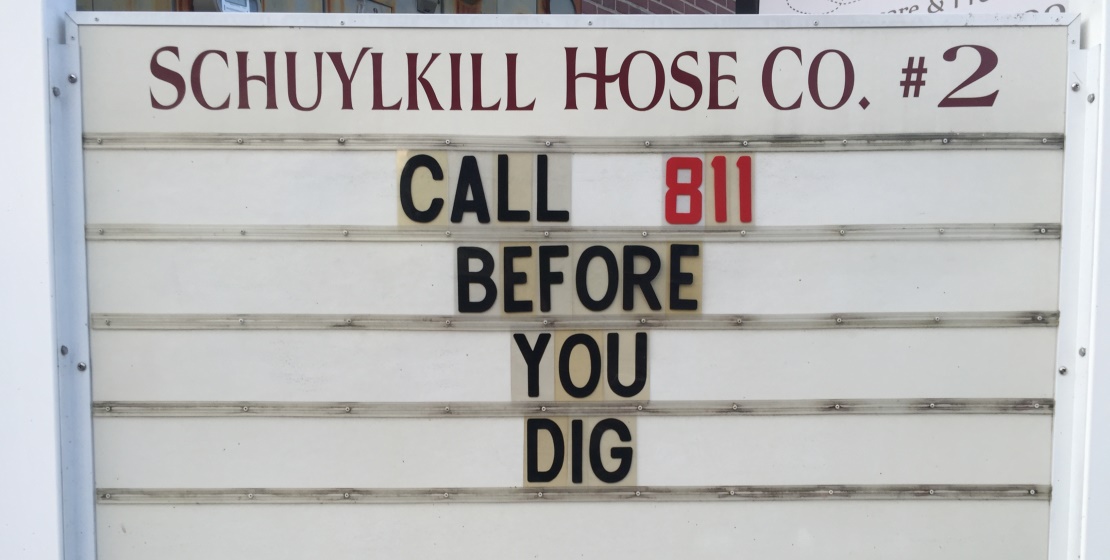
Our good friends at Pennsylvania 811 do a great contest every year that benefits fire companies while promoting public safety.
And it’s pretty simple.
Fire companies are asked to post an 811 message on the marquee outside their fire hall, take a photograph of it and send it to contact@pa1call.org.
Pennsylvania 811 will promote all of the entries on its Facebook page and on Twitter.
And those fire companies that send along photographs are entered in four different drawings for a $500 prize. Those drawings take place on July 1, Aug. 1, Sept. 2 and Nov. 23. So each fire company has four chances to win $500, while displaying a very important message.
Click here for details. If you’re a firefighter, or you know one, please share the information. You may be a winner!
April is a perfect month to get that message out for everyone to see, since it is National Safe Digging Month.
PPL Electric Utilities is proud to be among the utilities that sponsor the contest because we know calling 811 can save lives. Pennsylvania 811, the state’s 811 call center, says that underground utility lines are damaged every six minutes because someone digs without first dialing 811.
State law requires that an 811 call be made before digging with power equipment. When dialing 811, callers are connected to Pennsylvania 811, which notifies the appropriate utilities of an impending dig. Professional locators are then sent out to mark the site to show the location of underground utilities such as power lines.

Mar 30, 2017 | Safety and Security
Note: This post was updated April 7 with additional information.
We’ve learned about possible problems with nightlights that were distributed in energy efficiency kits and shared in schools.
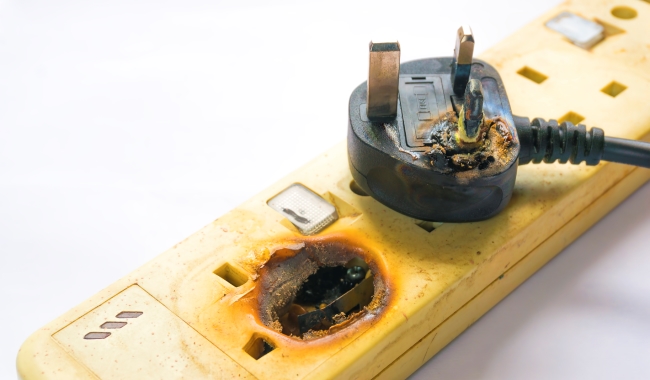
We are aware that some of these nightlights may get hot or smoke when plugged in. As a result of the potential risk of fire or shock from these nightlights, we are taking immediate steps to notify people who received them to unplug and not use the nightlights.
We are only aware of issues with nightlights that were distributed since June 2016 that are similar in design to the one pictured. We are not aware of any concerns with nightlights distributed prior to that time.
The Consumer Product Safety Commission has also been notified about this matter.
If you or your child received a nightlight since June 2016, unplug and stop using the nightlight immediately. Customers who received these nightlights will soon be receiving instructions as to what to do with them. Under no circumstances should you use them or provide them to others.
Your safety is important to us.
To see a list of schools that received the lights, click here: ppl-eemis-2017-03-21-01-03_school-addresses-1.xlsx
Anyone who received a nightlight from PPL can call Ecova, the energy-efficiency contractor that distributed the lights for PPL, at 1-877-486-9204 with any questions.
Aug 15, 2016 | Safety and Security
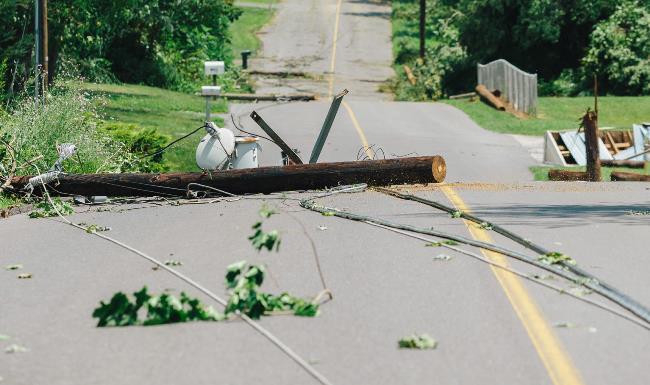
Stronger poles and wires and more comprehensive tree clearing are making our power grid more resistant than ever to storms, but lines occasionally come down when the weather turns nasty.
Wires also can fall when poles are hit in traffic accidents.
The first thing to do about any downed power line is to stay away from that wire and anything touching it. According to the Electrical Safety Foundation International, the ground around power lines may be energized up to 35 feet away. That’s more than 10 yards on a football field.
You can’t tell if a wire is live, or energized, just by looking at it. Assume all downed lines are live, no matter how they appear. Receiving an electrical shock can be deadly.
Some other downed wire safety tips from ESFi include:
- Don’t try to move a downed power line or anything else in contact with it by using another object such as a broom or stick. Non-conductive materials like wood or cloth can conduct electricity if even slightly wet.
- Be careful not to touch or step in water near a downed power line.
- Do not drive over downed power lines.
- If your car comes in contact with a downed power line while you are inside, stay in the car. Honk your horn to summon help, but direct others to stay away from your car. If you must leave your car because it’s on fire, jump out of the vehicle with both feet together and avoid contact with both the car and the ground at the same time. Shuffle away from the car.
Jun 17, 2016 | Safety and Security
The arrival of summer brings with it sun, fun and plenty of time spent outdoors, particularly when trying to catch up with projects around the house.
When tackling those household jobs, don’t forget to keep safety in mind, particularly around electricity. Statistics indicate that about 400 people are electrocuted each year in the U.S. and thousands more are injured as a result of electrical incidents. Summer is typically the prime season for those types of injuries.
7 Tips to help keep you safe while trying to check off all those items on your summer to-do list.
1. Be wise around wires. Summer is thunderstorm season, and while we’ve made significant investments in strengthening our system, fierce thunderstorms may bring down lines. No matter what the season, stay at least 10 feet away from fallen power lines and always assume that the wire is energized. Report the fallen wires to 1-800-DIAL-PPL.
2. Climb with caution. The summer months are a good time to do maintenance on roofs, trees, and shutters. When climbing ladders to do those jobs, be aware of any power lines that may pose a risk and avoid making contact with those lines. Always stay at least 10 feet away from those lines and make sure anything you are holding or touching is at least 10 feet away.
3. Before digging, call 811. Summer is prime yard work season. If a home improvement or landscaping project requires digging with power equipment, make a toll-free 811 call three business days before work starts to request a survey of underground utilities. Call 811 if it appears digging in your neighborhood is being done without a survey.
4. Keep power equipment away from water. If you undertake a yard project that requires power tools and extension cords near a pool, pond or water fountain, make sure to keep those devices and cords away from water and wet grass. Make sure that the cord used for the tool is plugged into a ground fault circuit interrupter.
5. Don’t overextend power cords. When cutting the grass or trimming weeds with electric-powered equipment, make sure extension cords aren’t damaged or frayed. Don’t overload them and don’t use multiple extension cords together.
6. Hold on to those balloons. Graduations and pool parties are summer staples. If your preparation for a party involves Mylar balloons, make sure to tie them down. They can cause power outages if they touch electrical lines.
7. Be cool AND safe. When you return indoors from a day of outdoor chores, you want a safe, properly functioning air conditioning system. Have a licensed inspector look over the system to make sure it’s operating safely and efficiently.
For more on electrical safety, visit pplelectric.com/safety.