Jul 11, 2022 | Community Involvement
Firefighters face many dangers – not the least of which are electrical hazards – while battling fires and working to keep others safe.
So when the Scranton Fire Department had the chance to learn from PPL Electric Utilities how to keep themselves and others safer around power lines and other electrical components, its members jumped at the opportunity.
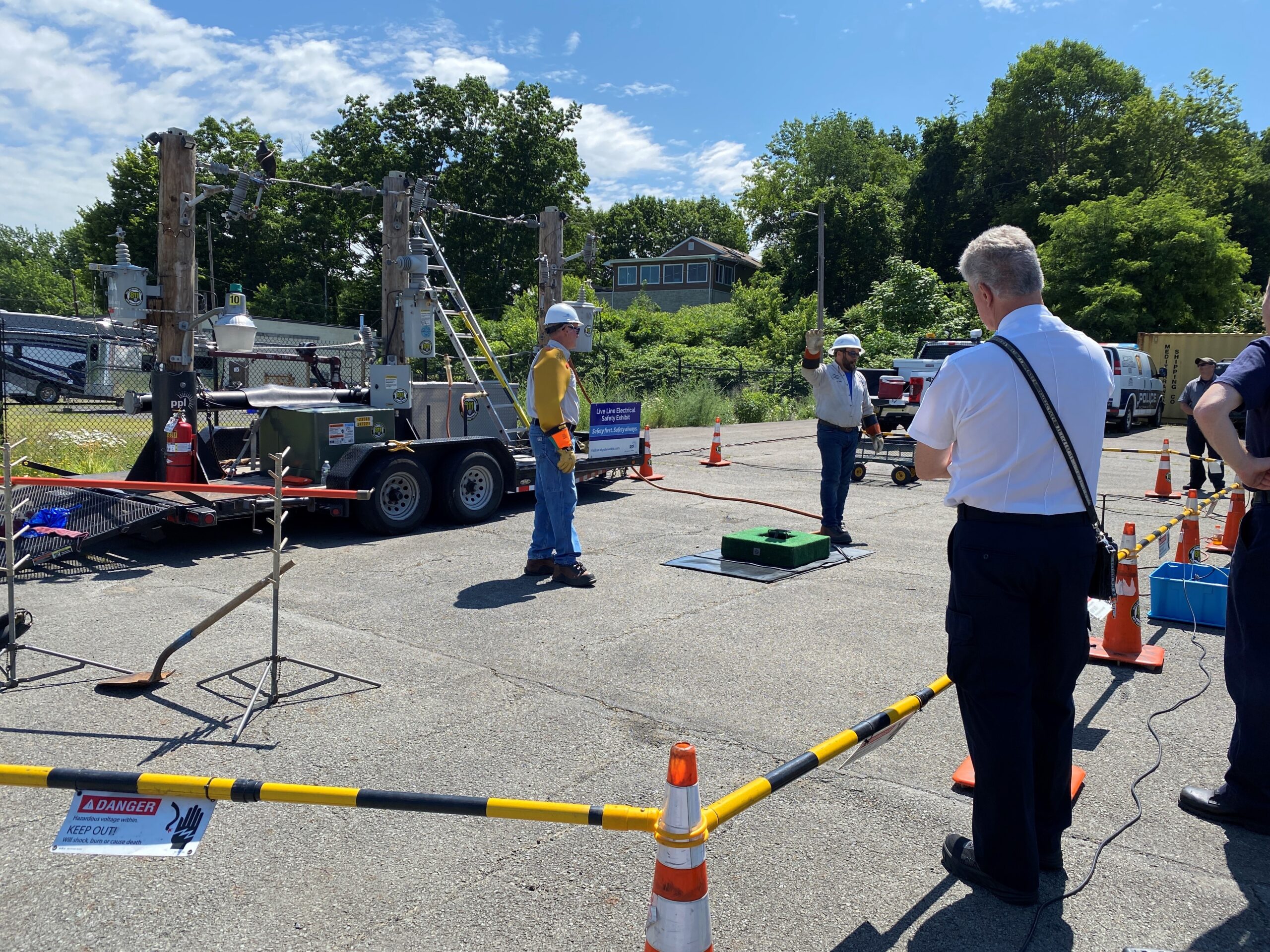
Dan Hallowich, deputy chief of Scranton’s Bureau of Fire, said the lessons we provided with our Live Line Electrical Safety Exhibit were “second to none.”
“More often than not, we have to rely on theoretical discussions and case study review to learn about electrical hazards,” Hallowich said. “This presentation was able to put theory into action for us. We were able to see, hear, and in some cases smell, the outcome of these hazards allowing the development of key sensory memories – which is key for split second decision making.”
“Without a doubt, the PPL Electric Live Line Safety Presentation has improved our knowledge and understanding of electrical hazards throughout the community resulting in a safer environment for our members.”
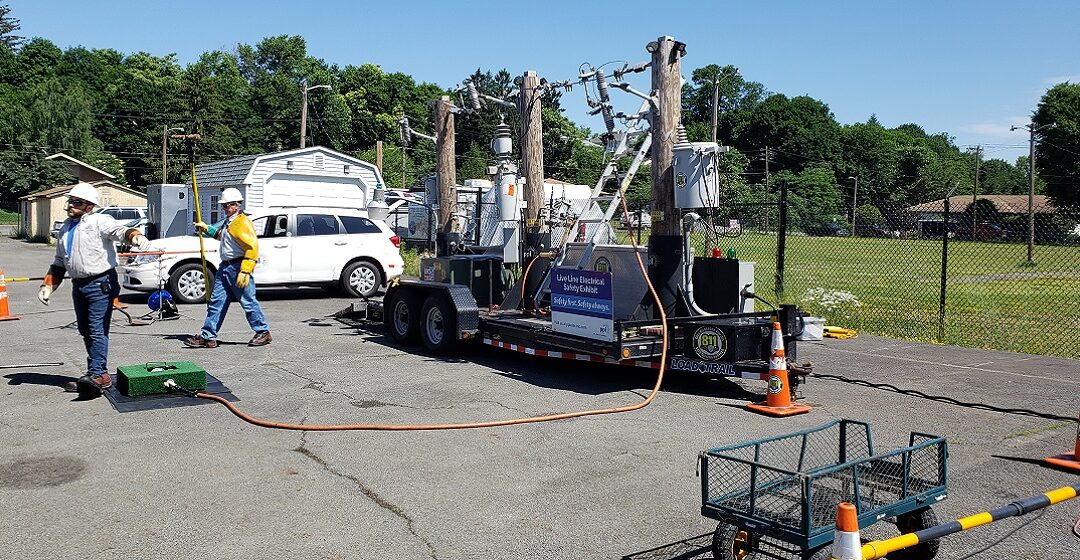
Our 7,200-volt exhibit features live electrical wires, utility poles and transformers. Using ladders, gloves, shovels and other tools in a controlled environment, trained PPL Electric staff wearing protective equipment recreate sparks, flames, smoke and crackling that occurs when those items, as well as tree branches and mylar balloons, contact live electrical lines. We also discuss the importance of calling 811 before digging.
To date, we’ve reached more than 55,000 people with nearly 600 demonstrations since 2016. And more than 50 electrical safety demonstrations have been scheduled for fire departments, municipalities, safety events and fairs across our 29-county service territory during 2022. We’ll once again be doing daily demonstrations at the Bloomsburg Fair, which takes place from Sept. 23 to Oct. 1.
If your organization is interested in a demonstration, please contact Doug Haupt at dlhaupt@pplweb.com or 610-297-2461. Available dates for 2022 are limited, but 2023 bookings have begun. There are several requirements for the demonstrations: an audience of at least 50 people is required; we need an area suitable to accommodate the exhibit; and the host organization is asked to invite nearby first responder organizations.
For more information about how we keep our communities safe, visit pplelectric.com/safety.
Jul 11, 2022 | Storms and Outages
No matter what kind of weather passes through our region, we’ll be prepared.
Here’s how you can stay safe and prepare for all types of storms:
- Regularly check local news, radio, or your mobile device for information about storm watches or warnings in your area.
- Keep supplies in an emergency preparedness kit. Include water bottles, non-perishable food, blankets, first-aid supplies, flashlights, and a battery-powered radio.
- Make sure your yard is free of heavy debris that could be tossed around in the wind. Trim trees to prevent limbs from falling on your house.
Tornadoes
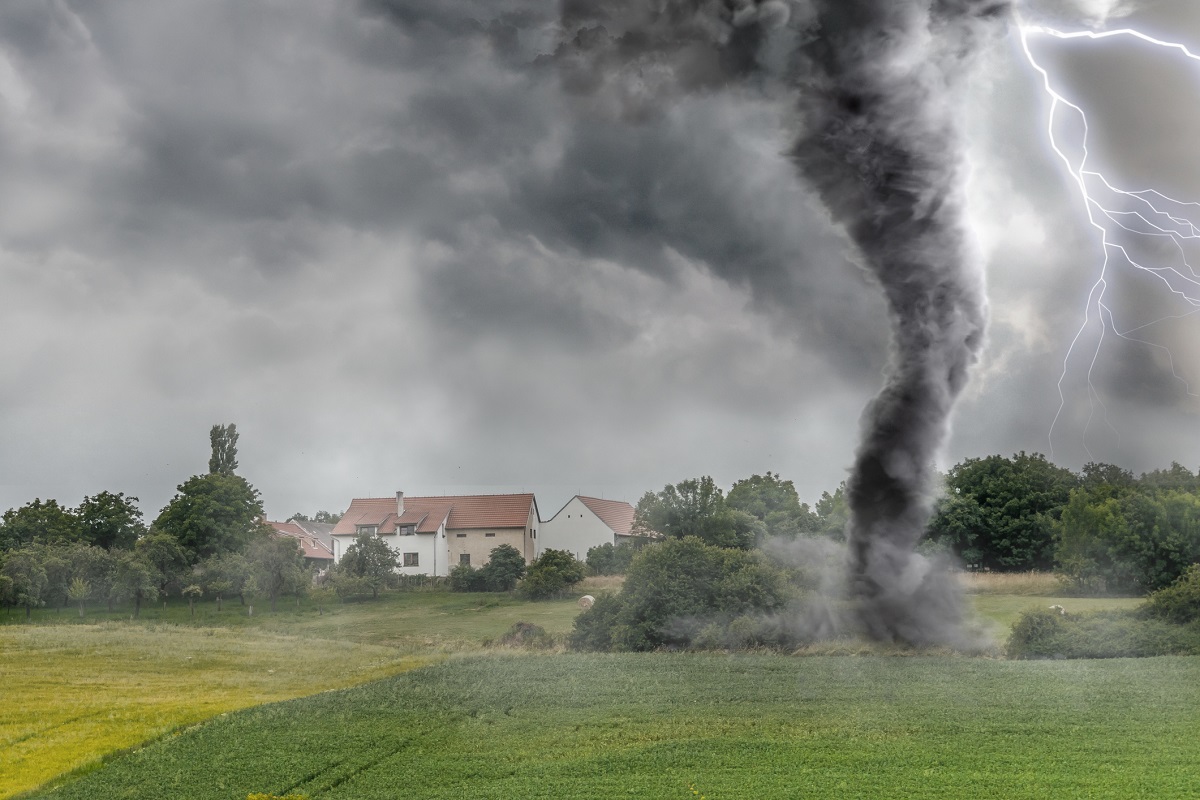
Tornadoes are capable of destroying homes, uprooting trees, and hurling objects through the air.
- Choose a safe area in your home where you and your family can gather if a tornado warning is issued. This area should be in the basement or a room with no windows and on the lowest level of your home.
- Conduct routine tornado drills with the entire family so everyone knows where to go and what to do if a tornado is approaching.
- Watch for signs of a tornado: a dark-colored sky, low-lying clouds, large hail, or a loud roar.
Hurricanes
Hurricanes are violent storms that often cause property damage and life-threatening hazards, such as high winds and flooding.
- Create an evacuation plan and practice it ahead of time to avoid confusion during the event.
- Close windows, doors, and hurricane shutters.
Thunderstorms
Lightning kills more people every year than tornadoes and hurricanes. Rain and heavy winds can cause flooding, damage to homes, and widespread power outages.
- If a thunderstorm appears likely, postpone all outdoor activities.
- If a thunderstorm watch or warning is issued, take shelter in your home or other building.
- Shutter all windows and close exterior doors securely.
Floods
Flash flooding can be among the most damaging and costly of all natural disasters.
- If you live in a flood-prone area, keep sandbags, plywood, and plastic sheeting on hand.
- Seal the walls in your basement with waterproofing compounds to avoid seepage.
Power outages
Although we work hard to maintain reliable electric service, a storm may lead to a power outage. You can report or check the status of an outage at pplelectric.com/outage or by texting “OUTAGE” to TXTPPL (898775).
Source: Questline
Jun 7, 2022 | Safety and Security
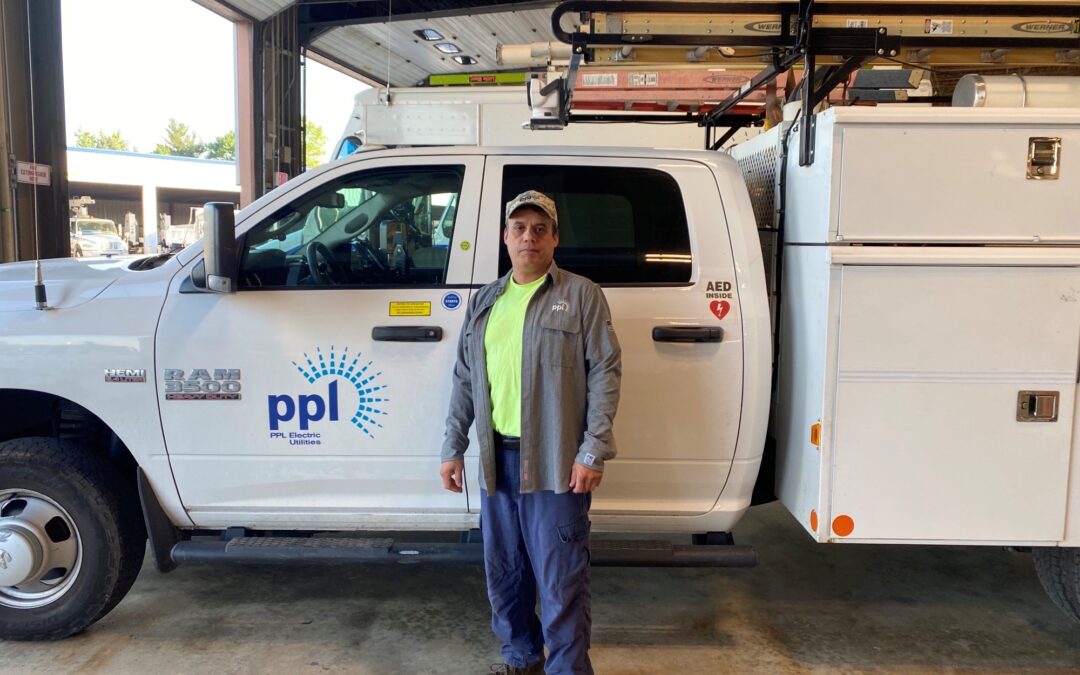
Miguel Cabrera didn’t think twice when he saw a ladder leaning up against a power line on his way to a job site in Lancaster.
He immediately parked his vehicle, put his hazard lights on and approached a man on the ladder to make him aware of the hazard.
“I walked up to him and said, that ladder is up against a cable that’s energized,” said Cabrera, a journeyman electrician. “He said, ‘What do you mean?’ I said, it can kill you.”
The man, who was using the ladder for work he was doing on a house, said he was told it was a cable wire, as opposed to an electric wire. He was apologetic and grateful that Cabrera took the time to make sure he was safe.
Cabrera’s good deed was a great example of looking out for the safety of others. The situation also was a reminder to look up and make sure there are no wires nearby when setting up a ladder for any job.
Mar 29, 2022 | Safety and Security
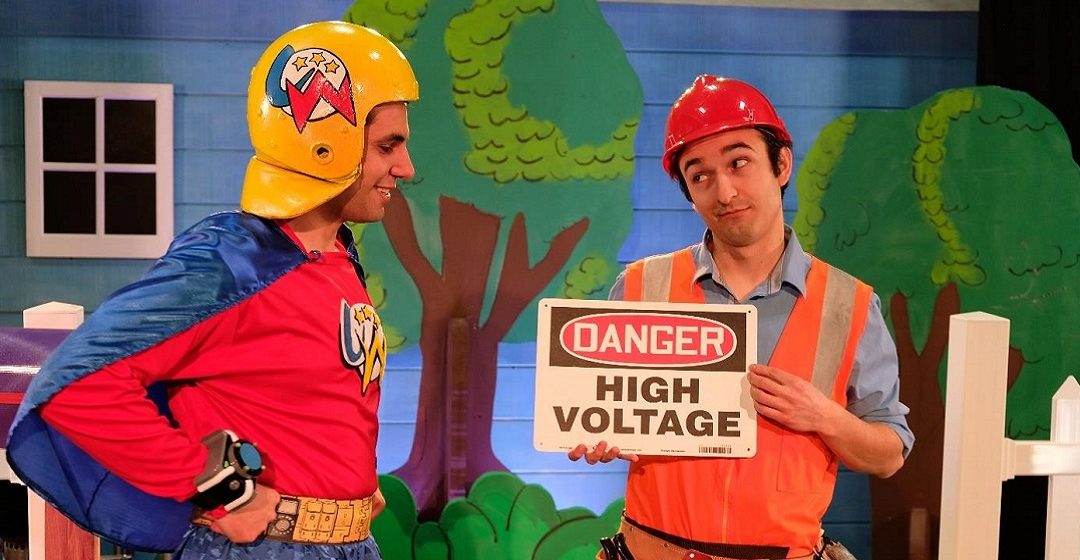
When it comes to electricity, no one knows more about how it works – and, more importantly, how to stay safe around it – than illustrious superhero Captain Wattage.
Just ask the hundreds of children across our service territory that saw him in action this spring.
Approximately 5,500 children in schools across central and eastern Pennsylvania saw our latest sponsored theater program designed to give long-lasting lessons about electrical safety.
The program, shown to students via livestream, featured Captain Wattage, who faces off against nemesis Vivica Voltage, who tries to get people to be unsafe around electricity. Through a series of lessons and with the help from Lineman Larry, Captain Wattage teaches how electricity is made, the uses of electricity, while identifying dangerous situations and how to stay safe around electricity.
It marks the seventh year that we’ve provided the program to schools in the communities we serve. To date, more than 120,000 elementary school children at more than 300 schools across PA have seen the program.
The online show is supplemented by student playbooks, posters and an e-learning package including games, e-books, hands-on lessons, and assessments for educators. We sponsor every aspect of the program, making Captain Wattage a cost-free supplement to lessons in science, literacy, and the arts taught by schools today.
For more information about electrical safety for kids, including games and activities please visit pplelectric.com/safety.

Mar 25, 2022 | Safety and Security
Are you planting any trees or shrubs this spring? If so, are you planning to call 811 before you start digging?
If you think a hole being dug for trees or plants isn’t enough to make the free 811 call, you may be wrong.
Some utilities could be buried inches below ground. And, unfortunately, about one in five people who dig don’t call 811 because they think their project isn’t deep enough for the call, according to Common Ground Alliance, a North American organization dedicating to preventing damage to underground utilities.
An 811 call is free for homeowners excavating on their residential property.
The law requires an 811 call before digging with power equipment, including backhoes, excavators, post hole diggers, and trenchers.
But it’s best to play it safe with any digging project by making the 811 call. Once placing the call, a crew will come out to the dig site to look for potential underground utilities and mark them with paint.
Here’s the information you will need when calling 811:
- The county and municipality in which the planned dig is located.
- The street name and address.
- The nearest intersecting/cross street to the address.
- Details of the dig site, including the area of the property where excavation will occur and what kind of work is being done.
- When the project is scheduled to take place.
If you hire a contractor to do the excavation for you, they are required to call 811 themselves.
Stay safe this spring and call before you dig.
For more info, visit the Pennsylvania 811 website at pa1call.org.