Sep 29, 2026 | Safety and Security
October brings pumpkins, costumes and trick-or-treating. It’s also Cybersecurity Awareness Month — a good reminder that some of the scariest tricks aren’t at your front door. They can show up in your inbox, text messages or search results.
The good news: You don’t need to be a technology expert to protect yourself. A few smart habits can help you spot the tricks, avoid the traps and keep your electric account — and other online accounts — safer.
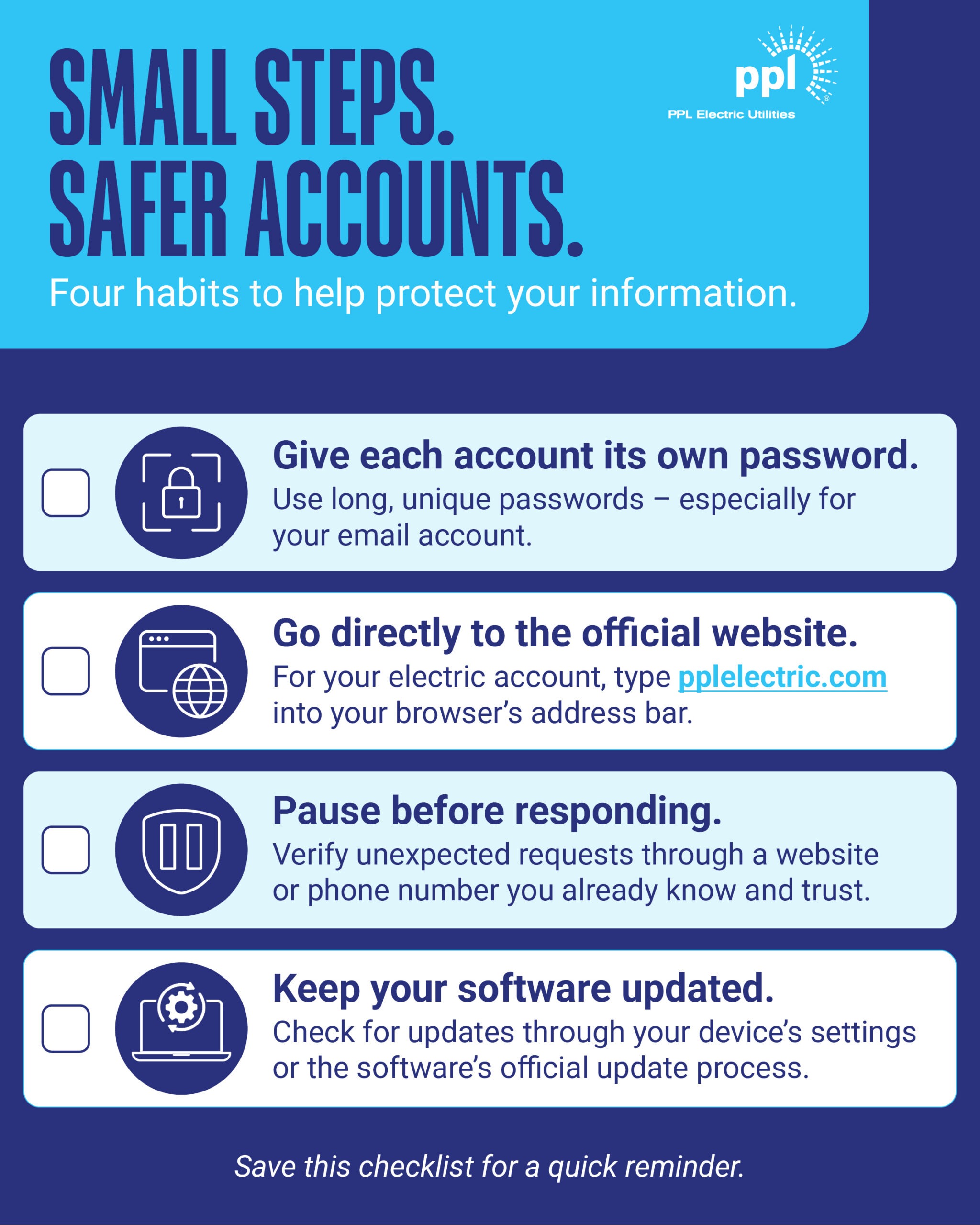
1. Don’t let one password unlock the whole haunted house.
Reusing the same password across several accounts may feel convenient, but it can put more than one account at risk. If a scammer gets that password, they may try it on your email, banking, shopping or utility accounts.
Choose a long, unique password for each account. A password manager can help you create and store different passwords so you don’t have to memorize them all.
Another option is a passphrase: several random words used together as a password. Avoid familiar sayings, song lyrics or movie quotes that could be easier to guess.
What does a passphrase look like? Think of unrelated words strung together, such as “cactus ribbon planet otter velvet lantern.” This is just an example — not a password to copy. Create your own combination and use it for only one account.
Give your email account special attention. Password-reset links for other accounts often arrive in your inbox. Someone who gets into your email could use those links to gain access to other accounts, so protecting your inbox helps protect more than your messages.
A useful first step: Replace a password you’ve reused with one you don’t use anywhere else.
2. Look twice before you enter the digital doorway.
Scammers can set up lookalike websites or buy search ads that use a trusted company’s name. At a glance, those pages can seem legitimate — but they may be designed to collect payments, passwords or personal information.
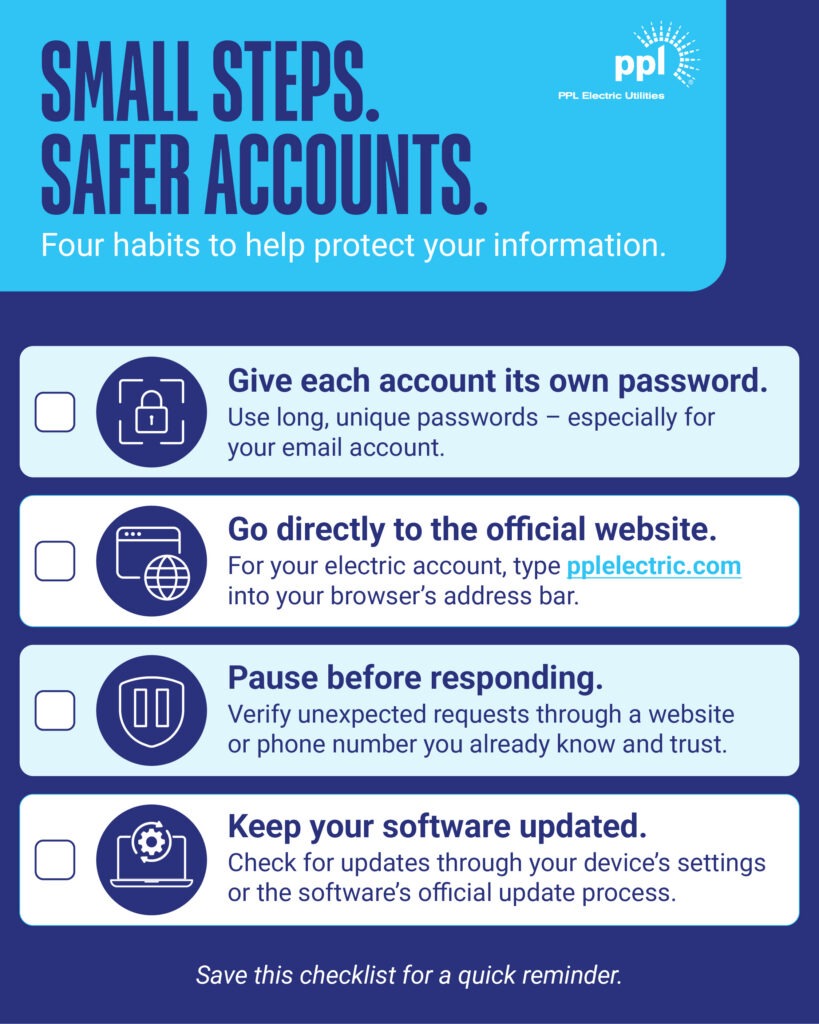
For your PPL Electric account, type pplelectric.com directly into your browser’s address bar, rather than searching for a payment page. Don’t assume a search result or advertisement belongs to PPL Electric just because it includes our name.
The same habit applies to other bills: use the website address or phone number printed on your bill instead of relying on unfamiliar search results.
3. Treat urgent messages like a jump scare: pause first.
An unexpected text says your bill is overdue. An email claims there’s a problem with your payment information. A message asks you to confirm account details right away. These urgent requests can be a trick to get you to share information or follow a harmful link. A familiar company name or logo can be part of the disguise — it doesn’t prove a message is legitimate.
Before responding, check the request through a separate, trusted channel. Don’t click suspicious links or open unexpected attachments. Use a website or phone number you already know is legitimate — not the contact information provided in the questionable message.
For a message about your PPL Electric account, open your browser and type pplelectric.com directly into the address bar to check your account. You can also call 1-800-342-5775 to verify a concern. You don’t have to decide whether a message is real based on its appearance alone.
4. Keep your devices from turning into a haunted house.
Software updates aren’t just about new features or a fresher look. They can also fix security weaknesses in the phones, computers, browsers and apps you use to manage your accounts. Install available updates and turn on automatic updates where available.
Be careful about where you get those updates. Scammers also advertise fake software downloads and use pop-up security warnings to get people to contact fraudulent tech-support services. Don’t follow an unfamiliar download advertisement or call a number displayed in an unexpected security pop-up.
Instead, check for updates through your device settings or the software’s official update process. Start with the phone or computer you use to pay bills or check email, and check whether automatic updates are turned on.
If the trick worked, take action quickly.
There are steps you can take. If you shared a password, change it through the account’s official website and on any other account where you used the same password. If you paid a scammer, promptly contact the bank, card issuer, or payment service you used and ask whether the payment can be reversed.
If you think a scammer has your personal or financial information, the Federal Trade Commission’s IdentityTheft.gov website provides steps based on the information involved.
This fall, make cybersecurity part of your routine.
Start with one simple step today: replace a reused password, check your device for updates or go directly to the official website before signing in. Small habits like these can help you avoid online tricks — not just at Halloween, but all year long.
For more information about recognizing and avoiding utility scams, visit pplelectric.com/scams. To verify a concern or report a suspected PPL Electric scam, call 1-800-342-5775.

Jul 8, 2026 | Safety and Security
With energy supply prices, summer usage and rates changing, you may see more calls, ads, emails, texts or door-to-door offers about lowering your electric bill.
You have choices when it comes to your electricity supply. Many offers come from licensed suppliers, but others might be a scam. So, it’s important to verify before you switch suppliers, sign a contract or share account information — be sure you understand what you’re being offered and how it could affect your bill.
The best first step is simple: pause, verify who you’re dealing with and read the terms before you decide.
Understand what the offer applies to
Your electric bill includes different types of charges, split between delivery and supply.
- Delivery covers the cost to deliver electricity safely and reliably across our distribution system. This varies based on usage.
- Supply covers the electricity you use, as well as transmission charges. If you do not choose a third-party supplier, we purchase electricity for you and pass on the cost of generation supply without markup or profit. If you do choose a supplier, your supply rate is based on the agreement you make with that supplier.
That distinction matters because supplier offers apply only to the supply portion of your bill, not your entire electric bill.
For more details about the breakdown of charges on your bill, visit our Bill Explainer page.
Know your current rate before you compare
Before reviewing an offer, check your current supply rate. You can find your supplier information and supply rate on your bill or on your online account.
The Price to Compare is the default supply rate you’ll pay if you do not shop for electricity with a third-party supplier. It can be helpful to use the Price to Compare as a reference point when reviewing offers.
You can learn more about shopping at pplelectric.com/shopping.
Questions to ask before you switch
A lower advertised rate may sound good, but the details matter. Before you switch suppliers or agree to a new contract, ask:
- Is the rate fixed or variable?
- Is it an introductory rate?
- How long does the rate last?
- What happens when the introductory period ends?
- Are there any additional charges besides the price per kWh?
- Are there monthly, cancellation or early termination fees?
- Will the contract renew automatically?
- Will I receive written contract terms before I agree?
A clear offer should explain the price, the length of the agreement, fees, renewal terms and what happens when the contract ends.
The Pennsylvania Public Utility Commission’s official shopping website, PA Power Switch, provides more information about supplier contract terms.
Watch for misleading or high-pressure tactics
Be cautious if someone contacts you unexpectedly and:
- Says they represent PPL Electric or are calling “on behalf of PPL” to sell supplier service.
- Says you must switch suppliers to avoid shutoff.
- Pressures you to act immediately.
- Focuses only on a low introductory price without explaining what happens later.
- Offers a gift card or incentive in exchange for account information.
- Asks for personal, financial or account information before you can verify who they are.
- Claims the offer applies to your whole bill.
We do not market or sell supplier services by phone or door to door. If someone claims to represent PPL Electric and you are unsure, stop the conversation and contact us directly.
You can review scam prevention tips on our Scams & Fraud Prevention page and Fraud & Deceptive Marketing page.
Verify before you share information
Scammers can make caller ID look real, create fake websites, send fake payment links or appear in search results through online ads. That’s why it’s important to use official contact information.
If you receive an unexpected call, email, text, ad or in-person visit:
- Do not feel pressured to act right away.
- Go directly to pplelectric.com.
- Call us directly at 1-800-342-5775.
- Avoid clicking on suspicious links.
- Do not provide banking or payment information.
The Federal Trade Commission also recommends contacting your utility directly if someone threatens immediate shutoff or demands payment. You can read more on the FTC’s utility scam guidance page.
The bottom line
Shopping for electricity supply is your choice. Some offers may be legitimate and can help you save, but it’s important to understand the details before you switch, sign or share information.
Before you switch: pause, verify and understand the offer.
For more information, visit PPL Electric’s Rates and Shopping page, Bill Explainer page or Scams & Fraud Prevention page.

Nov 18, 2025 | Safety and Security
The holidays should be enjoyable. But scammers see this season as a chance to take your money and personal information.
Utility Scam Awareness Day is Nov. 19. We’re joining Utilities United Against Scams (UUAS) to help you spot the warning signs and protect yourself. The Federal Trade Commission reports that Americans lost$12.5 billion to impostor scams in 2024, a 25% increase over the prior year.
As your schedule gets busier, scammers get bolder. They want you to be distracted. Here’s how they try to fool you, and how you can stay safe.
How scammers try to trick you
Scammers rely on pressure, fear and fake information. These are the most common tactics we see.
1. The threatening phone call
What they do:
Someone pretends to be from PPL Electric and claims your bill is past due. They demand immediate payment and push you to use a prepaid card, gift card, CashApp, Venmo, Zelle or cryptocurrency.
Red flag:
We never demand payment right away or ask you to pay through apps or gift cards. If you’re at risk of shutoff, we contact you through official channels and offer payment options.
What to do:
Hang up. Sign in at pplelectric.com to check your real account status or call 1-800-342-5775.
2. The fake caller ID
What they do:
They “spoof” our number so your caller ID looks legitimate.
Red flag:
Anything urgent, pushy or demanding personal information should make you pause, even if the number looks right.
What to do:
Hang up and call 1-800-342-5775 yourself.
3. Phishing emails and texts
What they do:
You get a message saying your bill is overdue, or your account needs an update. There’s a link that leads to a fake site.
Red flag:
Typos, unusual sender addresses, strange links or generic greetings.
What to do:
Don’t click. Go to pplelectric.com by typing it directly into your browser.
4. The impersonator at your door
What they do:
Someone shows up pretending to be a PPL Electric employee. They might say they need inside access, inspect equipment or demand payment.
Red flag:
Our employees carry official photo ID badges. We don’t ask for payments in person, and we don’t sell electricity door-to-door.
What to do:
Ask for ID. If something feels wrong, don’t engage. Call 1-800-342-5775.
Why scammers target the holidays
Scammers know that during the holidays:
- You’re juggling travel, shopping and family plans.
- Unexpected charges may not stand out.
- You’re checking accounts less often.
- You’re in a generous mindset.
That combination makes it easier for them to slip through the cracks.
Your scam-safe checklist
Use these steps to protect yourself and others:
✔ Slow down. Pressure to act fast is the biggest warning sign.
✔ Verify. Hang up and call us directly at 1-800-342-5775.
✔ Share what you learn. Talk with older relatives, neighbors, and friends. They’re often targeted.
If You Think a Scammer Reached You
Take action right away:
- Stop the contact — hang up, delete the message, or close the door
- Tell us at 1-800-342-5775
- Report it to your local police
- File a report with the FTC at reportfraud.ftc.gov
- Warn friends and family
We’re Here to Help
We work closely with law enforcement and UUAS year-round to protect our customers. This Utility Scam Awareness Day, take a moment to learn the signs and share them with someone who may need the reminder.
For more resources, visit pplelectric.com/scams.
Follow us for updates:
Remember: We will never demand immediate payment or ask you to use gift cards, payment apps, or cryptocurrency.
When in doubt, check your account at pplelectric.com or call 1-800-342-5775.
Nov 15, 2021 | Safety and Security
We join utilities across the nation to warn customers about scams. This year, the Utilities United Against Scams (UUAS) campaign is ‘End the Call. End the Scam.’ The campaign focuses on utility impostor scam calls and the advanced tactics that scammers use to target customers. Since the pandemic began, the number of scams has escalated, and scammers have increased their efforts to take advantage of financial challenges many customers have faced.
So, what can you do to stop a scam and avoid these scammers’ tactics?
UUAS has tips to help:
If you receive a call from a possible scammer, slow down, verify, and stop before you act.
- Slow down. Scammers may ask you for personal information and immediate payment. Don’t let them rush you into making a decision.
- Verify. Scammers often pose as employees. If you are unsure whether the call is from PPL, hang up and check your online account at pplelectric.com or contact us directly.
- Stop before you act. Think about the information the caller is asking of you. If it seems unsafe or incorrect, rethink the situation and ask questions.
Scammers are extremely sophisticated and use strategies that can make you believe they are not an impostor. Here are a few common scams and tips to protect yourself:
- Scammers often threaten immediate service termination. They ask for personal information or demand payments to stop a termination. We’ll never demand immediate cash to avoid shut-off.
- They’ve been taking advantage of increased online activities and are asking for payments through digital payment apps or direct transactions with banking institutions.
- They prey on households with tight budgets. They’ll inform you that you overpaid a bill and are due a refund, but first they’ll ask for your bank account information to process a transfer.
- They also are posing as utility employees by claiming the number on the caller ID does not match the utility’s phone number because of COVID-19 remote work policies.
As creative as these scammers get, it’s important to be vigilant and remember that anyone can be targeted. If a scammer targets you, they may also target your neighbor. That’s why we must continue to raise awareness. Together, we can #StopScams.
Visit the Utilities United Against Scams website for more information.
Utilities United Against Scams, 2021

Jun 8, 2021 | Safety and Security
What does a utility scam look like? We think these emojis will help you remember!
If you know what to watch for, you’ll never have to look worried, like this:

# # # # #
“Pay now or we’ll cut you off.”
Scammers say this; we don’t. If you are at any risk of losing service, we’ll give you plenty of notice. You won’t be surprised by a phone call threatening imminent shutoff.

# # # # #
“Go get a prepaid card.”
Scammers often insist that you have to pay with prepaid cards or digital payment apps, because it’s convenient for them. We don’t pressure you to use these types of payments.

# # # # #
“This is a fee to connect your meter.”
Scammers sometimes make this claim. Any meter-related costs you have to pay are included as part of your bill. There’s no extra fee to get a meter fixed, replaced or connected.

# # # # #
“But I said–” *click*
Don’t be scared, pressured or intimidated by scam phone calls. Just hang up. Call your local police if you feel threatened.

# # # # #
Want to make sure your account is not overdue?
For peace of mind, you may want to verify your account is in good standing after receiving a scam call. To do that, log on at pplelectric.com, to check your account status.