May 6, 2021 | Energy Efficiency
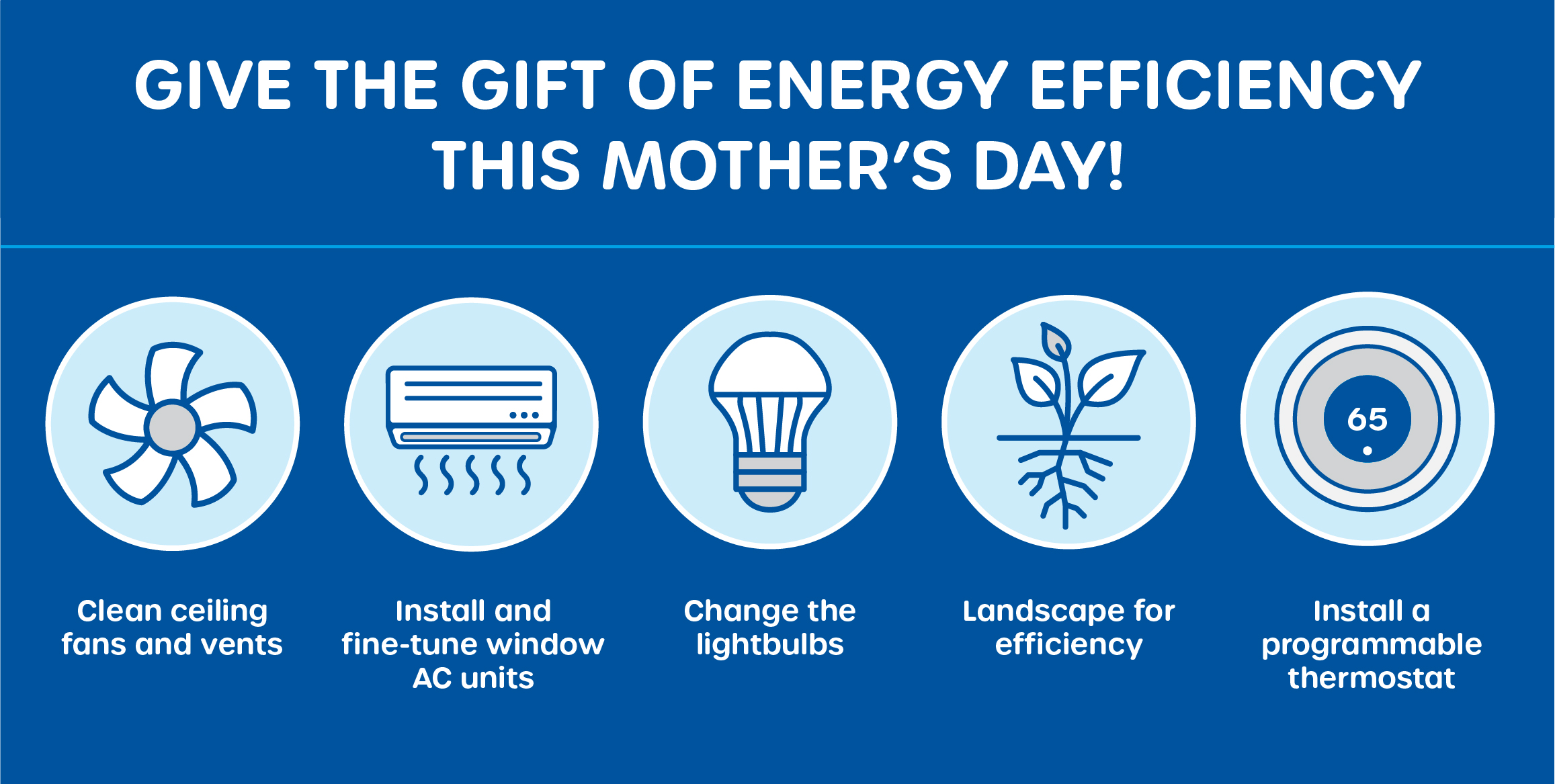
Flowers and candy are Mother’s Day mainstays, but this year try something new— make energy-efficient changes around your mom’s house for a gift that keeps on giving all year long. But, don’t forget the flowers. She’s your mom, after all.
Here are a few tips:
Clean the ceiling fans and vents.
- Not only can they be hard to reach, but they’re prone to dust buildup. Clogged vents could make Mom’s heating and cooling systems work harder to move air through the house. By using the ceiling fan and turning up the thermostat by only two degrees, your mom can lower air conditioning costs by up to 14%.
Install and fine-tune her window AC unit.
- If your mom lives in a home without central air, save her the hard work of installing window units. Be sure she knows how to use the timer settings to keep the unit running efficiently. Setting the timer to turn on the unit when she arrives home instead of running when the house is empty, for instance, will save money.
Change the lightbulbs.
- Swapping out costly and inefficient incandescent lightbulbs in Mom’s home with LED bulbs can save up to $75 each year, and they can last 3 to 25 times longer.
Landscape for efficiency.
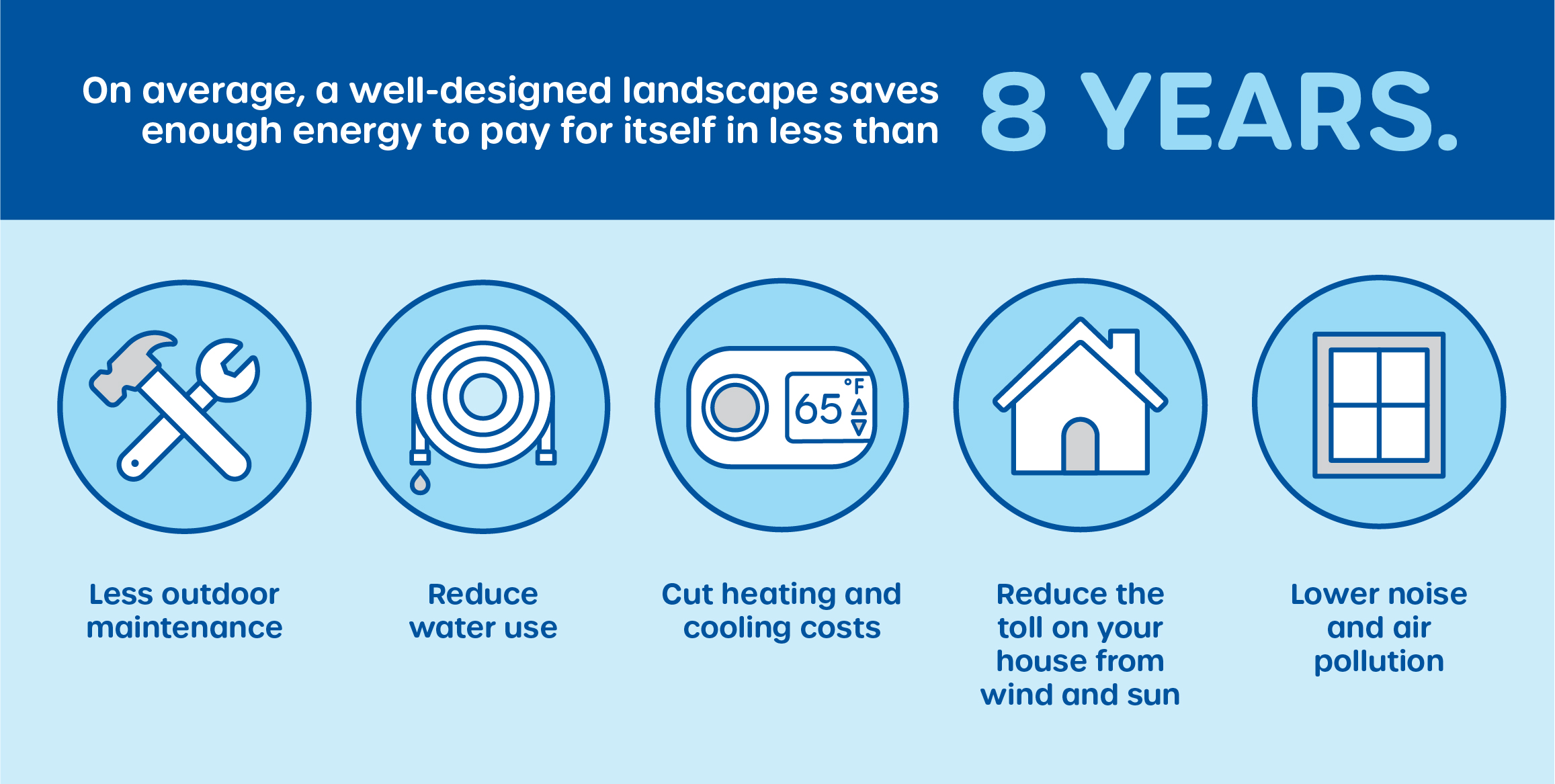
- Planting trees, shrubs and other landscaping features in appropriate places brings a bounty of energy savings, from cutting heating and cooling costs to reducing noise and air pollution. On average, a well-designed landscape saves enough energy to pay for itself in eight years.
Install a programmable thermostat.
- Help Mom set it and forget it. Programmable thermostats adjust when the heat or air conditioning turns on according to a preset schedule. Keeping the house warmer than normal when she is away and at 78°F when she’s home can save Mom up to 10% on her energy bill every year.

Apr 1, 2021 | Energy Efficiency
Laundry can be daunting, right? It seemingly never ends. Since the average household requires at least a few loads per week, it’s worth taking a closer look and finding ways you can save on your laundry-related electricity costs.
If you’re in the market for a new washer, there are efficient options available that will help you save over the lifetime of the unit. But if you prefer to hang on to your current machine, there are still plenty of ways to save energy and money:
Wash with cold water. Using warm water instead of hot can cut a load’s energy use in half, and using cold water saves even more. Cold water detergents are helpful to ensure items get clean. Be sure to use high-efficiency detergents when required by the manufacturer.
Wash full loads. You washer uses approximately the same amount of energy no matter the size of the load.
Dry right-sized loads for your machine. If your dryer is too full, it will take longer and use more energy for your clothes to dry. Loads that are too small also can take longer to dry, plus you spend more per item when running the dryer for only a few things.
Air dry when you can. Spring is here! And with sunshine and warmer weather you can hang laundry outside or use a drying rack to avoid powering up the dryer.
Clean the lint filter on your dryer. The dryer will run more efficiently and safely.
We hope these tips make your laundry routine more efficient and less of a chore!

Feb 26, 2021 | Energy Efficiency
Curb appeal can help sell houses, but did you know your landscaping also can improve your home’s comfort and reduce your energy bills year-round?
On average, a well-designed landscape saves enough energy to pay for itself in less than eight years. Appropriately placed trees, shrubs, fences and other landscaping features require less maintenance, reduce water use, cut heating and cooling costs, reduce the toll on your house from wind and sun, and lower noise and air pollution.
While our part of the country is classified as a cool region, leaving us concerned with harsh winters, it’s important to consider the climate immediately surrounding your home, called a microclimate, which could be sunnier, windier or wetter than the region’s climate. That would affect your landscaping choices.
A windbreak is usually made up of one or more rows of trees or shrubs that provide shelter from the wind and protect soil from erosion. They can protect your home from winter winds by lowering the wind chill near your house. Windbreaks also create dead air space to insulate your home in winter and summer. For maximum protection, plant a windbreak at a distance from your home of two to five times the mature height of the trees you select. One study found that planting windbreaks to the north, east and west of your house cuts fuel consumption by an average of 40%.
Trees also protect your home from the heat. Deciduous trees, which lose their leaves in the fall, protect your house from the sun but let in light in the winter. Evergreen trees and shrubs provide continuous shade, so be careful not to plant them too close to the south side of your house or you’ll lose the warmth of the winter sun.
It’s also important to think about the watering needs of your landscaping. Choose plants that require less water, and always water in the morning when evaporation rates are low. Mulching will help reduce evaporation while cutting back on your weeding chores.
As you survey your lawn and garden this spring, think beyond what flowers to put in the planters and consider how properly placed trees, shrubs and plants can save on your utility bills and put some green back in your pocket.

Feb 26, 2021 | Energy Efficiency
Whether it’s an old farmhouse or brand-new construction, your house can develop air leaks over time. That allows heat to escape, which increases your electric bill.
In fact, most existing homes have so many air leaks that it’s like having a window open at all times. Sealing the leaks could save an average of 15% on your heating and cooling costs, but you have to know where to find them first.
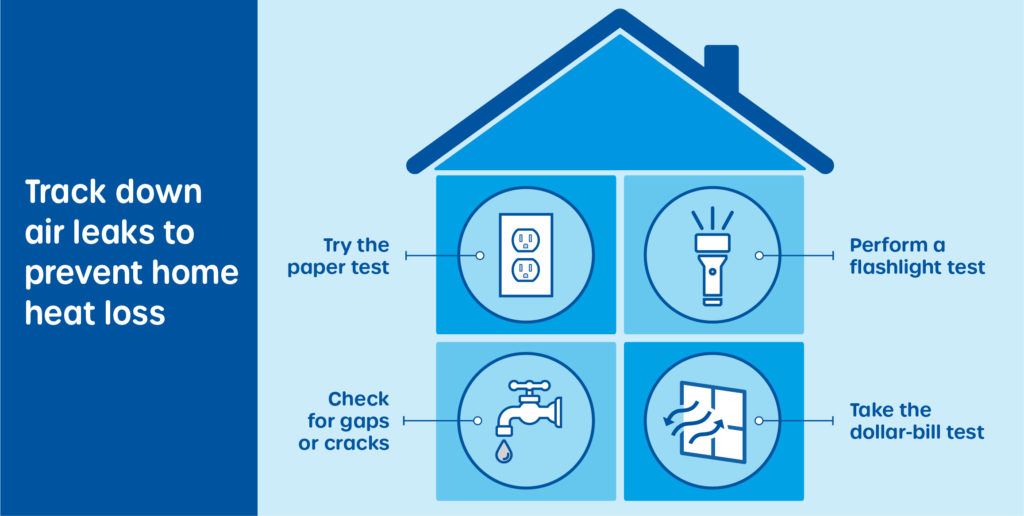
Become your own in-house energy detective and start hunting for leaks with this checklist.
On the outside of your house, check for gaps or cracks where different building materials meet. Siding and chimneys, the foundation and brick or siding are often at fault. Also check exterior corners and outdoor faucets.
On the inside, check for cracks and gaps. That includes door and window frames, electrical outlets, switch plates, baseboards, fireplace dampers, wall-mounted air conditioners, attic hatches and recessed lighting, and areas where dryer vents, cable and phone lines pass through walls.
Perform a flashlight test. Pick a likely drafty spot, such as an exterior door. Ask someone to shine a flashlight through potential gaps from inside when it’s dark outside. Stay outside and see if light seeps through. Then, plug the gaps.
Take the dollar-bill test. Shut a door or window on a dollar bill. If you can easily pull it out, you probably have an air leak.
Try the paper test. Hold a piece of paper where there might be a leak, such as around an electrical outlet or window frame. The paper will move if there’s a draft.
Check insulation. Properly insulated walls help keep the warmth inside your home. Energy.gov offers a detailed list of how to evaluate your insulation and determine if it needs to be improved.
If you discovered any air leaks, the next step is to seal them. When gaps are less than a quarter inch wide, and located between stationary building components and materials, caulking is your best bet.
Use weatherstripping for components that move, such as doors and windows. Be sure to choose the weatherstripping that will withstand the friction, weather and temperature changes associated with its location.
Spending the time to find and repair air leaks will make your home more comfortable and save you energy and money.

Feb 24, 2021 | Energy Efficiency
It’s been a whole year since the pandemic shifted our daily activities, interactions, and the way we work and attend school. We have some tried–and–true tips that will help you save energy and money no matter how much longer we’re all staying safe at home.
In the kitchen
Here are a few of our favorite ENERGY STAR® tips, to help you save energy as you prepare those delicious home-cooked meals.
Let there be light: Make sure all your light fixtures have LEDs, which use less energy and last much longer than traditional bulbs. And here’s an easy one: When you leave the kitchen, turn off the lights.
Clear the vents: Make sure all your air registers or floor vents are clear of furniture so the air can circulate freely. If your home has radiators, place heat-resistant reflectors between the radiators and walls.
Scrape to save: You can save water by scraping your dishes clean instead of rinsing them before placing them in the dishwasher. And, only run the dishwasher when it’s full.

Flip the fridge: Older refrigerators can use 20% more energy than ENERGY STAR® certified models. So, if your fridge is a relic, consider an upgrade. Also, if you have an old refrigerator running in the garage or basement, think about making a change.
Fix those faucets: Hot water leaking at a rate of one drop per second can waste up to $35 in electricity per year. Plus, leaks obviously waste water and, let’s be honest, can be annoying. Fix those faucets and save!
Electronics
Taking these simple steps to make your home more energy efficient can save you money whether you’re working from home or back to business as usual.
Screensaver = energy waster. Your computer and monitor are still fully powered when a screen saver turns on. Save energy by enabling sleep mode on these devices or shut them down when you’re not using them.
Use power strips. Household electronics tend to draw small amounts of power when they’re on standby mode. Power strips make it easy to power down your workstation with the flip of a switch. Smart power strips sense and cut power when electronics go into standby mode. It’s a small investment that could save you money in the long run.
Let the light in. Keep the blinds and curtains in your home open. Letting more sun in will help keep your home warm so your heating system doesn’t have to work quite as hard. Plus, natural light from your windows is great for all those video calls. 
For more energy saving tips, visit savewithppl.com