
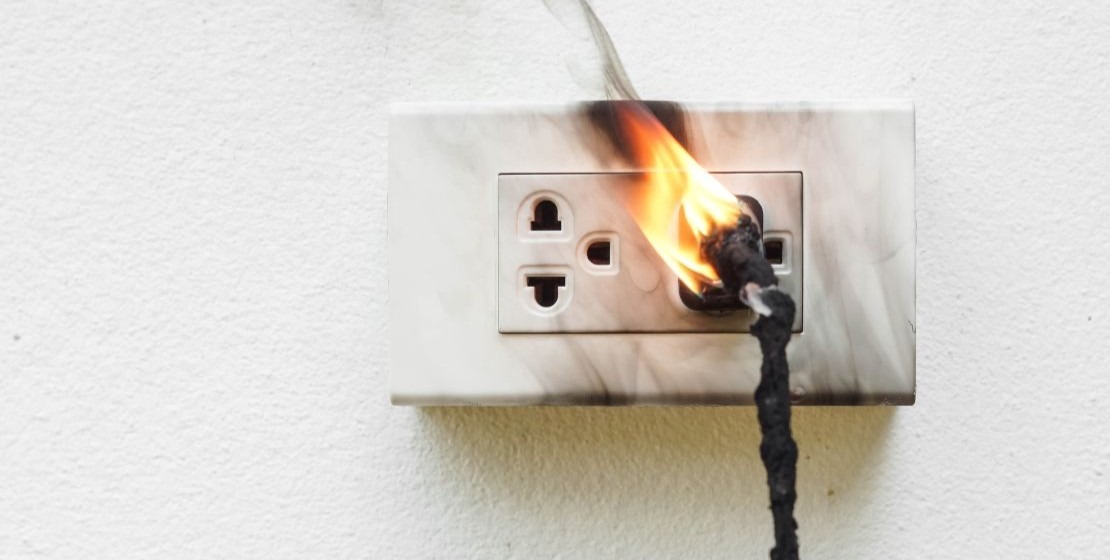
Fire Prevention Week (October 4-10) is a great time to think about how we can keep our homes and families safe. According to the Electrical Safety Foundation International (ESFI), home electrical fires are responsible for around 500 deaths, 1,400 injuries and $1.3 billion in property damage.
The good news is that many house fires can be prevented by following a few simple electrical safety tips. Electricity powers our everyday lives, but it should always be treated with care.
Here are some important reminders to help prevent electrical fires:
Check your power cords
Take a look at the cords around your home. If a cord is frayed, cracked, or damaged, replace it right away. Never put nails, staples, or other objects through electrical cords because they can damage the protective covering and create a fire hazard.
Don’t force plugs into outlets
Plugs should fit securely into outlets. If a plug feels loose or needs to be forced into place, stop using it and have the outlet inspected. Damaged outlets can increase the risk of electrical problems and fires.
Use the right light bulbs
Always use light bulbs with the recommended wattage for your lamp or fixture. Using bulbs that are too powerful can cause overheating and potentially start a fire.
Be careful with space heaters
When the weather gets cold, many people use space heaters. Keep them on a flat surface and away from furniture, curtains, blankets, and other flammable materials. Never plug a space heater into an extension cord or power strip, and don’t leave it running unattended.
Protect areas near water
Bathrooms, kitchens, and other places where water is present should have Ground Fault Circuit Interrupters (GFCIs). These safety devices can quickly shut off power if they detect a problem, helping to prevent shocks and electrical hazards.
A few simple safety habits can make a big difference. This Fire Prevention Week, take a few minutes to check your home’s electrical equipment and talk with your family about electrical safety. Working together can help keep everyone safe and reduce the risk of electrical fires.
0 Comments